

What Red Flags to Look for During a Home Showing in Florida
What if the detail that deserves your attention is the one a fresh coat of paint makes easy to miss? During a short showing, it can be hard to tell whether a stain, crack, or musty odor is a minor issue or a clue that needs a closer look. Knowing what red flags to look for during a home showing can help you use your time well without jumping to conclusions.
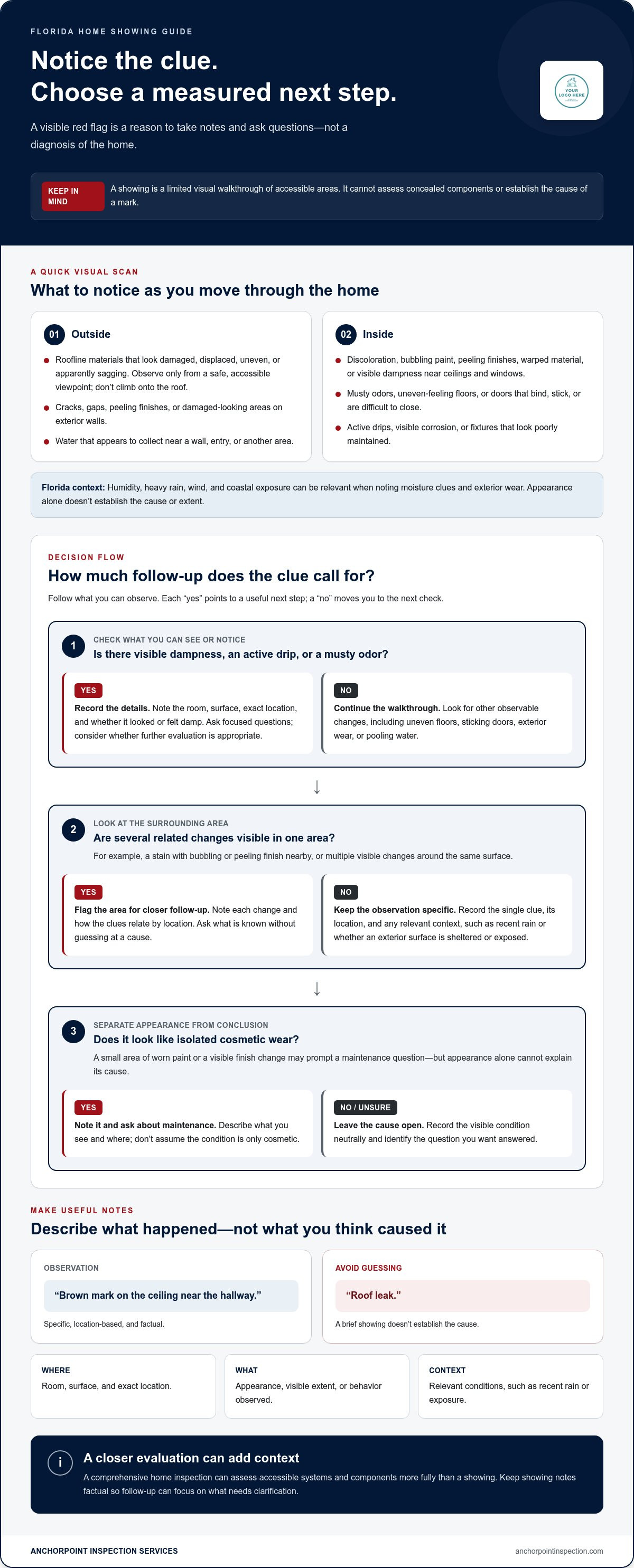
A showing offers a quick look at visible conditions, not a full assessment of the property. A warning sign isn’t a diagnosis. It’s a reason to take notes, ask focused questions, and consider whether further evaluation is appropriate.
This guide explains which visible concerns to watch for, how to compare their context, and what details to document before you leave. You’ll also learn how to prioritize follow-up questions and when a comprehensive home inspection can assess accessible systems and components more fully. The goal is a practical next step, not an on-the-spot verdict about the property.
Table of Contents
Why Home Showing Red Flags Deserve Attention in Florida
A home showing gives you a first look, not the full story. Fresh paint, carefully placed furniture, and tidy rooms can make a property feel move-in ready, but they don’t establish the condition of its structure, systems, or concealed areas. Knowing what red flags to look for during a home showing helps you spot details that may deserve follow-up without assuming you know their cause.
A showing red flag is an observable clue, such as a discolored patch, peeling finish, or area that looks damp. It isn’t proof of a defect. In Florida, humidity and heavy rain make recurring moisture clues worth noting. Wind and coastal exposure also make the visible condition of exterior surfaces relevant. Record what you noticed, where it appeared, and any context you observed, such as recent rain.
What a home showing can and cannot tell you
A showing is a limited visual walkthrough of areas you can access. You may be able to see a ceiling, notice a visible fixture, or feel that a floor is uneven, but you generally can’t assess concealed components or spaces that aren’t accessible. A Home inspection overview explains how a professional inspection examines a property beyond the initial visual impression.
Keep your notes neutral. Write “brown mark on the ceiling near the hallway” rather than “roof leak,” or “door sticks when closing” rather than “foundation problem.” The first describes what you observed; the second guesses at a cause. A visual clue is an observation to document, while a professional finding comes from a closer evaluation.
Why Florida weather belongs in your observations
Florida’s humid conditions and periods of heavy rain make moisture-related clues worth recording carefully. A musty smell, peeling paint, or discoloration may have more than one explanation, so don’t label it as mold, a leak, or water damage based on a brief visit. Note the room, the surface, and whether the area looked or felt damp during the showing.
Outside, observe visible wear on siding, trim, doors, and other exposed surfaces. Wind and coastal conditions can influence how exterior materials weather, but appearance alone doesn’t tell you what caused a mark or how extensive it may be. Record its exact location and any relevant conditions, such as recent rain or whether it’s on a sheltered or exposed side of the home.
These notes give you a clearer starting point for follow-up questions and a professional evaluation. They help keep the process measured: you’re identifying what you saw, not deciding whether the home is sound or needs a particular repair. A comprehensive home inspection can provide broader context on accessible systems and components than a showing allows.
Exterior and Interior Red Flags to Notice During a Showing
A useful walkthrough follows what you can see, from the outside of the home to its ceilings, walls, floors, and fixtures. Look for changes in materials, signs of moisture, and parts that appear uneven or damaged. These observations help you decide what to document and ask about, but they don’t reveal the condition of concealed areas or explain why something has changed.
Exterior signs around the roof, walls, and drainage
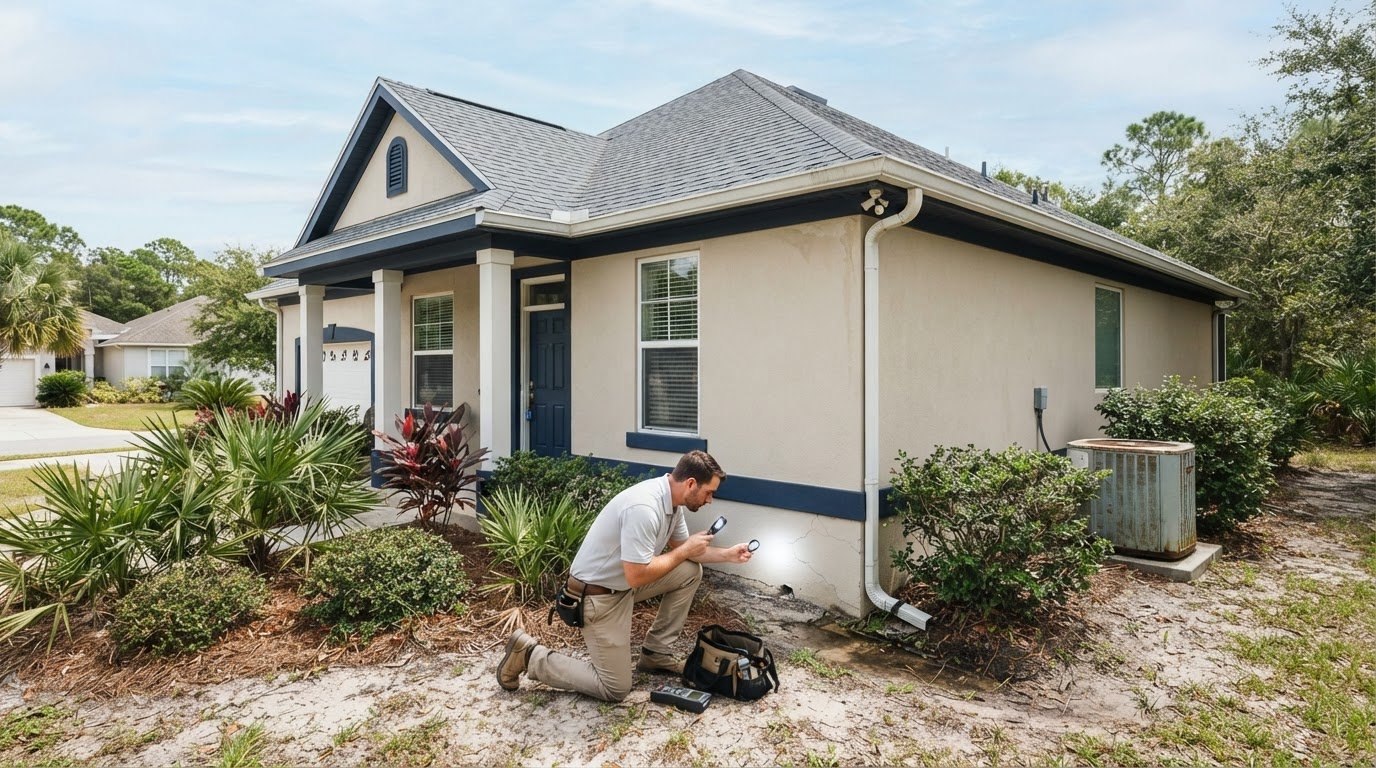
From a safe, accessible viewpoint, scan the roofline for materials that look damaged, displaced, or uneven, and note any apparent sagging. Don’t climb onto the roof or touch anything to investigate. On exterior walls, record cracks, gaps, peeling finishes, or damaged-looking areas, including their location and visible extent. A small crack and a longer crack may prompt different questions, but neither reveals its cause by appearance alone.
Notice the ground around the home as well. Does water appear to collect near a wall, entry, or another area? Record what you see instead of deciding that the drainage system is failing. Rain and coastal exposure can be relevant context for exterior wear in Florida, but the showing won’t establish whether weather caused a particular mark or how much repair may be needed.
Indoor clues around ceilings, floors, and plumbing
Inside, look up and around windows for discoloration, bubbling paint, peeling finishes, or warped material. Check walls for stains or visible dampness, especially near ceilings and window openings. A musty odor is worth noting too. These clues can have different explanations, so describe their location and appearance instead of labeling them as a leak or mold.
As you move through rooms, notice whether floors feel sloped or uneven and whether doors bind, stick, or are difficult to close. Record the room and the specific behavior. These observations can be useful for follow-up, but they don’t prove that the foundation has moved or that a structural problem exists.
Fixtures: Note active drips, visible corrosion, or fixtures that look poorly maintained. Avoid taking fixtures apart or testing anything beyond ordinary use during the showing.
Ceilings and walls: Describe the stain, bubbling, or peeling finish, and note whether it is near a window, plumbing fixture, or roofline.
Floors and doors: Record where a floor feels uneven or which door sticks, rather than drawing conclusions about structural movement.
A single visual symptom rarely identifies its cause. Location, surrounding conditions, and professional evaluation help provide context. If several observations raise questions, a comprehensive home inspection can assess accessible systems and components more closely. Keep your showing notes factual so follow-up can focus on what needs clarification.
Which Home Showing Red Flags Need the Closest Follow-Up?
Not every mark deserves the same next step. A small area of worn paint may call for a question about maintenance, while active dripping or moisture marks in several places deserve closer professional attention. An observation alone doesn’t tell you what caused it. Its location, extent, recurrence, and nearby clues help determine what information to gather next.
Use the comparison below to organize what you see, not as a severity rating. Avoid estimating repair costs or deciding from appearance alone that an issue is safe, dangerous, minor, or major. During a showing, focus on noticing patterns and preserving useful details for follow-up.
Clues that may be manageable but still deserve context
Cosmetic-looking wear may be isolated, but appearance doesn’t explain its history. Compare a single stain with repeated discoloration, nearby bubbling paint, or an odor in the same area. The age of the home, its maintenance history, and the materials around the mark may help a professional interpret what’s visible. Record the clue first and leave conclusions open.
Observations that merit prompt professional attention
Active water intrusion, extensive visible deterioration, recurring moisture, or several related warning signs deserve priority in your follow-up. The same is true of apparent movement or conditions that seem to be worsening. These observations don’t establish a cause or determine urgency by themselves, but they give a professional a clear starting point for closer evaluation.
To decide what red flags to look for during a home showing, focus on patterns rather than trying to rank every flaw. One observation may need a simple question; a recurring or active condition may call for more detailed assessment. A comprehensive home inspection can evaluate accessible systems and components and add context to concerns noticed during the showing.
How to Document Red Flags During a Home Showing
A clear record helps turn a quick walkthrough into useful follow-up. As you consider what red flags to look for during a home showing, keep your notes factual and tied to a specific room or surface. Separate what you directly observed from guesses about the cause, needed repairs, or code compliance. A showing can raise questions, but it can’t settle every technical one.
Use this simple sequence for each concern:
Observe: Describe what you can see or notice without diagnosing it. For example, write “paint is bubbling below the bedroom window,” not “the window leaks.”
Note the location: Identify the room and exact area, such as “hallway ceiling beside the bathroom,” rather than recording only “water damage.”
Capture a permitted photo: Follow the showing rules and get permission before photographing an occupied home. Keep the image focused on the visible condition and its surroundings.
List follow-up questions: Note what needs clarification, such as whether a stain has appeared before, whether a visible repair was completed, or whether an area was inaccessible.
A room-by-room note-taking method
Use consistent labels so details don’t blur together later. Start with exterior areas, then note living spaces, the kitchen, bathrooms, attic access, and visible utility areas. Describe the exact location and condition, such as “discoloration at the living room ceiling near the exterior wall.” If peeling paint is nearby, record both observations without assuming they share a cause.
This format makes it easier to see whether several clues are clustered in one area or appear in separate parts of the home. Write down what you couldn’t view, too. An inaccessible attic or closed utility area is a limitation of the showing, not evidence for or against a particular condition.
Questions to carry forward after the showing
Keep questions specific and open-ended. They can guide the next stage of the purchase process, but a showing is not the place to determine a technical cause, repair scope, or code issue. After a professional inspection, understanding how observations are described can also help you review a Home Inspection Report Explained resource.
Has the visible repair or patch been addressed before, and is there information about the work?
Has a stain or damp-looking area returned, or is it the first time it has been noticed?
Which rooms or components couldn’t be accessed during the showing?
What would a professional need to evaluate to provide more context?
For buyers in Lynn Haven, Panama City, and surrounding Bay County communities, a comprehensive home inspection can provide a closer evaluation of accessible systems and components after the showing. Arrange a comprehensive home inspection to assess concerns you’ve documented and support a more informed decision.
When to Arrange a Professional Home Inspection After a Showing
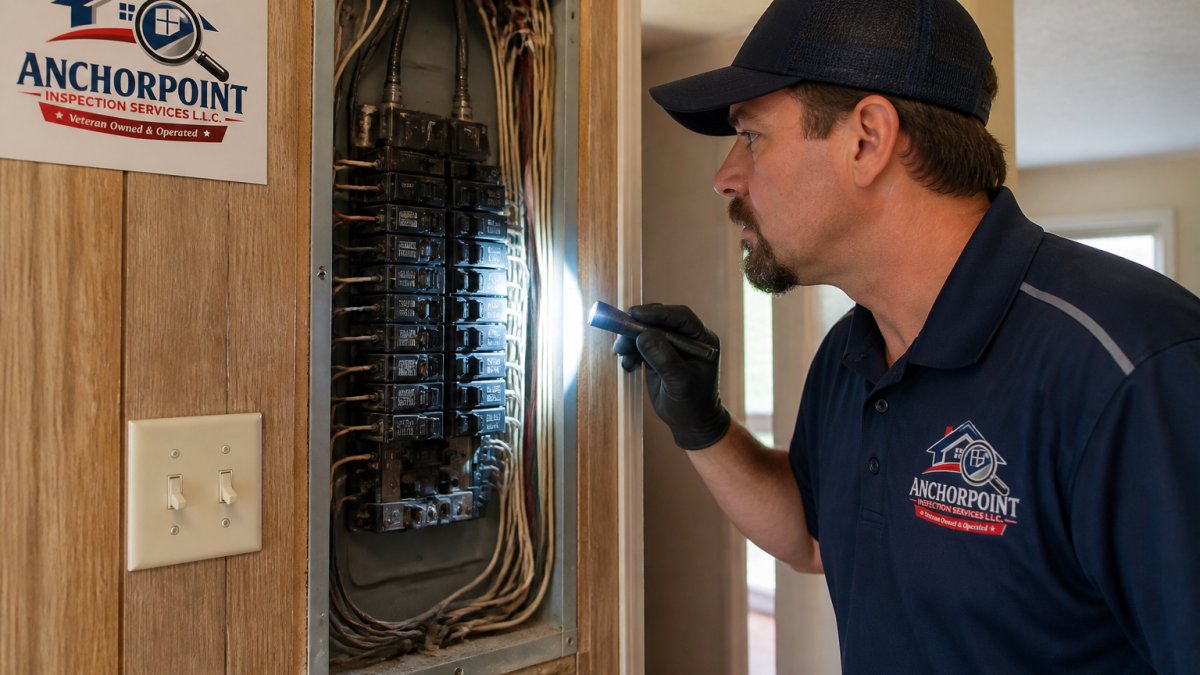
A showing helps you identify visible concerns and decide what questions to carry forward. A comprehensive home inspection goes further by evaluating accessible systems and components more systematically. Consider arranging one when you want a fuller picture of the property, whether you noticed a specific clue or simply want more context than a short walkthrough can provide.
This distinction matters: your notes capture what caught your eye, while an inspection adds professional observations about accessible areas. An inspector can document observed conditions and recommend further evaluation when appropriate. The assessment reflects conditions observed during the inspection; it isn’t a guarantee that no issues exist or that new problems won’t develop later.
What a professional evaluation adds to your observations
A professional evaluation can help put your showing notes in context. The inspector considers accessible components beyond the areas that drew your attention and documents visible conditions during the inspection. If a concern calls for assessment beyond the inspection’s scope, further evaluation may be recommended. For a closer look at how the process works, consult the article What to Expect During Your Florida Home Inspection.
Your notes still matter. They can help you point out where you saw a stain, recurring dampness, or a door that stuck, so the concern can be considered during the inspection. They don’t replace the inspection, and a professional assessment doesn’t establish the future condition of every concealed or inaccessible area. Treat it as a useful source of information for weighing next steps.
A clear next step for Bay County homebuyers
Anchorpoint Inspection Services provides residential inspections in Lynn Haven, Panama City, and surrounding Bay County communities. The company is owned and operated by Florida-licensed home inspector John R. Gramlick III. A comprehensive residential home inspection can assess concerns noticed during a showing as part of a broader review of accessible systems and components.
Bring forward the observations you recorded and use the professional evaluation to better understand what was visible on inspection day. You don’t need to diagnose a concern yourself. An inspection adds context to your notes and helps you consider the property with more information.
Keep the goal practical: gather clear information, understand the limits of what a showing revealed, and make a considered decision about the property. A professional inspection can add useful perspective, but it isn’t a promise of a problem-free home. It’s one step toward making your next decision with more context and confidence.
Turn Your Showing Notes Into a Confident Next Step
Learning what red flags to look for during a home showing isn’t about reaching a verdict before you leave the property. It’s about gathering observations that help you decide what deserves clarification and what should be evaluated more closely. Use your notes to keep the next conversation focused on the home’s condition, rather than guesses about what a mark or sound might mean.
A professional inspection adds context based on conditions observed during the evaluation, but it can’t guarantee that future issues won’t arise. That perspective can help you make a more informed decision without expecting a brief showing, or any single assessment, to answer every question about a home.
Anchorpoint Inspection Services serves buyers in Lynn Haven, Panama City, Panama City Beach, Callaway, Southport, Mexico Beach, Port St. Joe, Santa Rosa, Fort Walton, Niceville, Destin, Pensacola, Gulf Shores, and San Destin. The company is owned and operated by Florida-licensed home inspector John R. Gramlick III. If you’re ready for a closer evaluation of the property, schedule a comprehensive home inspection with Anchorpoint Inspection Services.
Frequently Asked Questions
Can I skip a home inspection if I do not see any red flags during the showing?
No. A tidy appearance can’t tell you how accessible systems and components are functioning or reveal conditions hidden behind finishes. Even if you know what red flags to look for during a home showing, a quick visit remains only a visual snapshot. A comprehensive inspection offers a more systematic assessment of accessible areas, giving you more information to consider before deciding how to proceed.
Are foundation cracks always a red flag when viewing a house?
No. A crack’s appearance alone doesn’t establish its cause or significance. Note where it is, how far it extends, and whether nearby finishes, floors, or doors show other changes. For example, record a crack beside a window separately from a door that sticks in another room. A professional inspector can document accessible conditions and recommend further assessment if the observations warrant it.
What should I do if I notice a water stain during a showing?
Record its location and appearance, then note nearby details such as a window, bathroom, or visible plumbing fixture. If the room has a distinctive smell or another surface looks affected, include that too. Don’t assume the stain proves a current leak, but don’t dismiss it because it feels dry. Share the observation during a professional inspection so it can be considered alongside other accessible conditions.
Should I worry about a musty smell in a house?
A musty odor is worth documenting, but it doesn’t identify a cause on its own. Note which room has the smell and whether it seems stronger near a closet, window, or enclosed area. If you notice visible dampness or stained materials nearby, record those observations separately. Avoid diagnosing the issue from smell alone, and include the details in your notes for professional evaluation.
Can a home showing reveal roof problems?
Sometimes a showing provides a limited view of roof materials from the ground or another accessible vantage point. You may notice material that appears displaced, damaged, or uneven, but that view can’t establish the roof’s full condition or remaining service life. Don’t climb onto the roof to investigate. Record what you can see and where, then include the observation in your questions for a professional inspection.
What should I photograph during a home showing?
Photograph visible concerns only if the seller or showing rules allow it, and get permission before taking pictures inside an occupied home. A useful image shows enough surrounding detail to identify the location later, such as a stain in relation to a doorway or window. Avoid capturing personal belongings unnecessarily. Add a room label and a short factual note. A photo supports follow-up, but doesn’t explain the condition.
Do home inspectors check every part of a house?
No. An inspection evaluates accessible systems and components within its scope, so concealed or blocked areas may not be assessable. The report can help you understand what was observed and note limitations, giving you a clearer basis for questions or further evaluation. Anchorpoint Inspection Services provides residential inspections in Lynn Haven, Panama City, and surrounding Bay County communities for buyers seeking more context than a showing can provide.

Comments