

Negotiating Repairs After a Home Inspection in Florida: A Buyer’s Guide
What should you ask the seller to fix when an inspection report lists everything from a loose handrail to a roof concern? The answer isn’t to turn every note into a demand. When negotiating repairs after home inspection in Florida, first separate material, actionable concerns from routine maintenance. Then use specific report details to support focused requests.
A long report can make it difficult to judge what matters, and a repair request can feel as though it might put the deal at risk. The report informs your decision, but it doesn’t automatically require the seller to make repairs. What happens next depends on your signed contract and its deadlines. For example, an “as-is” contract doesn’t obligate a seller to make repairs, though buyers may still discuss repairs or other terms during the inspection period.
This guide explains how to prioritize findings, document reasonable requests, and understand the contract-dependent options available to Florida buyers. In Bay County and across Florida, reviewing structural, roofing, and mechanical findings carefully can help you move from uncertainty to an informed conversation.
Table of Contents
Negotiating Repairs After a Home Inspection in Florida Starts With the Contract
A concerning inspection report raises questions, but it doesn’t automatically decide whether a sale proceeds or what the seller will do. A repair negotiation is a buyer-seller discussion shaped by the terms of the signed contract. Before deciding what to request, find the agreement’s inspection process, notice requirements, deadlines, and any conditions that affect your options.
That distinction matters because Florida contracts can set different rights and timelines. There isn’t one repair-request rule for every transaction. An inspection documents observed conditions; it doesn’t, by itself, require the seller to repair them. The contract and any later written agreement determine the parties’ obligations.
What an inspection report can, and cannot, tell a Florida buyer
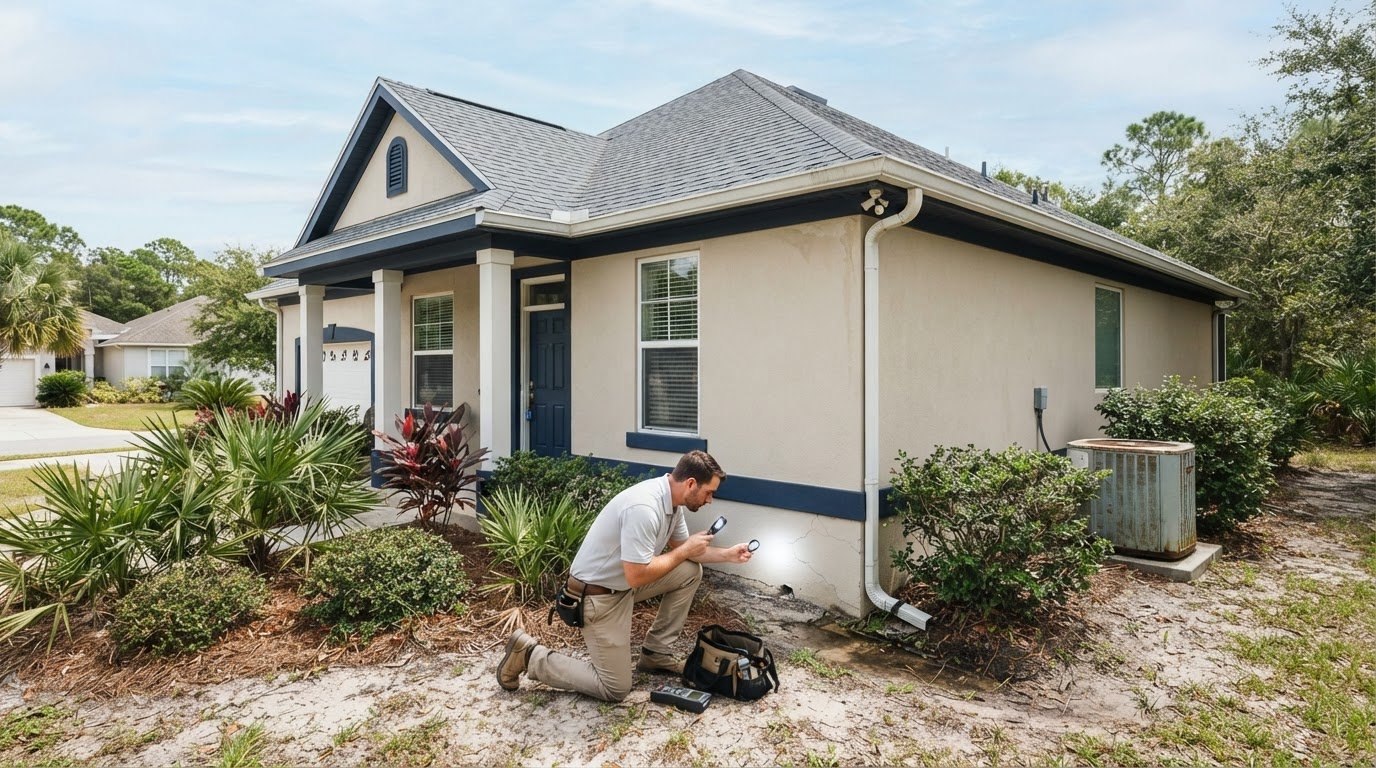
A home inspection report records conditions the inspector could observe in accessible areas at the time of the inspection. It can help you understand components such as the roof, structure, and mechanical systems, but it isn’t a guarantee that every issue has been identified or that conditions won’t change. For a general overview of an inspection’s purpose and typical scope, see this Home Inspection Overview.
The inspector’s findings aren’t the same as a repair estimate, legal interpretation, or decision by the seller. A report may describe a visible concern and recommend further evaluation, for example, but it doesn’t establish the final scope or cost of work, whether a seller will address it, or what your contract allows. Learn how to read a home inspection report to distinguish documented observations from questions that need separate answers.
Why the signed contract matters before you request repairs
Review the executed contract before sending a request. Locate its inspection and notice provisions, note the deadlines, and check how the agreement describes each party’s responsibilities. If you’re uncertain about timing or the meaning of a provision, raise the question promptly with your real estate professional or a Florida attorney.
“As-is” wording alone doesn’t explain every option available under a particular agreement. The inspection period, notice language, other contingencies, and any amendments can affect what a buyer may do and when. Read your signed documents rather than relying on a general description of an “as-is” sale.
Once you understand the contract framework, use the report to identify the condition you want to discuss and support your request with specific observations. That keeps negotiating repairs after home inspection in Florida grounded in evidence, while contract interpretation and the seller’s response remain matters for the appropriate parties.
How to Prioritize Florida Home Inspection Findings Before Negotiating
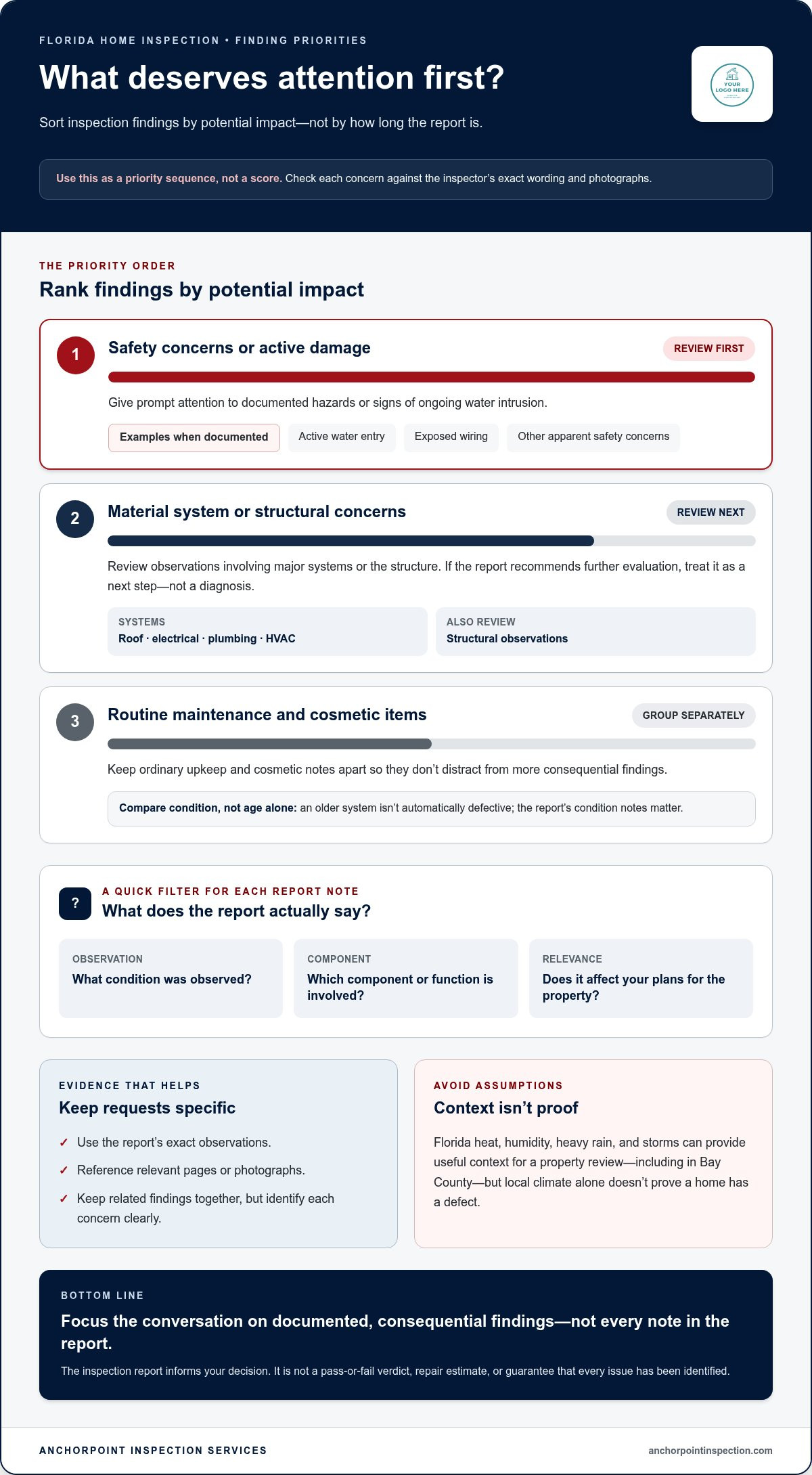
A long report can make every note seem equally urgent. Rank findings by potential impact, then check each item against the inspector’s exact wording and photographs. This helps you decide which observations merit discussion and which are better understood as ordinary upkeep.
Safety concerns or active damage: Give prompt attention to documented hazards or signs of ongoing water intrusion.
Material system or structural concerns: Review observations involving the roof, electrical, plumbing, HVAC, or structure. If the report recommends further evaluation, treat that as a next step, not a diagnosis.
Routine maintenance: Group ordinary upkeep and cosmetic items separately so they don’t distract from more consequential findings.
Florida’s heat, humidity, heavy rain, and storms can provide useful context for a property review, including in Bay County. But local climate alone doesn’t prove a home has a defect. Treat it as background, not evidence. A short request tied to specific report details is easier for both sides to assess than a broad list of assumptions.
Which inspection findings may deserve prompt discussion?
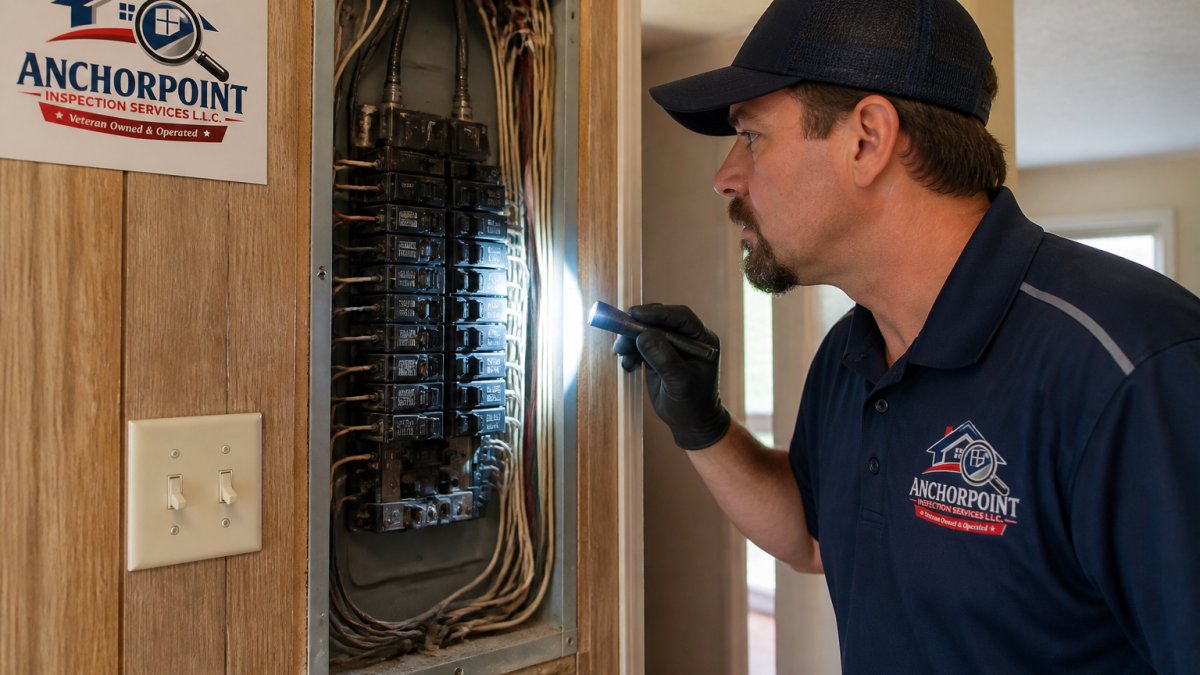
Start with what the report actually documents. If it notes active water entry, exposed wiring, or another apparent safety concern, review the observation promptly and follow any recommendation for further evaluation. These examples matter only when they appear in the report. Don’t infer a problem from a home’s age or location alone.
For a system or structural observation, distinguish the inspector’s description from a specialist’s diagnosis or repair scope. The Florida Department of Business and Professional Regulation provides information about state home inspector regulation at Florida Home Inspector Regulations. A report can identify an observed concern, while further evaluation may be needed to clarify its cause or appropriate response.
How to distinguish material findings from routine maintenance
For each item, ask what the report observed, which component or function it relates to, and whether it affects your plans for the property. An active leak documented in a photograph differs from a note that a fixture shows wear. An older system isn’t automatically defective because of its age; the report’s condition notes matter.
Keep related items together, but cite each one clearly. If the report documents separate roof observations, for example, list them under a roof heading and reference the relevant page or photograph for each. Don’t combine unrelated concerns into a vague request, and don’t describe hidden damage as fact unless it has been documented.
Use your ranking to prepare for negotiating repairs after home inspection in Florida, not to make a technical diagnosis. Anchorpoint Inspection Services’ residential inspections document observed property conditions, including structural components, roofing, and mechanical systems. Buyers in Lynn Haven, Panama City, and nearby Bay County communities can use a residential home inspection to understand a property’s observed condition.
Repair, Credit, or Price Change: Compare Your Florida Negotiation Options
Once you’ve selected the findings you want to discuss, consider which outcome would address each concern. A repair, a credit, and a purchase-price change work differently, and none is automatic. When negotiating repairs after home inspection in Florida, the signed contract, seller agreement, and transaction requirements help determine which option is workable.
When a repair request may be the clearest option
A repair request can be direct when the report documents a specific condition and the desired result can be described clearly. If the report recommends further evaluation, you might discuss that defined next step rather than prescribe work before the concern is understood. Avoid wording such as “fix everything,” which leaves the scope open to different interpretations. The final terms, including the work and any agreed timing, should be clear and accepted by both parties.
Specificity helps. Refer to the report’s description and location, then state the outcome you’re requesting. For example, identify a documented plumbing concern by its report section and ask for an agreed response to that finding. Don’t imply the seller has accepted the request until the parties have documented their agreement in the form required by the contract.
When a credit or price adjustment may be discussed
A credit is generally discussed as an agreed transaction allowance, while a price change alters the purchase price itself. They aren’t interchangeable by default. Contract terms, lender rules, and closing requirements may shape either arrangement, so don’t assume a proposed credit can be applied in a particular way or that a price adjustment will affect financing as you expect.
Before choosing between these options, discuss the transaction-specific consequences with your real estate professional. The seller may accept, decline, or respond with different terms. Whatever you discuss, tie it to documented findings and put any agreement in writing according to the contract. An inspection report can inform the conversation, but it can’t guarantee a repair, credit, or price change.
How to Make a Clear, Evidence-Based Repair Request
A focused request makes it easier to understand what you’re asking the seller to consider. Use the inspection report as your reference, tie each request to a documented condition, and follow your contract’s communication process and deadlines. A calm, specific approach separates observed facts from questions that may need further evaluation.
Select priority findings. Choose the report items you want to raise rather than forwarding every maintenance note. Keep your priorities consistent with the terms and timing of your agreement.
Cite the report details. Identify the relevant section, page, component, and location. Include photographs or excerpts that help show the documented condition, using the channel agreed for transaction communications.
State one requested outcome for each concern. Be clear whether you’re asking the seller to address a specific finding or discussing another negotiated option. If the report recommends further evaluation, frame that as a question or requested next step, not a diagnosis.
Meet the applicable deadlines. Coordinate with your real estate professional to track notice requirements, response dates, and the method for delivering a request under your signed agreement.
What to include in a focused repair request
Use the inspector’s wording where practical, and identify where the condition was observed. For example, refer to the report’s note about a visible plumbing concern beneath a particular sink instead of writing “plumbing is bad.” Then state one understandable requested action or alternative. Keep documented observations separate from open questions, such as whether additional evaluation is needed to clarify the condition.
Share only materials relevant to the items you’ve selected, such as the report excerpt and associated photograph. Avoid claims about hidden damage, cause, or repair scope unless they’ve been established through appropriate evaluation. This keeps the request grounded in available evidence and gives the other party a clear basis for responding.
How to keep communication and deadlines organized
Keep a simple record of the dates and documents involved. Your real estate professional can help track applicable notice and response dates, while a Florida attorney can address legal questions. Send communications through the agreed channel, retain written responses, and save final terms with your transaction records. Record any agreement in the written form required by the contract.
Keep your language measured. Describe what the report says and what you’re requesting without assigning blame or implying the seller has already agreed. If a finding calls for specialist evaluation, explain that the report identifies an observation and that further evaluation may clarify it. Don’t present a conclusion the inspector didn’t make.
Clear documentation supports negotiating repairs after home inspection in Florida by keeping the conversation connected to the report and transaction process. Anchorpoint Inspection Services provides residential inspection findings buyers can use to understand observed property conditions. See Anchorpoint’s residential inspection services for information about property-condition reporting.
How a Florida Home Inspection Supports Your Next Decision
An inspection report gives you information to consider, not a verdict on whether to buy the home or a decision about what the seller should do. It makes observed conditions easier to understand, ask questions about, and discuss with your transaction team. When negotiating repairs after home inspection in Florida, use the report alongside your contract and your own priorities. The decision remains yours.
What buyers can take from an inspection report
Trace each question back to a specific observation, component, and location in the report. A note about a roof, structural component, or mechanical system can guide a focused conversation, but it doesn’t determine the cause, repair scope, or outcome. Findings describe conditions observed at the time of inspection; they don’t guarantee every issue has been identified or that conditions won’t change.
This distinction keeps discussions grounded. Ask your transaction team how a documented finding relates to your priorities and whether the report’s recommendation points to a question that needs further evaluation. A seller may respond in different ways, and the report can’t predict that response. For a perspective on how sellers may use inspection information before listing, see this Florida pre-listing inspection guide.
A calm next step for buyers in Bay County
Review the report and mark the observations that matter most to you. Then review your contract’s deadlines and applicable notice provisions with your real estate professional, and discuss contract-specific questions with a Florida attorney. Keeping those conversations distinct helps: the inspector documents observed conditions, while your transaction team helps you understand the process and decide how to proceed.
Anchorpoint Inspection Services provides residential inspections with documented property-condition findings for buyers in Lynn Haven, Panama City, Panama City Beach, Callaway, Southport, Mexico Beach, Port St. Joe, Santa Rosa, Fort Walton, Niceville, Destin, Pensacola, Gulf Shores, and San Destin. The inspection role is careful evaluation and clear reporting, not negotiating with the seller, estimating repair costs, interpreting contract terms, or guaranteeing a particular outcome. A report can support informed questions, but it doesn’t make the purchase decision for you.
Reviewing a home’s condition is one step in a larger decision. Learn how a residential inspection can provide information about observed property conditions through Anchorpoint Inspection Services.
Move Forward With Clear Information
A repair discussion doesn’t have to resolve every question at once. Treat it as one part of your larger home-buying decision, and weigh the documented condition, your priorities, and the terms of your transaction. The goal of negotiating repairs after home inspection in Florida isn’t to let the report decide for you. It’s to make your next move with a clearer understanding of what you’re considering.
As you prepare for a purchase, use information that helps you ask better questions and assess the property with care. Anchorpoint Inspection Services is owned and operated by Florida-licensed home inspector John R. Gramlick III. Its residential inspections document observed conditions in areas such as structural components, roofing, and mechanical systems.
For a residential inspection as part of your next step, contact Anchorpoint Inspection Services.
Frequently Asked Questions
Can I negotiate repairs after an as-is home inspection in Florida?
Yes, you can ask the seller to consider a repair or another change, but an “as-is” label generally doesn’t require the seller to agree. What you can do, and by when, depends on your signed contract, including its inspection provisions and deadlines. Before making a request or deciding how to respond to a refusal, ask your real estate professional or a Florida attorney how the terms apply to your transaction.
What repairs are reasonable to request after a home inspection?
Requests are generally easier to assess when they focus on a documented condition affecting safety or a home component’s function, rather than ordinary wear or cosmetic preferences. For example, a report noting a malfunctioning outlet may support a more focused discussion than a request to update all outlets because they look dated. Buyers in Lynn Haven, Panama City, and Panama City Beach should base requests on the specific report, not assume a concern exists because of location.
Can a seller refuse to make repairs after a Florida home inspection?
Yes, a seller may refuse a proposed repair unless the signed contract or a later written agreement creates an obligation that applies to the situation. A buyer’s request alone doesn’t establish that the seller has agreed. If the seller declines, review your contract’s available options and deadlines with your real estate professional. Don’t assume a refusal automatically cancels the sale or gives you a particular remedy.
Should I ask for a repair, a credit, or a price reduction?
Choose the option that best addresses the documented concern and fits your transaction. A repair focuses on agreed work, a credit is a negotiated transaction allowance, and a price reduction changes the purchase price. These choices can have different practical effects, and lender or closing requirements may affect what is workable. Discuss the implications with your real estate professional before proposing terms, and record any agreement in the required written form.
Should I ask the home inspector to estimate repair costs?
A home inspection report describes observed conditions; it isn’t a repair estimate. An inspector may recommend further evaluation when a finding needs clarification, but that recommendation doesn’t establish the repair scope or cost. If you need pricing to weigh a proposal, obtain an estimate from a qualified repair professional based on the specific concern. Keep that estimate distinct from the inspection report, which documents the inspector’s observations.
Can repair negotiations delay closing in Florida?
They can affect the timeline if the parties need to discuss terms, arrange further evaluation, or complete agreed work before closing. A repair discussion doesn’t automatically extend the closing date. Check the contract’s deadlines and closing terms, and have your real estate professional help track any proposed changes. If the parties agree to alter timing or other terms, document the change as required by the transaction documents.
What should I send with a home inspection repair request?
Include the relevant report excerpt, the item’s location, and any report photograph that clearly shows the observation. State the specific outcome you’re requesting, and attach a relevant specialist report or estimate if you already have one and it supports the discussion. Avoid adding conclusions about hidden damage that the documents don’t establish. Send the materials through the communication channel agreed for the transaction, and keep copies of the request and response.
Comments