

New Construction Phase Inspection Checklist for Fort Walton Beach Homes
What if the most important inspection happens just before the next construction step hides the work? Framing, wiring, plumbing, and other components can be harder to assess once covered. A new construction phase inspection checklist Fort Walton Beach homeowners can use starts with timing: plan independent reviews at milestones before work is concealed.
Builder and municipal inspections serve important purposes, but an independent inspection offers a separate opportunity to understand visible and accessible conditions from the owner’s perspective. It doesn’t replace required approvals or certify every hidden component. Clear observations can help you decide what to discuss with your builder while the relevant work is still easier to see.
This phase-by-phase guide explains what an independent inspector may assess before a concrete pour, before drywall, and during the final walkthrough, along with how to coordinate each visit. You’ll also learn how to understand inspection findings, raise timely questions, and keep useful project records. Anchorpoint Inspection Services provides new construction phase inspections in Fort Walton Beach to help owners make informed decisions as building progresses.
Table of Contents
Why schedule new construction phase inspections in Fort Walton Beach?
New construction inspection checklist: what to review at each phase
Does a builder or municipal inspection replace an independent inspection?
How to prepare for a Fort Walton Beach construction-phase inspection
Plan your Fort Walton Beach new construction phase inspection with Anchorpoint
Why schedule new construction phase inspections in Fort Walton Beach?
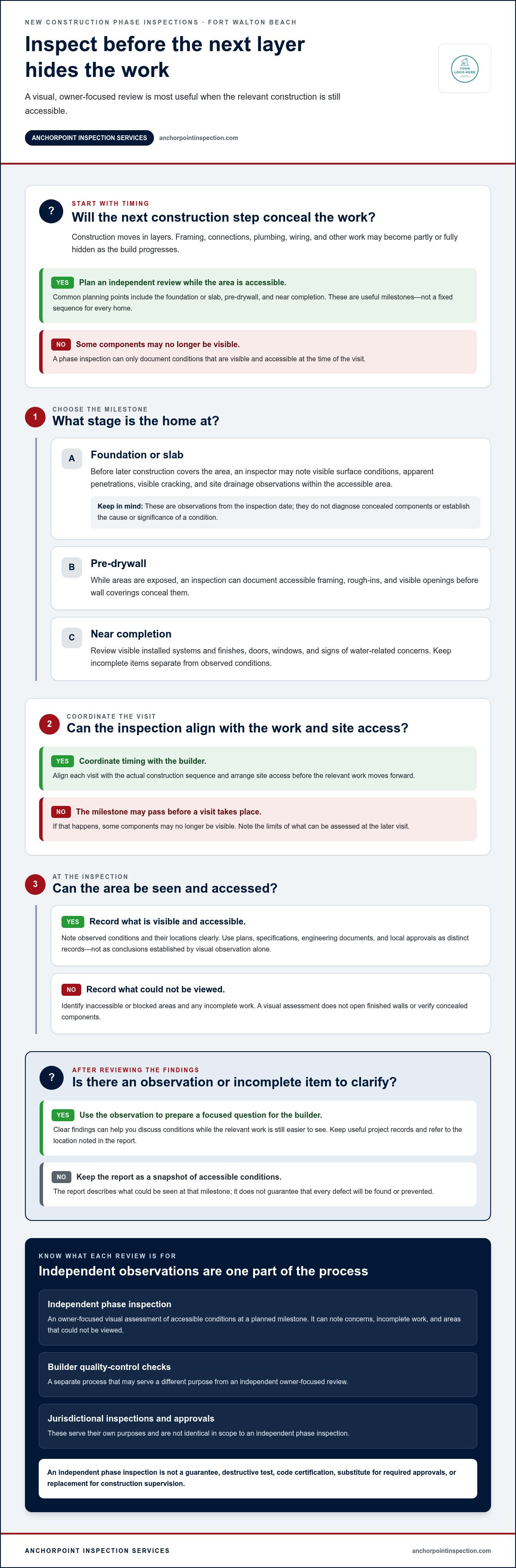
A phase inspection is an independent visual assessment of a home at a planned point in construction. Rather than waiting until the property is complete, an inspector reviews components that are accessible at that milestone and records observed conditions. This gives you information to discuss with your builder while the project is underway. It helps you understand what can be seen at a particular stage, but it can’t guarantee that every defect will be found or prevented.
Timing matters because construction moves in layers. Framing, connections, plumbing, wiring, and other work may become partly or fully hidden as the build progresses. For example, an observation made before drywall installation may be difficult to verify visually after the walls are closed. A timely report can help you raise a focused question before the next stage makes that area less accessible.
Which construction milestones are commonly considered?
Homeowners commonly plan visits around the foundation or slab, the pre-drywall stage, and near completion. These are useful planning points, not a fixed sequence for every home. Construction methods, project schedules, and site access all affect which visits make sense. For a broader explanation of the process, see this Florida new construction inspection guide.
Foundation or slab: Review visible conditions before later work covers the area.
Pre-drywall: Observe accessible framing and installed components before wall finishes conceal them.
Near completion: Note visible conditions and incomplete items while preparing for the final stages.
Coordinate each visit with the builder so the inspection aligns with the actual work sequence and site access. If a milestone passes before an inspection can take place, some components may no longer be visible.
What an independent phase inspection can and cannot tell you
A phase inspection documents visible, accessible conditions at the time of the visit. The inspector may note incomplete work, concerns to discuss, and areas that couldn’t be viewed. The Building inspection overview describes the broad purpose and variety of building inspections. A construction-phase review is one kind of visual assessment, with a scope shaped by the conditions available on site.
A phase inspection is an independent visual review of accessible construction conditions at a planned milestone, not a guarantee, destructive test, code certification, or substitute for construction supervision. An inspector generally doesn’t open finished walls or take over the builder’s responsibility for managing the work. Builder quality-control processes and jurisdictional inspections may serve different purposes, so they aren’t identical in scope to an owner-focused review.
Use the new construction phase inspection checklist Fort Walton Beach as a guide to planning questions, not as a claim that every item applies to every project. Clear observations can help you understand what was visible, what was blocked from view, and what you may want to discuss with your builder. That distinction supports informed decisions without overstating what an inspection can establish.
New construction inspection checklist: what to review at each phase
A useful checklist follows the construction sequence because work visible during one visit may be covered by the next. Treat these checkpoints as prompts, not a promise that every item applies to every home. Construction methods and schedules vary, so coordinate each review around what is actually accessible on site.
At every visit, separate what you can observe from what must be checked against plans, specifications, or other records. An independent visual assessment doesn’t determine code compliance or verify that every feature matches approved documents. The duties of construction and building inspectors include work across construction stages, but an owner’s independent inspection has its own scope and reporting purpose.
Foundation and slab stage: what may be visible?
Before the foundation or slab is covered by later construction, note visible surface conditions, apparent penetrations, and any cracking that can be seen. An inspector may also record site drainage observations within the accessible inspection area. These observations describe what was visible on the inspection date. They don’t diagnose concealed components or establish the cause or significance of a condition.
Keep plans, engineering documents, and local approvals distinct from visual observations. Reviewing those materials or confirming that work complies with them may require a separate process. Record the location of an observation clearly so you can refer to the relevant area when discussing it with your builder.
Pre-drywall and final walkthrough checkpoints
Before wall coverings go up, an inspection can document accessible framing, rough-ins, and visible openings. Conditions may be difficult to assess once enclosed, so schedule access while these areas remain exposed. The pre-drywall inspection guide offers focused guidance on this milestone.
Near completion, review visible installed systems and finishes, along with doors, windows, and signs of water-related concerns. Note incomplete items separately from observed conditions. A final-stage visit provides a snapshot of what can be seen at that time, but it can’t reveal components already concealed behind finished surfaces.
Keep a clear record at every visit
For a practical new construction phase inspection checklist Fort Walton Beach homeowners can use to organize follow-up, keep dated notes and photographs where site rules permit. Connect each image to the matching report observation, location, and inspection date. This makes it easier to track a question through later construction stages and discuss it with your builder without confusing a visual observation with a plan requirement or code determination.
Accessible: What could be viewed at the time of the inspection?
Incomplete: What work appeared unfinished or awaited installation?
Blocked: Which areas or components couldn’t be seen?
These labels help turn a report into an organized project record. For an independent review tied to your construction milestones, explore Anchorpoint’s new-construction phase inspections.
Does a builder or municipal inspection replace an independent inspection?
No. Builder quality-control checks, jurisdictional inspections, and independent inspections can each provide useful information, but they don’t necessarily have the same purpose or scope. An independent review adds owner-focused observations about conditions visible during a planned visit. It doesn’t replace required approvals, direct construction work, or guarantee code compliance.
The distinction is easier to see side by side. The exact process and documents can vary by project, so treat this as a general guide rather than a description of every builder’s or jurisdiction’s procedures.
Independent inspection versus official construction inspection
An independent inspector reports observed conditions within the agreed scope. That report can help you understand what was visible and prepare questions, but it isn’t an approval from a jurisdiction or a determination that all work meets code. Official reviews follow their own procedures and purposes. Neither review substitutes for the other, and both can contribute different information as a home is built.
This distinction matters if an official inspection has taken place and you’re still unsure about a visible condition or how it relates to your concerns as the owner. An independent assessment can document that condition for discussion while required official reviews continue through their applicable process.
How to raise inspection observations with the builder
Keep the conversation specific and timely. Share the report observation, identify the room or area and construction stage, and ask how the condition relates to the project documents. For example, rather than saying “the framing looks wrong,” refer to the report’s exact location and ask which plan detail or specification applies. This gives everyone a clear point to review.
Written follow-up can preserve context as the work moves forward. Keep the relevant report page, dated notes, and any permitted photographs together, and record the builder’s response or next step. Avoid presenting an observation as a proven code violation unless that determination has been made through the appropriate process.
If report terminology feels unfamiliar, this home inspection report guide can help you interpret observations and limitations. The new construction phase inspection checklist Fort Walton Beach is most useful when it helps you coordinate the right review, understand what each result can tell you, and raise clear questions without confusing one inspection role with another.
How to prepare for a Fort Walton Beach construction-phase inspection
A little coordination can make an inspection more useful. Start by identifying the construction milestone you want assessed, then arrange access while the relevant work is visible. Gather documents and questions that give context to the visit, and set aside time afterward to review the report. This process helps connect observations to specific parts of the project rather than treating the inspection as a general walkthrough.
Identify the milestone: Note the home’s current stage and which areas you want reviewed.
Coordinate access: Discuss timing, site entry, and safety expectations with the builder before work advances.
Gather relevant records: Collect available plans, specifications, earlier reports, and questions about particular conditions.
Review findings: Read the report after the visit and organize follow-up questions by location and observation.
These steps help keep the visit focused. Plans and specifications can provide useful context, but an independent visual inspection doesn’t automatically verify that construction matches every document.
Coordinate timing before work is concealed
For a pre-drywall visit, timing needs to align with the build schedule. If wall coverings go up before access is arranged, framing and rough-ins may no longer be visible for a visual review. Discuss the intended inspection stage with the builder early, and agree on a site-access plan that follows the builder’s safety expectations. A milestone is a planning cue, not a guarantee that a particular date will suit the project.
Before the visit, clarify which areas will be accessible and whether active work could limit entry. If the schedule changes, revise the plan promptly. This matters when the inspection is meant to document components before they’re covered, since access can change as crews move from one task to another.
Turn the inspection report into clear next steps
After the assessment, sort findings by location, observed condition, and suggested follow-up, rather than relying on alarm level alone. Group notes by room or building area, then distinguish an observed condition from an item that was incomplete or blocked from view. This makes it easier to compare the report with your plans, specifications, and project records.
Share relevant observations with the builder in a clear, timely message. Identify the inspection date, construction stage, location, and report entry, then ask how the observation relates to applicable project documents or what follow-up is planned. Keep written responses with the report so the discussion is easy to track as work continues.
Use the new construction phase inspection checklist Fort Walton Beach as a planning tool, then tailor your questions to the actual stage and accessible conditions of your home. To arrange an independent assessment around your project milestones, explore Anchorpoint’s new construction phase inspections.
Plan your Fort Walton Beach new construction phase inspection with Anchorpoint
The most useful time for an inspection is when the relevant construction remains visible and accessible. Aligning a visit with that milestone gives you a clearer record of observed conditions and helps you raise questions while the work is still in progress. Useful checkpoints depend on the project sequence, so coordinate timing around the actual build rather than treating it as a fixed calendar appointment.
Anchorpoint Inspection Services provides new-construction phase inspections for residential and commercial projects in Fort Walton Beach. Owner John R. Gramlick III is a Florida-licensed home inspector. An independent assessment adds observations to your project records and can help you have more informed discussions with your builder. It doesn’t guarantee defect-free construction or replace the builder’s responsibilities or official reviews.
What to expect from an Anchorpoint phase inspection
At the scheduled stage, the inspection focuses on conditions that are visible and accessible within the agreed scope. The report can clarify what was observed, what appeared incomplete, and which areas could not be viewed. Its purpose is to provide useful information about the property at that point in construction, not to certify every component or predict how the home will perform.
For example, a pre-drywall visit can document accessible conditions before wall coverings go up, while a later visit reflects what can be seen at that stage. The construction milestone affects what the inspector can observe, so coordinating the visit with project progress helps set realistic expectations.
Choose a useful next step for your build
Before arranging an inspection, gather a few details about the project. Sharing the current construction stage and relevant timing helps focus the assessment on the areas you want reviewed. You can also note whether the project is residential or commercial and collect any plans, specifications, prior reports, or questions related to the inspection.
Current stage: Identify what work is underway and what may soon be covered.
Timing and access: Share the milestone you’re considering and coordinate site access with the builder.
Project context: Gather relevant documents and list specific questions or locations of interest.
After the inspection, keep the report with your other project records. Dated documentation helps you refer back to observations, track follow-up, and keep discussions with your builder focused. The new construction phase inspection checklist Fort Walton Beach is a starting point for organizing those decisions, while the actual assessment reflects the project’s visible conditions and agreed scope.
For an independent review of your construction stage, discuss your new construction phase inspection needs with Anchorpoint. Share your project type, current milestone, and timing considerations to start with the details that matter to your build.
Make your next construction milestone count
As your build moves forward, treat inspection planning as part of managing the project, not an extra step to fit in after work is finished. The new construction phase inspection checklist Fort Walton Beach can help you decide which milestone to discuss and what information to prepare. A clear, dated record also gives you a useful reference as decisions are made and the home takes shape.
Choose a next step that fits your project: identify the upcoming stage, note the areas you want assessed, and coordinate access with your builder. An independent inspection can offer observations to inform your questions, while you and your builder determine how to address project details. Keeping the process focused makes construction conversations easier to follow.
Anchorpoint Inspection Services provides new-construction phase inspections in Fort Walton Beach and serves Lynn Haven, Panama City, Panama City Beach, Callaway, Southport, Mexico Beach, Port St. Joe, Santa Rosa, Niceville, Destin, Pensacola, Gulf Shores, and San Destin. Discuss a new construction phase inspection with Anchorpoint and share your project stage and timing considerations to plan your next milestone.
Frequently Asked Questions
Can I get a new construction inspection after the drywall is installed?
Yes. A later inspection can still assess conditions that remain visible and accessible, such as installed finishes and components that aren’t concealed. Drywall limits what can be seen inside walls, so a later visit can’t recreate a pre-drywall view. If that stage has passed, ask your builder what project records, photographs, or documentation may be available to explain work that is now covered.
How many inspections should a new construction home have?
There isn’t one inspection count that suits every home. Your decision may depend on the construction method, project timeline, access, and which stages matter most to you. For instance, you might prioritize a review before walls are closed and another closer to completion. Consider your priorities alongside the builder’s schedule, then choose milestones when the relevant areas can be viewed.
Can I attend my new construction phase inspection?
Coordinate attendance with the inspection and site-access arrangements. If you’re present, you can note where an observation occurs and ask for clarification about what the report describes. Follow site safety instructions, especially around active work zones, tools, or unfinished areas. Afterward, use the written report as the main reference so questions and follow-up stay connected to documented findings.
Is a new construction inspection the same as a building code inspection?
No. An independent inspection reports observed conditions within its agreed scope; a jurisdictional inspection follows its own official review process. Neither replaces the other, and an independent report doesn’t certify code compliance. For a permitting or approval question, direct it to the authority responsible for the project. Use the independent report to understand what the inspector observed at the property.
What happens if an inspector finds a concern during construction?
Use the report to identify the exact location and description of the observation, then share it with your builder. You might ask which project document applies or whether additional evaluation is appropriate. The next step depends on the condition and who is responsible for assessing it. Keep the report, related plans, and written replies together so later conversations can refer to the same information.
Do phase inspections guarantee that a new home will have no defects?
No. An inspection can’t guarantee a defect-free home. It offers a view of accessible conditions at a particular stage, within the agreed scope. For example, an area behind finished wall coverings may not be available for visual review. Treat findings as useful information for owner discussions, not a promise about every concealed component or future condition. The report’s limitations clarify what was and wasn’t assessed.
What should I have ready before a new construction inspection?
Have the current construction stage, site-access arrangements, and relevant project information ready. Gather available plans, specifications, previous reports, and a short list of questions tied to particular rooms or features. A new construction phase inspection checklist Fort Walton Beach owners prepare can help organize those details before the visit. Share what you know about the stage so the assessment can focus on accessible areas and your stated priorities.
Comments