

How to Prepare for a Home Inspection as a Seller
What if the best way to prepare for a home inspection is to avoid unnecessary repairs and focus on access, working systems, and clear information? A seller searching “how to prepare for a home inspection seller” may worry that one small issue could derail negotiations. In practice, making key areas accessible and helping the inspector understand the home can make the visit more straightforward.
It’s reasonable to wonder what needs attention before inspection day, what should be left to the inspector, and how to respond if the report identifies a concern. You don’t need to make the home flawless. A practical plan can help you prepare without taking on work that isn’t needed.
This guide explains how to clear access to major systems, gather useful records, and set expectations for inspection day. It also covers how to consider findings calmly, so you can discuss next steps with a clearer understanding of the home’s observable condition.
Table of Contents
Why preparing for a seller home inspection helps the process go smoothly
Inspection day can feel like a judgment of the entire home, but preparation has a narrower, more practical purpose: help the inspector reach relevant areas and understand useful context. A home inspection is generally a visual assessment of accessible components and systems, not an effort to make a property look flawless. Clearing a path to equipment or sharing records of prior work can support a more complete visit without changing the home’s actual condition.
Inspection readiness means making accessible areas and relevant information available, not staging the home to hide imperfections or guarantee a particular result. That distinction helps sellers focus their effort. Long task lists can be distracting; preparation is most useful when it helps the inspector observe the property and understand relevant context.
What a buyer’s home inspection is designed to do
A home inspector observes accessible parts of the property and documents conditions that matter to understanding its systems and components. This can include visible signs of wear or damage, as well as components that could not be inspected and the reason access was limited. For a general overview of the purpose and typical scope, see Understanding the Home Inspection Process.
An inspection is not a pass-or-fail test, and it can’t promise how a component will perform in the future. It describes observable conditions at the time of the visit. Clear access helps the inspector see relevant areas instead of leaving them blocked by stored belongings or locked doors. If an area can’t be reached, the report may need to note that limitation rather than describe the component’s condition.
What seller preparation can and cannot change
Preparation can reduce avoidable delays. Moving boxes away from an electrical panel or clearing the attic entry gives the inspector a better opportunity to observe those areas. Working utilities also allow relevant systems to be operated as appropriate. These steps support observation; they don’t certify a system or determine what the report will say.
Preparation can’t erase a defect, guarantee a favorable report, or control how a buyer responds to a finding. Ordinary wear is part of a home’s observable condition, not automatically a crisis. If a concern comes up, a factual explanation and relevant documentation are more useful than minimizing it or making unsupported claims. The inspector reports observations; the buyer and seller decide what, if anything, to do next through their transaction.
Keep the goal manageable: make spaces accessible, share useful context, and allow the inspection to proceed without interruption. This won’t remove uncertainty from a sale, but it gives everyone a clearer basis for understanding the property and discussing next steps.
What the inspector needs to access in a Florida home
A useful way to think about how to prepare for a home inspection seller is to walk through the home as if you were locating its major systems. The goal isn’t to move or adjust equipment. It’s to clear a safe route so the inspector can observe what’s accessible and operate ordinary controls where appropriate.
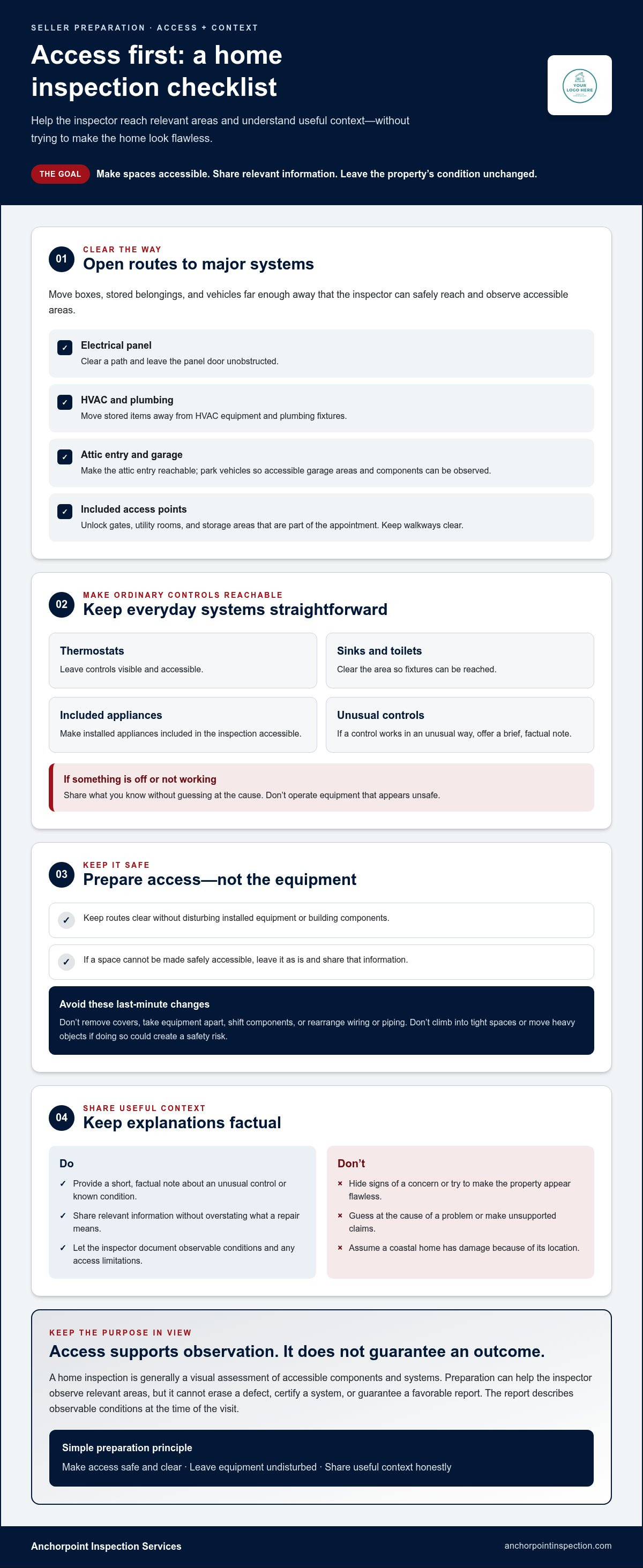
Make the electrical panel, HVAC equipment, plumbing fixtures, attic entry, garage, and routes to other included areas safely accessible. Move boxes, stored belongings, and vehicles far enough away to avoid blocking panels, equipment, doors, or walkways. Keep the area tidy, but don’t remove covers, shift components, or rearrange wiring or piping to make a space look better.
Clear routes to major systems and service areas
Check the access points included in the inspection arrangements. Unlock gates, utility rooms, and storage areas that are part of the appointment, and make sure the attic entry can be reached. In the garage, move items away from visible equipment and areas the inspector needs to view. Don’t climb into tight spaces or move heavy objects if doing so could create a safety risk.
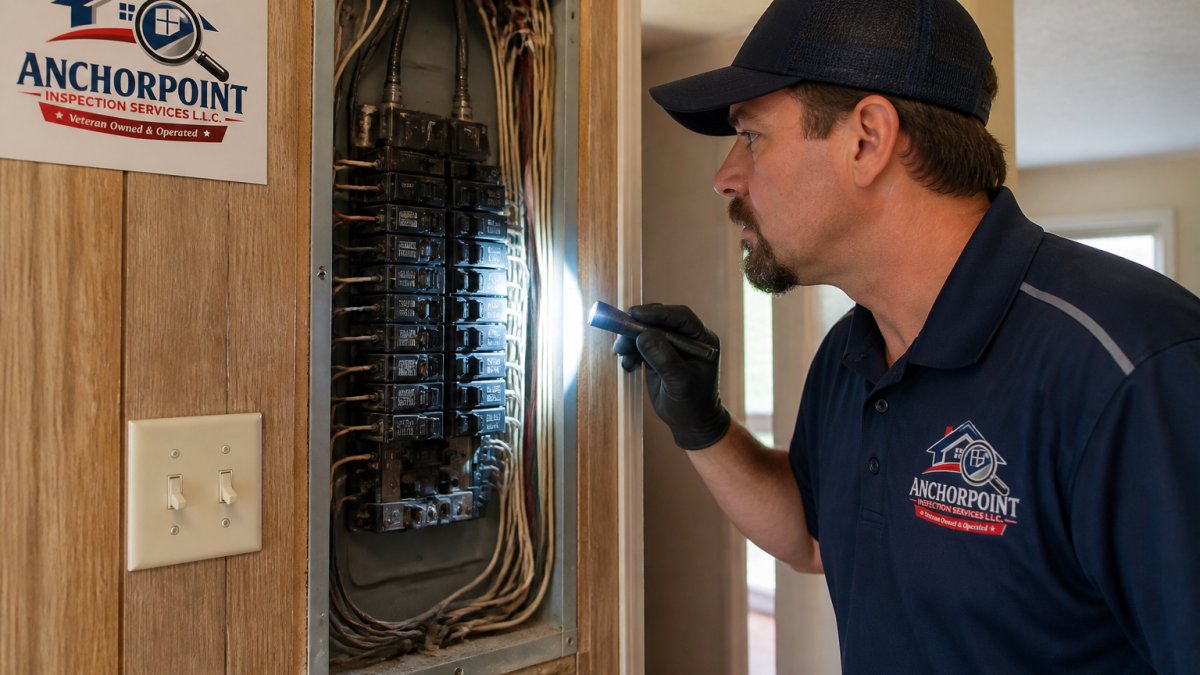
Clear a path to the electrical panel and leave its door unobstructed.
Move stored items away from HVAC equipment, plumbing fixtures, and the attic entry.
Park vehicles so the garage and its accessible components can be observed.
Keep walkways clear without disturbing installed equipment or building components.
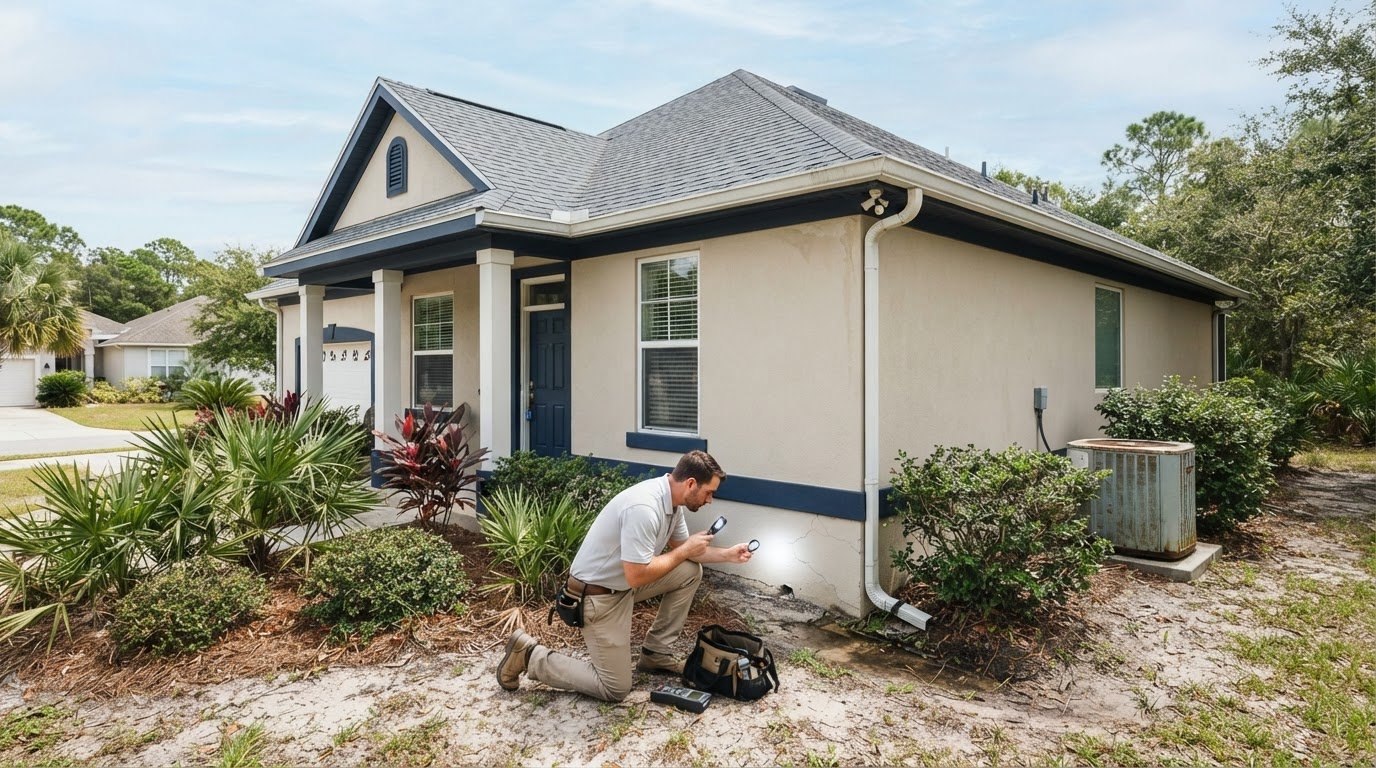
Bay County and nearby coastal properties can experience different weather exposure depending on their location and construction. Don’t assume a home has damage because it’s near the coast, and don’t conceal signs of a concern. The inspection is based on what’s observable at the property. Realtor.com’s Seller's Home Inspection Preparation Checklist also offers a broad reference for thinking through accessible areas inside and outside the home.
Make everyday systems straightforward to operate
Clear access to thermostats, sinks, toilets, and installed appliances included in the inspection. Leave ordinary controls visible. If a control works in an unusual way, provide a brief, factual note rather than a lengthy explanation. Don’t attempt unfamiliar repairs or operate equipment that appears unsafe. If a system is off or a control isn’t functioning, share what you know without guessing at the cause.
Preparation is about access, not alteration. Don’t remove panels, take apart equipment, or shift stored items in a way that could disturb a component or create a hazard. If a space can’t be made safely accessible, leave it as is and share that information. A comprehensive home inspection can also give sellers an independent view of accessible property conditions. Anchorpoint’s comprehensive home inspection is an option for sellers seeking clearer information before listing.
Seller inspection checklist: fix, disclose, or simply prepare?
Not every item on a seller’s inspection checklist calls for a repair. Start by sorting each concern into one of three actions: prepare the area for access, handle straightforward routine maintenance, or document and disclose a known concern. This helps you avoid rushing into unnecessary work while still giving the buyer and inspector an accurate picture of the home.
Instead of treating every item on an inspection checklist as something to fix, consider what each task is meant to accomplish:
Which small tasks are worth handling beforehand?
Simple housekeeping can make visible areas easier to assess. Replace missing light bulbs where practical, and move belongings that block access. Gather available service records, warranties, permits, and receipts related to completed work. These documents can clarify what was done and when. Avoid cosmetic projects that might cover a concern or leave unfinished work; a quick visual improvement isn’t a substitute for understanding the condition underneath.
Use judgment about repairs. A small, familiar maintenance task may be manageable, but an issue involving electrical, plumbing, structural, or other specialized work may call for a qualified professional’s assessment. Don’t attempt repairs you’re not equipped to perform, and don’t describe work as complete unless you have a reasonable basis and records to support that statement.
How to handle known issues and prior repairs
Write down known concerns in plain language, including approximate repair dates and the documentation you have. Keep records together, even if the work is older. Don’t conceal a defect, make unsupported claims about a repair, or treat the inspection as a reason to withhold relevant information.
Florida sellers generally have disclosure responsibilities regarding known hidden facts that materially affect a property’s value and aren’t readily observable. An “as-is” sale doesn’t automatically remove those responsibilities. The details can depend on the circumstances, so this is general information, not legal advice. For guidance on your situation, consult a qualified legal or real estate adviser. To consider an assessment before the buyer’s inspection, use this Florida pre-listing home inspection guide as a planning resource.
What to do on inspection day as the seller
Inspection day is easier to manage when you know what’s expected and who should handle each part. Focus on following the appointment arrangements, making agreed access available, and giving the inspector room to work. You can answer questions about the home without trying to interpret technical observations on the spot.
Prepare the property before the appointment begins
Before the appointment, confirm the agreed entry plan and make any needed keys, codes, or instructions available. Secure pets, and put away medications, valuables, and private documents. Make applicable utilities available when it’s safe and consistent with the arrangements. If Gulf Coast weather could affect access or timing at your property, follow the appointment plan and communicate relevant changes through the agreed contact.
Use this sequence to get ready:
Confirm access. Check that the inspector can enter using the agreed method and reach the areas included in the appointment.
Review utilities. Make relevant utilities available when appropriate, but don’t turn on equipment that appears unsafe or act against the appointment instructions.
Secure pets. Arrange a safe place for animals so they don’t interrupt the inspection or approach open doors and equipment.
Put away personal items. Store medications, valuables, and private papers. Keep any records you plan to share together and easy to find.
Follow the departure plan. If you’re expected to leave, do so as arranged. If you’ll remain available, give the inspector space and let them proceed without interruption.
Stay helpful without trying to direct the inspection
Be available to provide concise, factual context if asked. For example, share when a repair was completed or where a service record is kept, if you know. If you don’t know the answer, say so rather than guessing about a system’s history or condition. The inspector’s role is to make independent observations, so avoid following closely, testing systems for them, or debating a finding during the walkthrough.
After the appointment, review the written report carefully before drawing conclusions. A finding is information to understand, not an instruction to agree to a particular repair or change in sale terms. The buyer and seller can consider next steps through their transaction. This home inspection report guide can help you understand how observations and limitations are presented.
Want a clearer picture of the home’s observable condition before or during the sale process? Explore a comprehensive home inspection with Anchorpoint for an independent assessment.
How a professional inspection can help Bay County sellers move forward
A seller doesn’t have to arrange an inspection before listing. Still, an independent assessment can be useful if you want a clearer view of the home’s observable condition before deciding how to plan maintenance, organize records, or prepare for buyer questions. It provides information to consider, not a required step in every sale.
When an earlier home inspection may be useful
Advance information can help you sort practical tasks from issues that may need further attention. For example, a seller might use an inspection report to identify areas to discuss with a qualified professional or locate documentation for past work. It can also help you prepare a factual account of the property instead of trying to recall details under pressure later.
An early inspection doesn’t guarantee a sale price, ensure a buyer will proceed, or determine what a buyer’s inspector may observe later. It’s a point-in-time assessment of accessible components, and the people involved in the transaction decide how to respond to its findings. Sellers considering how to prepare for a home inspection can review this pre-listing inspection planning guide for more context. An earlier inspection doesn’t replace disclosure or buyer due diligence.
Arrange a residential inspection with a local professional
Anchorpoint Inspection Services provides comprehensive residential inspections in Lynn Haven, Panama City, Panama City Beach, Callaway, Southport, Mexico Beach, Port St. Joe, Santa Rosa, Fort Walton, Niceville, Destin, Pensacola, Gulf Shores, and San Destin. The business is owned and operated by John R. Gramlick III, a Florida-licensed home inspector. A professional inspection can help a seller understand observable conditions in an organized way, making it easier to plan next steps and share relevant information during the sale process.
If you’re weighing whether an independent assessment fits your plans, consider your timing, the information you already have, and whether a clearer understanding of the home would be useful. The goal isn’t to anticipate every buyer’s concern or complete every possible repair. It’s to make informed decisions based on the property’s observed condition while keeping expectations realistic.
A measured approach can make the process feel more manageable: prepare access, keep useful records, and consider an independent assessment when it would help you plan. Learn about Anchorpoint’s home inspection services to see how a comprehensive residential inspection may support your next steps.
Choose a clear next step for your sale
Preparing for a sale doesn’t require having every answer before the buyer’s inspection. It helps to decide what information would make you feel more prepared to move forward. If you’re still weighing how to prepare for a home inspection seller, consider whether an independent assessment could give you useful perspective before you make plans or respond to questions.
There’s no single approach that fits every property or transaction. Your next step might be organizing the records you already have, discussing a known concern with a qualified adviser, or learning what a comprehensive inspection can tell you about the home’s observable condition. The aim is to make decisions with better information, not to predict every finding or buyer response.
For a clear starting point, schedule a comprehensive home inspection with Anchorpoint. An independent assessment can help you understand observable property conditions and plan your next steps.
Frequently Asked Questions
Should I be present during the buyer’s home inspection?
Follow the appointment arrangements, but you don’t need to shadow the inspector. If you stay, be available to answer questions about the home’s history or point out where records are kept, then give the inspector room to work. For example, if asked about a replaced appliance, share what you know rather than offering a technical opinion. If you’re unsure whether to remain, coordinate with the people managing the appointment.
Can a seller fail a home inspection?
No. A home inspection is not generally scored as a pass-or-fail test. The report records observable conditions and may identify components that need attention or couldn’t be inspected. A buyer may decide how to respond to those findings, but the inspection itself doesn’t automatically cancel a sale or require a particular outcome. The purchase contract and any later discussions between buyer and seller shape what happens next.
Do sellers have to make repairs before a home inspection?
Not simply because an inspection is scheduled. Whether repairs are required depends on the sale agreement and any terms negotiated by the parties. Separate simple upkeep from repair commitments: a missing bulb is different from a concern that may call for professional assessment. Review your contract and get qualified legal or real estate advice if you’re unsure about your obligations.
Should I leave the utilities on for a home inspection?
Make utilities available when it’s safe and consistent with the appointment arrangements, since some systems may need power or water to be operated. If a utility is disconnected, tell the person coordinating access rather than attempting to restore service yourself. If you know a system shouldn’t be operated, share that information. The inspector can document any limits on what could be observed or tested during the visit.
How long does a home inspection usually take?
There isn’t one dependable duration for every property. The time needed can vary with the home’s size, layout, accessible areas, and the scope of the appointment. A house with multiple levels or several systems may require a different schedule than a smaller, simpler property. Follow the appointment details and leave some flexibility rather than arranging another commitment immediately afterward. Ask the person coordinating the inspection about the expected schedule.
What should I do with pets during a home inspection?
Arrange for pets to stay somewhere secure and separate from the inspection area, such as with a trusted person or in a closed room that isn’t part of the inspection. A pet loose near an entry can create a safety concern or make it harder to move through the home. Let the appointment coordinator know about any access instructions, such as a room that must remain closed to keep an animal safely contained.
Can the buyer attend the home inspection?
The buyer may be able to attend, but attendance should follow the appointment arrangements and any terms in the purchase agreement. Confirm who is expected to be present so entry and access are clear. If the buyer attends, let the inspector lead the walkthrough and direct technical questions to them. You can provide factual background if asked, while avoiding speculation or trying to negotiate over individual observations during the inspection.
Comments