

Florida 4-Point Inspection: 2026 Homeowner’s Guide
Imagine opening your mail to find a notice that your homeowners insurance policy is at risk of non-renewal unless you provide a specific report within thirty days. For many Floridians in 2026, this is a common reality as carriers tighten their requirements for aging properties. You might feel a sense of urgency or even anxiety about what an inspector will find hidden behind your walls. It's understandable to worry that a 4 point inspection Florida insurance requirement could lead to a list of expensive repairs or, worse, a total loss of coverage in an already difficult market.
We believe that clarity is the best cure for that uncertainty. This guide will show you exactly what a 4-point inspection covers and why insurers have become so selective about the homes they protect. You'll learn how to identify potential deal-breakers in your electrical, plumbing, HVAC, and roofing systems before the inspector arrives. By taking a proactive approach to these four critical areas, you can move forward with the confidence that your home remains a safe, insurable investment for years to come.
Table of Contents
What is a 4-Point Inspection in Florida?
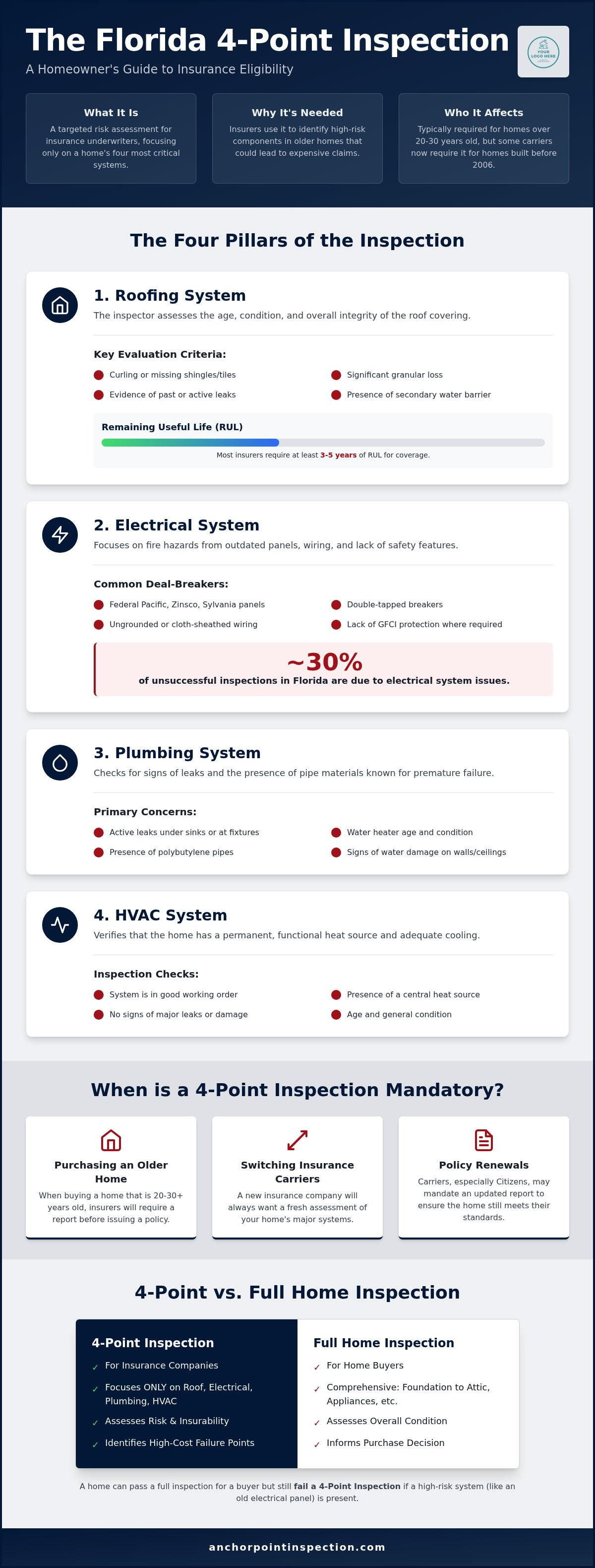
A 4-point inspection isn't a comprehensive evaluation of every cosmetic detail in your home. It's a targeted risk assessment designed specifically to satisfy the requirements of a 4 point inspection Florida insurance provider. Insurers use this specialized report to determine if the primary systems of an older home are too high of a risk to cover. They want to ensure that a house won't suffer a major electrical fire or a massive plumbing leak shortly after they issue a policy. By focusing on the areas most likely to fail, carriers can better manage their exposure in a challenging market.
While a What is a Home Inspection? typically covers everything from the foundation to the attic for a buyer's peace of mind, the 4-point is strictly for the insurance company's underwriting process. It doesn't look at the structural integrity of the walls or the operation of kitchen appliances. It focuses only on the components that most frequently lead to insurance claims. This distinction is vital because it means a home could pass a general inspection but still fail a 4-point report if a specific high-risk system is present.
In 2026, the threshold for these inspections has shifted significantly. While the industry standard used to be 30 years, many carriers now require a report for homes built before 2006. In some coastal regions near Panama City, you might even see this requirement for homes as young as 15 years old. Insurers are becoming more selective as they manage their exposure to Florida's climate and rising repair costs.
The Four Pillars of the Inspection
The inspection concentrates on the systems that are most expensive to repair after a failure. We look at each area with a focus on longevity and safety.
Roofing: We evaluate the age and condition of the shingles or tiles. Most insurers require at least three to five years of remaining service life to grant coverage.
Electrical: We check the brand of your breaker panel and the type of wiring. Electrical system issues are a leading cause of failure, accounting for nearly 30% of unsuccessful inspections in the state.
Plumbing: We look for specific pipe materials, like polybutylene, which are known for failing. We also check for active leaks under sinks and around water heaters.
HVAC: The inspector verifies that the home has a permanent heat source and that the air conditioning system is in good working order.
When is a 4-Point Inspection Mandatory?
You'll likely encounter this requirement during three specific scenarios. First, if you're purchasing a home that is 20 to 30 years old, your lender or insurer will demand a report before closing. Second, switching carriers is a major trigger for a 4 point inspection Florida insurance report. If you decide to find a better rate, the new company will want a fresh look at your home's vitals. Finally, if you're insured through Citizens Property Insurance, they often mandate these inspections for older properties as part of their renewal process to ensure the home still meets their underwriting standards.
Deep Dive: What Inspectors Look For in Each System
When an inspector enters your home, they aren't just checking if the lights turn on or the faucets run. They're gathering evidence for an insurance underwriter who may never see the property in person. This process is essential for Florida homeowners because it provides a visual record of the home's current health. Every report includes clear photography of the roof surface, the electrical panel with its cover removed, the water heater, and the HVAC equipment. These photos prove the condition and age of each system, making the data undeniable for the insurance carrier.
Inspectors in 2026 use standardized forms to document the "Remaining Useful Life" (RUL) of your home's vitals. This isn't a guess; it's a calculation based on the manufacture date, the current physical condition, and local environmental factors. If a system is functional today but is statistically likely to fail within the next two or three years, an underwriter might flag the property as a high risk. Understanding these nuances helps you prepare your home before the official report is submitted.
Roofing and Electrical Standards
Underwriters are hyper-focused on the RUL of your roof. In the current Florida market, most carriers require a minimum of three years of life remaining to offer a standard policy. We look for curling shingles, significant granular loss, or signs of past interior leaks. We also verify the presence of a secondary water resistance barrier, which can significantly impact your eligibility and premium rates.
Certain electrical components are immediate red flags. Panels manufactured by Federal Pacific Electric (FPE) or Zinsco are often considered automatic failures due to known safety issues. We also examine the wiring for modern standards and safety hazards. Double tapping occurs when two wires are connected to a single-pole breaker not designed for it, creating a potential fire hazard that requires professional correction.
Plumbing and HVAC Requirements
The presence of polybutylene piping is a major hurdle for a 4 point inspection Florida insurance report. These grey plastic pipes were common in the 1980s and 1990s but are prone to sudden, catastrophic failure, leading many insurers to deny coverage until they are replaced. We also inspect the water heater for a Temperature and Pressure Relief (TPR) valve and proper discharge piping. If your water heater is over 15 to 20 years old, some insurers will require replacement regardless of its current performance.
Your air conditioner might keep you cool, but if the unit is nearing the end of its expected lifespan, an underwriter might deny coverage. We document the manufacture date and check for any signs of active leaks or excessive corrosion in the drain pan. Ensuring these systems are documented correctly is a specialty of our team, and you can schedule your 4-point inspection to get an accurate, professional assessment of your home's current standing.
4-Point vs. Wind Mitigation: Which Do You Need?
Homeowners in the Florida Panhandle often find themselves confused by the various reports requested by their insurance agents. You might be asked for a 4-point report, a wind mitigation, or both at the exact same time. While they both involve an inspector visiting your property, they serve completely different purposes in the eyes of an underwriter. One is about whether the company will take you on as a client, while the other is about how much of a discount they'll give you on your annual premium. Understanding this distinction is the first step toward managing your home's carrying costs effectively.
For many residents in areas like Panama City, ordering these two inspections as a bundle is the most efficient path forward. Most inspectors offer a combined rate, and since the professional is already on-site, it saves you from scheduling multiple appointments. More importantly, having both reports ready ensures your agent can shop for the best possible 4 point inspection Florida insurance rates with all the necessary data in hand.
The Eligibility Report: 4-Point
The primary goal of the 4-point inspection is to prove that your home is a safe, insurable asset. It's essentially a "pass or fail" check for the four major systems we've discussed. If your home is over 20 years old, this report is usually mandatory. Without a clean 4-point, most carriers won't even provide a quote, regardless of how beautiful the rest of the house looks. You can find more details on these requirements in our 2026 Guide to Florida Home Insurance Inspections. This report doesn't typically lower your bill; it simply grants you access to the insurance market.
The Discount Report: Wind Mitigation
A wind mitigation inspection Panama City homeowners frequently request is the "discount report." It focuses entirely on how well your home can withstand a major storm. We look for specific construction features like roof-to-wall attachments, the shape of your roof, and the type of protection on your windows and doors. Unlike the 4-point, this inspection is technically optional. However, it's highly recommended because the credits you earn for storm-resistant features can often pay for the cost of the inspection in the very first year of your policy. These two reports work together to ensure you're both eligible for coverage and paying the lowest rate available for your property's specific safety features.
Preparing for Success: How to Pass Your Inspection
Passing a 4 point inspection Florida insurance assessment requires a proactive mindset. Many homeowners wait until the inspector is at the door to wonder if their systems will pass. This often leads to avoidable delays or policy cancellations that are difficult to reverse. By identifying deal-breakers early, you can make minor repairs that prevent a major insurance headache. If you've recently upgraded your plumbing or replaced an electrical panel, keep your permits and invoices ready. These documents act as professional proof of maintenance and can often clear up questions about the remaining useful life for the underwriter.
Preparation isn't just about making repairs; it's about providing clear access and information. When an inspector can easily see the water heater, the electrical panel, and the HVAC unit, the process moves faster and with fewer uncertainties. We recommend clearing out storage closets or moving furniture that might block these critical components. A clear path allows for better photography, which is exactly what your insurance carrier needs to see to approve your policy.
Common Red Flags and How to Fix Them
Electrical hazards are a primary cause of immediate rejection in the Florida market. Walk through your garage, laundry room, and attic to look for exposed wiring or missing junction box covers. These are simple, low-cost fixes that demonstrate a well-maintained home to the insurance carrier. Similarly, your roof's appearance matters more than you might think. Clear any accumulation of pine needles or debris from the roof surface and gutters. Significant debris can trap moisture and hide the true condition of the shingles, which might lead an inspector to report an undetermined condition. Finally, ensure all utilities are active. If the water or power is off, the inspector cannot verify system functionality, which usually results in an incomplete report that insurers will reject immediately.
Homeowner’s Pre-Inspection Checklist
Take a few minutes to perform your own walkthrough before scheduling. Open the cabinets under every sink and look for moisture, active drips, or staining. If you find a leak, fix it now rather than waiting for the report to flag it. Check your water heater's serial number; the first four digits often indicate the month and year of manufacture. If the tank is over 15 years old, be prepared for the insurer to ask for a replacement plan. You should also test your HVAC system in both heating and cooling modes to ensure the thermostat and air handler respond correctly, even if it's a warm day. Visible mold or water damage is a top reason for 4-point failure in 2026. Addressing these aesthetic and functional issues before our arrival creates a smoother path to coverage. If you're ready to secure your property's future, book your 4-point inspection with our experienced team today.
Why Choose Anchorpoint for Your Insurance Inspection?
Choosing an inspector is about more than just checking a box for your insurance agent. At Anchorpoint Inspection Services, led by John R. Gramlick III, we understand that a 4 point inspection Florida insurance report is a high-stakes document that directly impacts your ability to protect your home. Our team doesn't just collect raw data; we provide the professional authority and supportive reassurance you need to navigate the underwriting process. We act as your diligent mentor, ensuring you understand exactly what the report says and why it matters for your coverage. This educational approach helps lower the anxiety often associated with insurance renewals in our volatile 2026 market.
Our commitment to accuracy and transparency means that we provide reports that insurers can trust. We focus on the long-term well-being of our clients, offering a grounded perspective that goes beyond a simple walkthrough. When you receive your digital report, it isn't just a list of findings. It's a clear, step-by-step roadmap that helps you manage your property's risks and maintain your eligibility for the best possible insurance rates.
Local Knowledge Matters in the Panhandle
Living on the coast presents unique challenges for home maintenance that inland inspectors might overlook. In Panama City Beach and Lynn Haven, the salt air and high humidity accelerate corrosion on HVAC coils and electrical components. Our 4-point inspection in Bay County is tailored to these specific environmental stressors. We are deeply familiar with local building codes and the evolving preferences of Florida insurance carriers. This local expertise ensures that your report is technically proficient yet highly accessible, providing the specific clarity that underwriters demand for properties in the Panhandle.
Booking Your Inspection
We've designed our process to be as methodical and steady as the inspections we perform. Whether you need an assessment for a residential home or a commercial property, our scheduling is designed to be functional and convenient. Many of our clients find value in combining their required insurance reports with other specialized assessments for total property peace of mind. For example, you can easily bundle your 4-point with a pool inspection Lynn Haven FL residents trust to protect their families and investments. After you receive your report, we remain available to guide you through the findings, ensuring you feel empowered to make informed decisions about your home's future.
Securing Your Home's Future in the Florida Market
Maintaining a property in the Panhandle requires a proactive approach to both maintenance and documentation. By focusing on the four critical pillars of your home's health, you can navigate the 2026 insurance landscape with confidence. You now understand how to identify common deal-breakers and why the distinction between eligibility reports and discount-focused inspections matters for your bottom line. This knowledge empowers you to address potential issues before they become obstacles to your coverage.
Securing a 4 point inspection Florida insurance report is a vital step in protecting your investment and ensuring long-term peace of mind. As a Florida Licensed Home Inspector with deep expertise in Bay County insurance requirements, our team focuses on providing the professional accuracy that underwriters trust. We prioritize your schedule by delivering detailed digital reports quickly, allowing you to move forward with policy renewals or home purchases without unnecessary stress.
If you're ready to ensure your property meets the latest standards, Schedule Your 4-Point Inspection with Anchorpoint Today. We view our role as a partnership in your homeownership journey, and we're here to help you maintain a safe, insurable home for years to come.
Frequently Asked Questions
How long is a 4-point inspection valid in Florida in 2026?
A 4-point inspection report is typically valid for 12 months from the date of the assessment when you're applying for a new policy or switching carriers. Insurance companies in the Florida Panhandle require recent data to accurately assess their current risk. If your report is older than one year, you'll likely need to schedule a new walkthrough to ensure your documentation meets the latest underwriting standards for properties in Panama City or Lynn Haven.
Can a 4-point inspection cause my insurance to be canceled?
Yes, a report that identifies significant hazards can lead to a non-renewal or cancellation notice if repairs aren't made. Insurers use the 4 point inspection Florida insurance data to decide if a home meets their safety thresholds. If the inspector finds an outdated electrical panel or an active plumbing leak, the carrier may give you a specific timeframe to professionally correct the issue before they terminate your coverage.
How much does a 4-point inspection typically cost in the Panhandle?
While we don't provide fixed pricing here, industry rates in the Panhandle vary based on the home's size and whether you bundle the service with a wind mitigation report. Most homeowners find that the professional fee is a small investment compared to the potential savings of maintaining continuous coverage. You should check with local providers in Panama City or Lynn Haven for current market rates tailored to your specific property type and age.
Do I need a 4-point inspection if I just bought a new construction home?
Homeowners who purchase a new construction home typically don't need a 4-point inspection because the systems are modern and meet current building codes. These reports are specifically designed for older properties, often those built 20 to 30 years ago. For a new home, we recommend a comprehensive home inspection or an 11-month warranty inspection to identify any builder defects before your initial coverage period expires and your warranty protection ends.
What are the most common reasons for failing a 4-point inspection?
The most frequent reasons for failure include roofing that has less than three years of remaining life or the presence of hazardous electrical panels like Federal Pacific. Plumbing issues, such as active leaks or the presence of polybutylene pipes, also trigger immediate denials. In 2026, underwriters are also looking closely at the age of water heaters and HVAC systems, often requiring replacement if they've exceeded their expected functional lifespan in our coastal climate.
Can I perform my own 4-point inspection to save money?
You cannot perform your own 4-point inspection for insurance purposes. Florida law requires these reports to be completed by a licensed professional, such as a Florida licensed home inspector, a professional engineer, or a registered architect. Insurance carriers in Panama City Beach will only accept forms that carry the signature and license number of an authorized expert who can verify the condition of the four primary systems for the underwriting department.
Does a 4-point inspection affect my home's market value?
While a 4-point inspection doesn't directly set your home's appraisal value, it significantly impacts the property's marketability and ease of sale. A home that can't pass this inspection is essentially uninsurable for most buyers, which can lead to failed contracts or lower offers. Providing a clean report to potential buyers demonstrates that the major systems are in good standing, making the closing process much smoother for everyone involved in the transaction.
What happens if the inspector finds polybutylene plumbing?
If polybutylene plumbing is identified, most insurance carriers will deny coverage or exclude water damage from your policy until the pipes are replaced. This grey plastic piping is known for sudden failures that lead to catastrophic indoor flooding. We recommend consulting with a licensed plumber to discuss replacement options if this material is found during your 4 point inspection Florida insurance assessment to ensure your home remains protected and eligible for standard coverage.


Comments