

Condo Inspection in Niceville, FL: Guide for Buyers
Could a condo look move-in ready while still leaving important questions about the unit unanswered? Before buying in Niceville, it’s reasonable to want a clearer picture of visible conditions and possible maintenance concerns. Condo inspection services Niceville FL buyers can use help assess the unit itself, but they don’t replace a review of association records or shared areas.
A condo inspection gives you information about the condition of the space you’re considering, helping you understand findings before making a decision. It can also help separate unit-level questions from issues that may involve the association, such as building-wide inspections, reserves, or maintenance of common areas. Those responsibilities aren’t all covered by an individual unit inspection.
In this guide, you’ll learn what a condo inspection can clarify, how it differs from an association review, and what an inspection report can and can’t tell you. Anchorpoint Inspection Services provides condo evaluations in Niceville and across Lynn Haven, Panama City, Panama City Beach, Callaway, Southport, Mexico Beach, Port St. Joe, Santa Rosa, Fort Walton, Niceville, Destin, Pensacola, Gulf Shores, and San Destin. Clear findings can support informed next steps in your purchase.
Table of Contents
Why schedule condo inspection services in Niceville, FL?
Buying a condo in Niceville means assessing a specific unit while also understanding that some parts of the property may be shared or managed by the association. An inspection helps answer an important first question: what observable conditions are present inside the unit at the time of the visit? For buyers comparing properties in Niceville and the surrounding area, documented findings can turn a general concern into practical questions to discuss during the transaction.
Condo inspection services Niceville FL buyers arrange can provide a clearer basis for planning. A visible plumbing leak, for example, may prompt questions about its source, repair history, or whether follow-up is appropriate. A sticking door or damaged finish may be worth noting as a maintenance item. The inspector’s observations don’t decide whether you should buy. They give you information to weigh alongside the price, association details, and your own priorities.
What a condo inspection can help a buyer understand
A condo inspection is a time-specific evaluation of observable conditions in the unit, not a warranty against future problems. An inspector may note visible concerns and explain why they matter, helping you distinguish an item to monitor from one that may call for further attention. A general overview of the role of inspectors is available from Building inspection Wikipedia.
Use the findings to shape useful next steps. If an observation raises a question, consider whether you need more information, follow-up evaluation, or a maintenance plan. The report describes conditions observed during the inspection. It can’t predict how long a component will last or guarantee that a new issue won’t develop after the visit.
Why a unit evaluation is not the same as a whole-building review
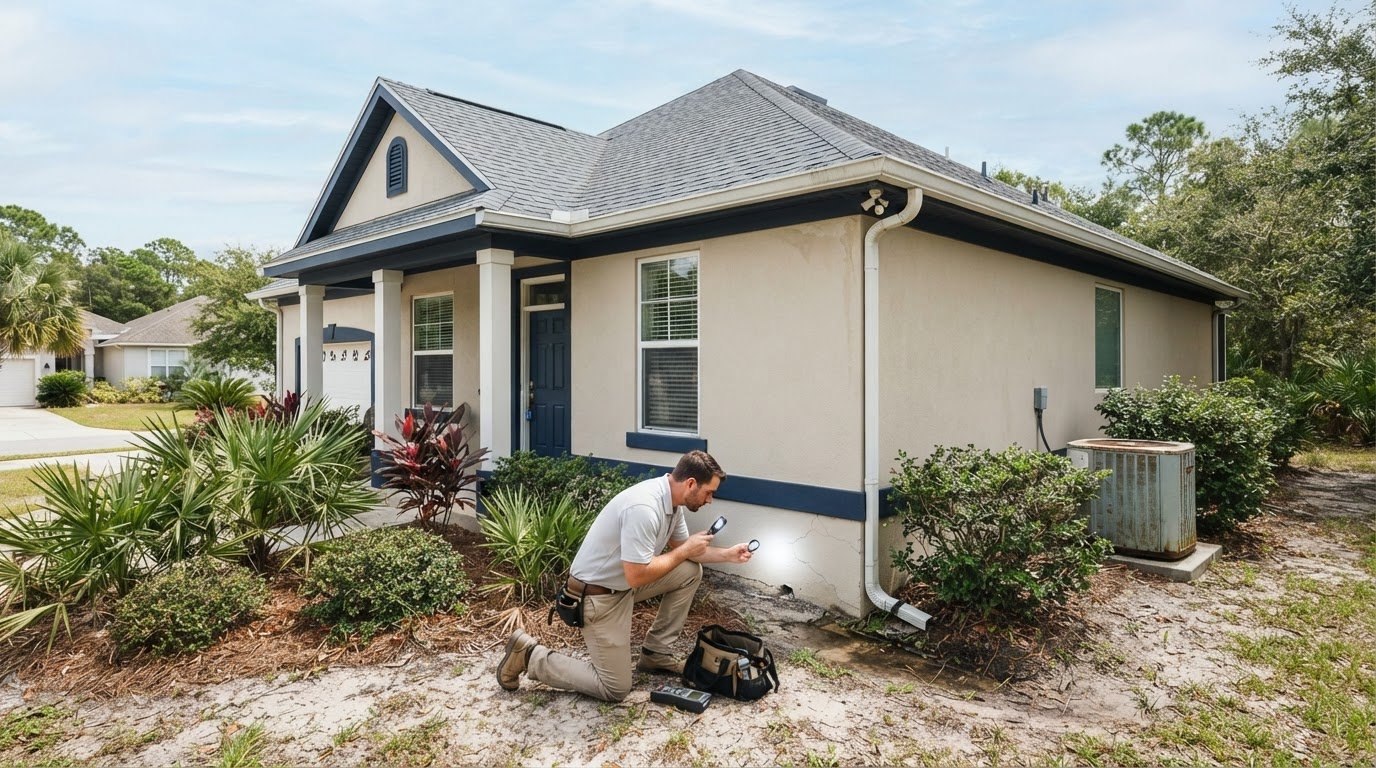
Condominium ownership commonly distinguishes the interior unit from shared property, but the exact boundaries and responsibilities depend on the property’s documents. An individual inspection focuses on areas that are accessible within the agreed scope. It shouldn’t be treated as an evaluation of every roof, structural element, common corridor, or association-maintained system.
That distinction matters when an observation seems connected to a larger building concern. A condition inside a unit may lead you to ask whether there is relevant maintenance history or information about shared components. Pair the unit findings with available association records and information about common areas to build a more complete picture. Each source offers a different kind of insight.
Before drawing conclusions, consider three questions:
What was observed? Identify the condition and where it appears in the unit.
What remains outside the inspection? Note inaccessible or concealed areas and shared property.
What information would help? Use the observation to guide questions about maintenance, association responsibilities, or possible follow-up.
This measured approach keeps the report in perspective. It records visible conditions at a particular time, not the building’s complete history or a promise about its future. Understanding both the unit’s condition and the limits of the evaluation supports informed conversations and a deliberate property decision.
What does a Niceville condo inspection evaluate inside the unit?
A condo inspection gives a buyer a structured look at visible conditions within the unit, within the scope of the inspection performed. Think of it as an on-site evaluation of what can be observed safely and readily, rather than an assumption that every component can be accessed or tested. For buyers considering condo inspection services Niceville FL, understanding the scope helps make the findings easier to interpret.
Visible interior conditions and accessible components
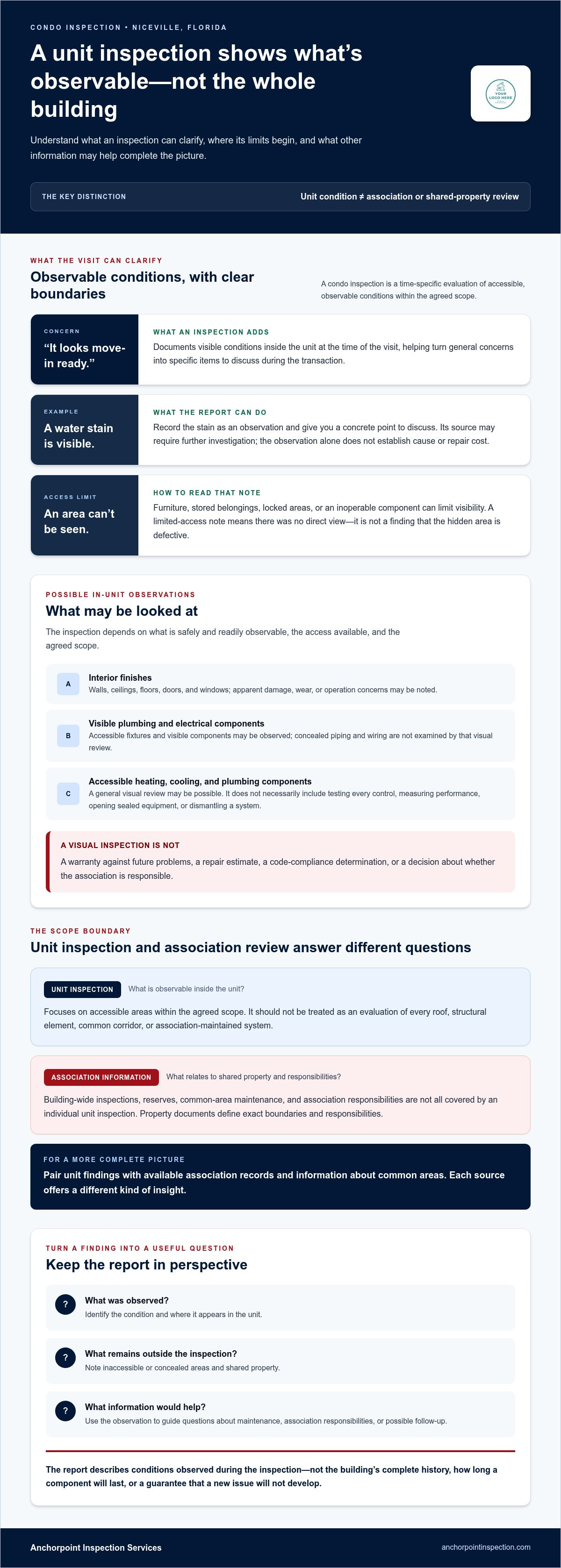
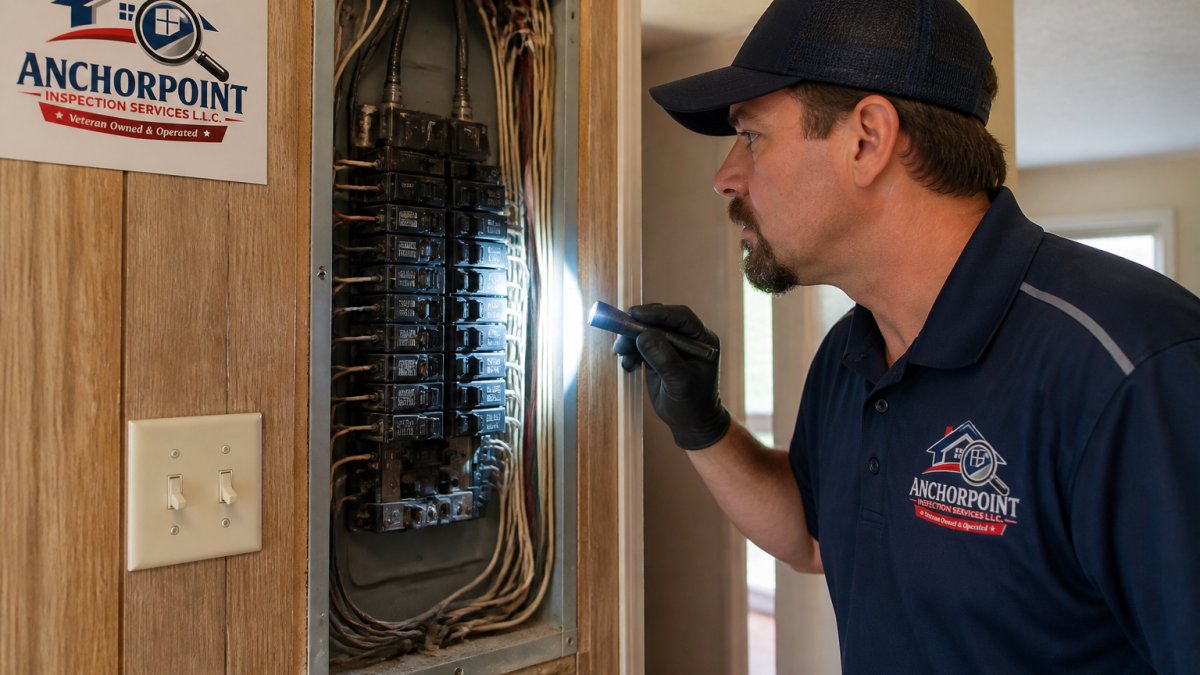
An inspection may include observations of interior finishes and visible elements such as walls, ceilings, floors, doors, and windows. The inspector may note apparent damage, wear, or operation concerns. Accessible plumbing fixtures and visible electrical components may also be observed, but that doesn’t mean concealed wiring or piping is examined.
Access and site conditions affect what can be observed. Furniture, stored belongings, locked areas, or an inoperable component can limit visibility or evaluation. A note about limited access isn’t a finding that a hidden area is defective. It tells you where the inspection couldn’t provide a direct view. If a particular concern matters to your decision, share it before the inspection so it can be considered within the agreed scope.
Observed conditions also have limits. An inspector documents what is visible, not a repair estimate, code-compliance determination, or decision about whether the association is responsible. For example, a water stain can be recorded as an observation, but its source may require further investigation. The finding gives you a concrete point to discuss rather than a conclusion about cause or cost.
Mechanical systems and inspection limits
Accessible heating, cooling, and plumbing components may receive a general visual review as part of the inspection. What can be evaluated depends on the equipment, access, and agreed scope. A visual observation doesn’t necessarily involve testing every control, measuring performance, opening sealed equipment, or dismantling a system. Concealed spaces and components aren’t made visible simply because they serve the unit.
Pay attention to the difference between an observation and a diagnosis. If the inspector notes an unusual sound, visible damage, or a condition that can’t be fully assessed during the visit, the report may identify why further evaluation could be appropriate. A qualified specialist can investigate a particular system or concern in greater depth. That assessment can help clarify next steps without treating the original inspection as a repair plan.
As you review findings, group them by the questions they raise: Is this a visible maintenance concern? Is more evaluation needed to understand the cause? Could the issue relate to a shared component or association responsibility? This approach keeps observations useful without assuming an inspection settles every technical, financial, or ownership question.
Anchorpoint’s condo evaluations help Niceville buyers understand observed unit conditions and consider informed next steps. Explore Anchorpoint condo inspection services as part of your purchase planning.
Condo inspection vs. association review: what is the difference?
A unit inspection and an association review answer different buyer questions. The inspection focuses on observable conditions within the condo unit and accessible areas included in the agreed scope. Association records and building-level information can help explain shared-property responsibilities, maintenance planning, and the building’s broader history. Both sources matter, but one doesn’t replace the other.
Which questions belong to the unit inspection?
Use the inspection to understand what was observable inside the unit during the visit. If a visible condition raises concern, the findings can help you frame a focused follow-up question: Is more evaluation needed, or should I learn about the maintenance history? The inspection doesn’t determine who owns a component, who must pay for work, or what the association’s policies require. Those questions depend on separate information.
Which questions belong to the condominium association?
Questions about shared-area maintenance, association finances, or building-wide work call for association information. Buyers can review available governing documents, budgets, meeting records, and maintenance information to understand what has been discussed or planned. If a unit observation seems connected to a shared component, use it to guide a related records question rather than assuming the inspection answers it.
For example, an observation near a ceiling may give you a reason to ask about relevant maintenance history. It doesn’t, by itself, establish the source of the condition or whether a shared component is involved. Keeping those questions distinct helps you seek the right information from the right source.
Condo inspection services Niceville FL buyers arrange are one part of due diligence. A unit inspection provides information about the space you’re considering, while association documents offer a separate view of shared responsibilities and building matters. Neither source should be treated as a substitute for the other.
If you need help interpreting governing documents or understanding legal responsibilities, consult a qualified legal professional. An inspector can explain observed physical conditions within the inspection scope, but association decisions and legal interpretations are separate matters. Combining unit findings with relevant association information gives you a more balanced foundation for deciding what to ask next and how to proceed with the purchase.
How to prepare for a condo inspection in Niceville
A little preparation can help keep the inspection focused on the condo unit and the questions that matter to you. Before the appointment, coordinate entry with the appropriate person and make sure areas included in the agreed scope can be accessed. If a room, storage area, or system is locked or blocked, the inspector may not be able to observe it. Shared spaces may require separate access and aren’t automatically part of a unit inspection.
Before the inspector arrives
Start with access, then gather details that may help explain the property’s history. Available information such as prior repair records, appliance or system documentation, and seller disclosures can provide useful context, but it doesn’t replace an on-site inspection. Prepare a short list of concerns so you can raise them during the appointment.
Coordinate entry. Arrange access to the unit and any areas included in the inspection scope.
Note specific concerns. Identify visible conditions or components you want the inspector to pay attention to.
Gather available details. Keep relevant property information handy, while recognizing that documents can’t show current conditions on their own.
Flag access limits. Mention locked rooms, obstructed areas, or shared spaces that may need separate arrangements.
For condo inspection services Niceville FL buyers schedule, sharing concerns in advance helps make the visit more useful. It gives the inspector context without turning a buyer’s question into a promised conclusion about cause, repair responsibility, or cost.
During and after the evaluation
If practical, attend the inspection. Seeing an observation in place can make it easier to understand what the inspector is describing and ask a focused question. Attendance doesn’t expand the agreed scope or provide access to areas that remain locked or obstructed.
Afterward, read the findings carefully and note which observations are clear, which raise follow-up questions, and whether any limited-access areas need attention. The home inspection report guide can help you understand documented findings and organize your next questions.
If an inspection observation prompts a question specifically about insurance, the Florida home insurance inspection guide offers related context. Keep that separate from the condo evaluation: an insurance-related inspection and a buyer’s unit assessment serve different purposes.
Anchorpoint Inspection Services provides condo evaluations in Niceville to help buyers understand observed unit conditions and consider informed next steps. Arrange a condo inspection with Anchorpoint as part of your purchase planning.
Arrange a condo inspection with Anchorpoint in Niceville, FL
Once you understand what a unit inspection can and can’t tell you, arranging one is a practical step in evaluating a condo purchase. Anchorpoint Inspection Services provides condo evaluations in Niceville. The company is owned and operated by John R. Gramlick III, a Florida-licensed home inspector.
An inspection documents observed conditions within the agreed scope at the time of the visit. It can give you useful information about the unit, but it doesn’t replace a review of association records or determine responsibility for repairs. Sharing context before the appointment helps keep the evaluation focused on the property and your questions.
What to share when arranging an inspection
Start with the condo’s location and your transaction timing, then provide available access details. Mention any areas that may be locked or difficult to reach, and identify specific concerns you’d like the inspector to consider. These details help establish expectations about what can be observed within the agreed scope. They don’t guarantee access to shared areas or a particular inspection outcome.
Property location: Provide the unit’s Niceville address or other identifying details.
Transaction timing: Share relevant dates so the inspection can be considered within your purchase process.
Access arrangements: Explain how entry will be coordinated and note any areas with limited access.
Specific concerns: List the components or visible conditions you especially want to understand.
Keep your questions concise and practical. For example, note a condition you saw during a viewing or a component whose history you’re unsure about. If you have relevant property information, such as available maintenance or repair records, have it ready to provide context. Documents can support the discussion, but they don’t show the current condition of the unit as directly as an on-site evaluation.
Use inspection findings to plan your next step
After the evaluation, review the documented observations and sort them into questions about the unit, possible specialist follow-up, or association information. Discuss findings with your real estate professional as appropriate for your transaction. If a concern involves a shared component, association records may offer separate context. If it calls for technical diagnosis, further specialist evaluation may help clarify it.
Keep the report’s scope in view as you decide what to do next. A documented observation is a starting point for informed questions, not a repair estimate, legal conclusion, or prediction about future conditions. This distinction helps you focus on information you still need without treating every note as an emergency or overlooking an item that deserves follow-up.
If you’re considering condo inspection services Niceville FL buyers can use to better understand a unit before making a decision, Anchorpoint offers condo evaluations to support your planning. Share the property details and your concerns, then arrange a condo inspection with Anchorpoint.
Move forward with a clearer picture
A condo purchase doesn’t require you to have every answer before taking the next step. It helps to know what information you have, what still needs clarification, and which questions belong with the unit inspection versus the association. Use the findings as a practical checkpoint: consider what deserves follow-up, what fits your maintenance plans, and what information would help you feel ready to decide.
For buyers seeking condo inspection services Niceville FL, Anchorpoint Inspection Services can help make the unit’s observable condition easier to understand. A measured evaluation supports thoughtful decisions without promising certainty about concealed conditions or future maintenance.
Share the property details and any concerns you’d like considered, then arrange a condo inspection with Anchorpoint Inspection Services.
Frequently Asked Questions
What does a condo inspection include in Niceville, FL?
A condo inspection in Niceville generally focuses on visible conditions inside the unit and accessible components within the agreed scope. This may include interior surfaces, doors, windows, plumbing fixtures, and accessible heating or cooling equipment. The observations depend on the property and access during the visit. Buyers using condo inspection services Niceville FL can use the findings to prioritize questions about maintenance or possible follow-up.
Should I get a condo inspection before buying?
Yes, a condo inspection can provide useful information before you decide whether to proceed with a purchase. It may help you notice conditions that weren’t apparent during a brief showing, such as a fixture that operates unexpectedly or visible wear around a window. Consider the findings alongside your transaction details and association information. An inspection is one source of information, not a prediction of future conditions.
Does a condo inspection include common areas?
Not automatically. A buyer’s condo inspection usually focuses on the unit and accessible areas within the agreed inspection scope. A lobby, roof, elevator, or shared utility room may be managed separately and may not be accessible as part of a unit evaluation. If a common-area concern matters to your purchase in Niceville, review relevant association information and clarify which areas were included in the inspection.
Can a condo inspection identify issues the association is responsible for?
An inspector may observe a condition inside the unit that raises a question about a shared component, but the inspection doesn’t determine who is responsible for repairs. For example, a stain near a ceiling can be documented without establishing its source or ownership responsibility. Use the observation to guide a review of association records or a focused question to the appropriate professional. Responsibility depends on property documents and applicable arrangements.
How long does a condo inspection take?
There isn’t one reliable duration for every condo inspection. The time needed can depend on the unit’s size and layout, the agreed scope, access to components, and conditions encountered during the visit. A locked room or obstructed area may limit what can be observed rather than simply adding inspection time. For planning, allow room for access coordination and any questions you want to discuss during the evaluation.
Should I attend my condo inspection?
Attending can help you understand where an observation is located and ask questions while the inspector is on site. If you can’t attend, prepare a concise list of concerns beforehand and review the findings afterward. For a Niceville purchase, you might note a visible condition you spotted during the showing or a particular fixture you want evaluated. Attendance is helpful for context, but it doesn’t expand the agreed scope.
Is a condo inspection the same as a 4-point inspection?
No. A condo inspection helps a buyer understand observable conditions in the unit, while a 4-point inspection is a separate, more focused assessment of key systems often considered for insurance purposes, including the roof, electrical, plumbing, and heating or cooling systems. They serve different purposes and aren’t interchangeable. Which assessment is relevant depends on your purchase questions and any insurance documentation needs.
Do I still need an inspection if the condo association maintains the building?
An association’s maintenance role doesn’t show the current condition of every component inside your particular unit. A buyer may still want an evaluation of unit-specific items, such as plumbing fixtures, interior doors, or accessible equipment. Association records can add separate context about shared-property maintenance, but they don’t replace a direct look at the unit. In Niceville, consider both sources as you build a fuller picture before deciding.

Comments