

Commercial Property Due Diligence Checklist for Florida Sites
A commercial property's most important risks aren't always visible from the street. A commercial property due diligence checklist for Florida should cover environmental conditions, title and access rights, zoning and permitted use, financial and lease records, and the condition of the building and its systems. Commercial real estate transactions commonly allow 30-60 days for due diligence, so organizing these checks early helps you use the review period effectively.
Look beyond the purchase price: a building’s roof, drainage, electrical, plumbing, and HVAC systems can affect its condition and future maintenance costs. This guide explains commercial property due diligence in Florida, with a practical checklist covering environmental review, property rights and surveys, zoning and permits, financial and lease records, and building systems. It also explains how a commercial property inspection can help you understand a site’s physical condition before making a decision.
Table of Contents
Phase I and Phase II environmental site assessments
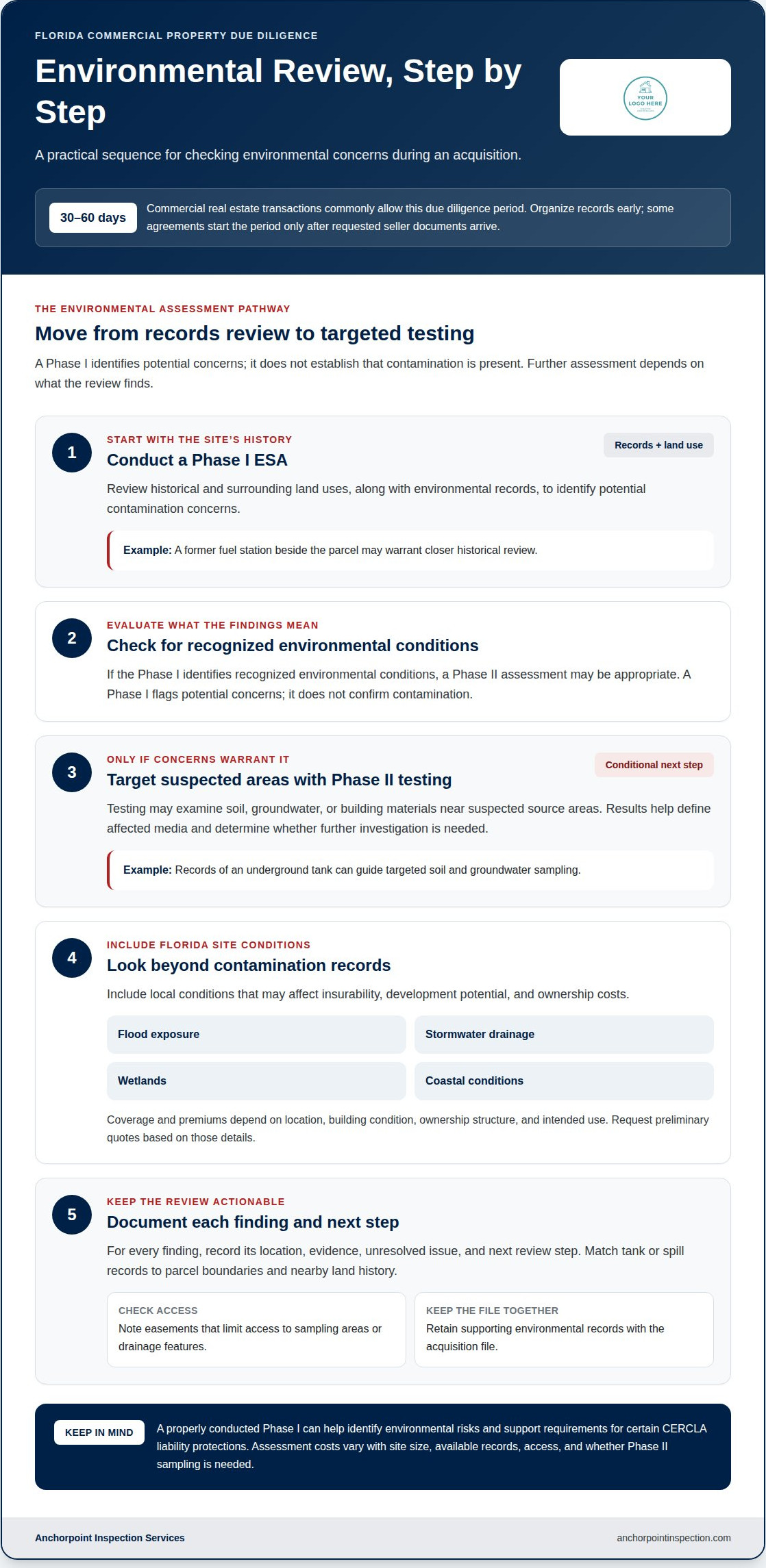
For a Florida acquisition, begin with a Phase I Environmental Site Assessment (ESA). It reviews the property’s historical and surrounding land uses, along with environmental records, to identify potential contamination concerns. For example, a former fuel station beside a parcel may warrant closer historical review. A Phase I identifies potential concerns; it does not establish that contamination is present.
If a Phase I identifies recognized environmental conditions, a Phase II assessment may be appropriate. Testing may examine soil, groundwater, or building materials near suspected source areas. For example, records of an underground tank can guide targeted soil and groundwater sampling. Results help define affected media and determine whether further investigation is needed. A properly conducted Phase I can help identify environmental risks and support requirements for certain CERCLA liability protections.
Commercial real estate transactions commonly allow 30-60 days for due diligence, so organize records promptly. Some purchase agreements start that period only after requested seller documents arrive. Record each finding’s location, evidence, unresolved issue, and next review step. Match any tank or spill record to parcel boundaries and nearby land history. Note easements that limit access to sampling areas or drainage features. Keep supporting environmental records with the acquisition file.
Include flood exposure, stormwater drainage, wetlands, and coastal conditions in Florida’s environmental review. These factors can affect insurability, development potential, and ownership costs. Coverage and premiums depend on location, building condition, ownership structure, and intended use, so request preliminary quotes based on those details. Environmental assessment costs vary with site size, available records, access, and whether Phase II sampling is needed.
Verify rent rolls against executed leases, amendments, guaranties, side letters, and available tenant estoppels. Compare billed rent, concessions, lease dates, renewal options, and tenant-paid expenses with operating records. Reconcile expenses against invoices, maintenance records, and the trailing 12-month operating statement. Lease abstracts alone can omit terms affecting rent increases, repairs, and tenant responsibilities.
Title, easements, access rights, and land surveys
Start with the title commitment and trace ownership through recorded documents. Review exceptions for utility easements, access rights, liens, and reciprocal easement agreements. These records can reveal obligations affecting parking, shared drives, drainage, or future construction. For example, an access easement may serve neighboring parcels while limiting where you can place site improvements.
Compare the title record’s legal description with a current land survey and the property as improved. A survey can show whether buildings, fences, driveways, or pavement cross property lines or recorded easements. It can also identify setback concerns and access limitations. Resolve discrepancies before finalizing purchase terms, since location or access conflicts may affect development plans and negotiations.
For a commercial real estate transaction, specify the survey scope and intended users early. The 2026 ALTA/NSPS standards include Table A items addressing additional survey details. Table A Item 20 formalizes documentation of potential encroachments, setback issues, and access concerns. Table A Item 15 addresses drone imagery sources and discussion of accuracy implications. These details help buyers understand what the survey depicts and its limitations.
Review recorded liens and other title exceptions alongside the ownership history. Match each exception to the parcel and determine whether it affects access, utilities, or use. A title insurance policy, typically issued at closing, protects against certain ownership disputes. It does not replace reviewing the title commitment, survey, and recorded documents before closing.
Review the last three years of real estate tax bills and records for assessments or tax liens. Don’t rely solely on the seller’s current tax bill to estimate future cash flow, because the assessed value may reset after a sale. Compare listed charges with title records and account for any unresolved lien in the transaction review.
Read the survey and title exceptions together. If a recorded utility easement crosses a planned building area, determine how it affects the intended site layout. A current ALTA survey should align with the title record and improved site, giving buyers a clearer basis for resolving discrepancies before closing.
Zoning, permitted uses, and regulatory compliance
Florida zoning determines how a commercial property may legally be used. Compare the parcel’s zoning designation with your intended operation, then verify permitted uses, density limits, setbacks, signage rights, and parking compliance. A site suitable for retail may not allow a planned warehouse. Restrictions can affect tenant operations, future improvements, and lender review.
Confirm that the property has valid certificates of occupancy and permits for renovations. Compare permit records with visible additions, such as a converted office or expanded loading area. Unpermitted work or unresolved violations can delay closing and add costs. Review open code violations and identify any remaining corrections or documentation before proceeding.
Verify the proposed use against current zoning because a mismatch can limit occupancy or require additional approvals.
Review parking, setbacks, signage, and density because each can constrain site operations or future changes.
Check accessibility and ADA-related conditions because barriers may affect how occupants and customers use the property.
Review fire safety features and available inspection or code records because unresolved concerns can affect readiness and compliance.
Florida zoning, land-use rules, building codes, and permitting all affect whether a property can support your intended business. Review zoning, permits, certificates of occupancy, accessibility, fire safety, and open violations together. One unresolved issue can change a project’s feasibility.
Commercial real estate disclosure, contract, and due diligence deadlines depend on the purchase agreement. Transactions commonly allow 30-60 days for review, and an agreement may start that period after requested seller documents arrive. The contract may also allow renegotiation or cancellation if due diligence uncovers problems.
Review seller disclosures and available records for litigation, code notices, and unresolved compliance matters. Compare each item with the property’s permits and current use. If a tenant’s business differs from the site’s permitted use, identify the conflict before finalizing the purchase. Record the issue, its effect on operations, and any related contract decision.
Building and systems inspections
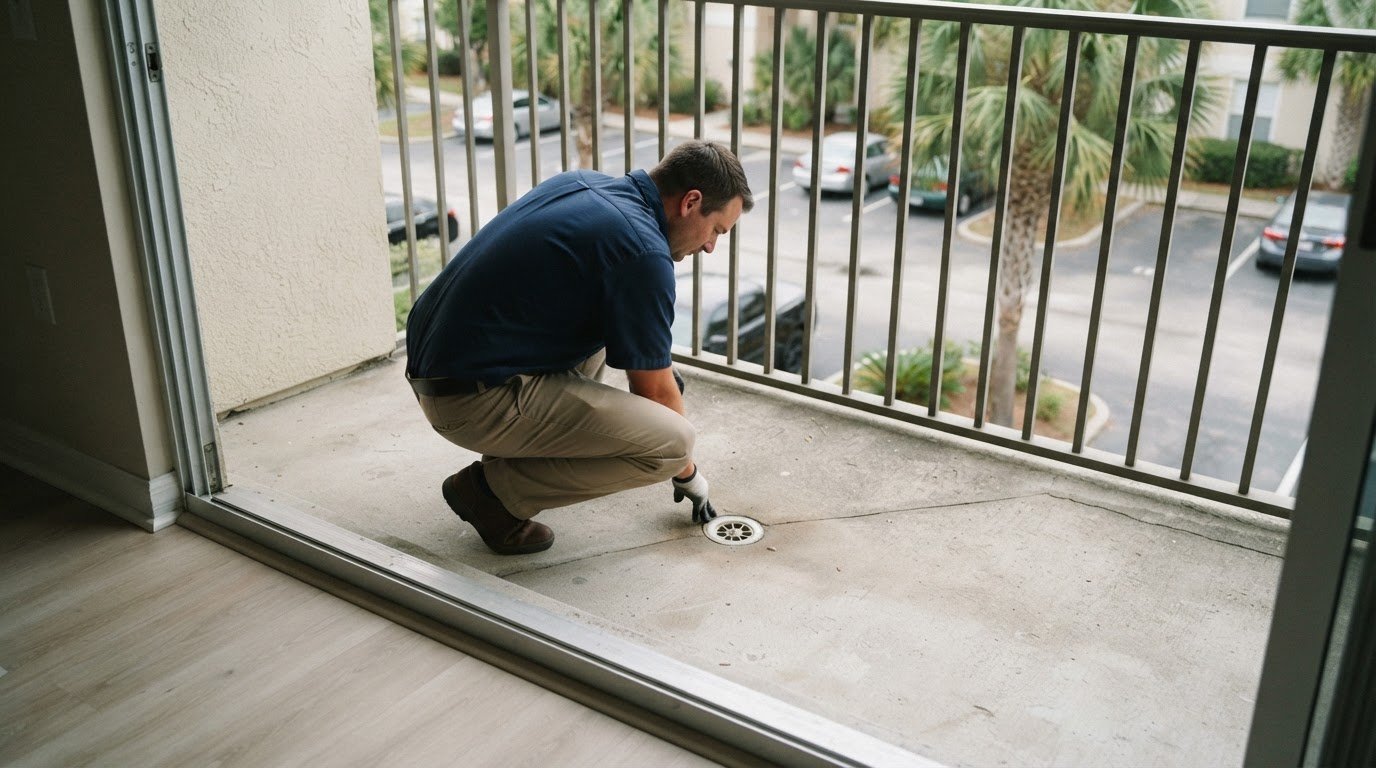
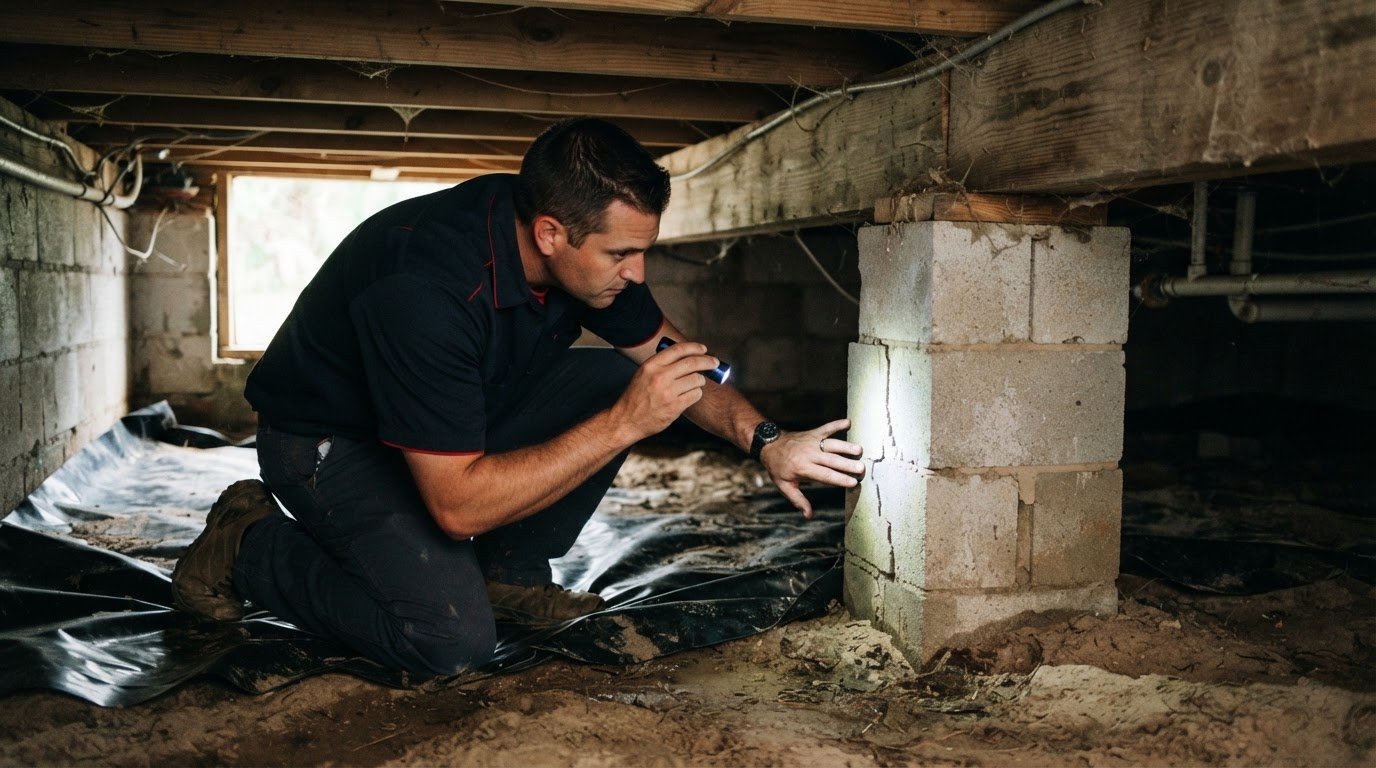
A physical inspection adds essential detail to commercial property due diligence. Review the structure, roof, foundation, drainage, electrical and plumbing systems, HVAC equipment, and fire safety. Each can affect building condition, maintenance planning, or readiness for its intended use. Historical repair records can help explain recurring problems, recent replacements, and deferred work.
Use a consistent walkthrough and connect each observation to its practical effect. For example, a roof leak near electrical equipment calls for documenting both the visible damage and the affected area. Check drainage around the foundation, panel condition, plumbing fixtures, HVAC operation, and visible fire safety features. Record each concern’s location and condition so the findings can inform repair planning before closing.
Record roof wear and signs of water entry because moisture can affect interior finishes and building components.
Review foundation and site drainage because standing water or poor runoff can affect the structure.
Examine electrical, plumbing, and HVAC systems because their condition shapes maintenance needs and daily use.
Document visible fire safety or building-code concerns because unresolved issues may need further review.
Compare the prior two years of utility bills with the property’s operating history, then confirm service availability and capacity for the intended use. Review water and sewer connections, or septic records where applicable, alongside available maintenance and permit documents. Ask how proposed changes could affect utility capacity or applicable impact fees, which depend on the property and project.
A capital needs assessment can organize observed repairs into 5-, 10-, and 20-year projections. This separates immediate maintenance from longer-term replacements, helping buyers understand how a roof, HVAC system, or electrical upgrade could affect ownership plans. Inspection findings also give the purchase team a clearer basis for discussing repairs or contract terms before closing.
For a focused review of a commercial building’s physical condition, arrange a commercial property inspection as part of due diligence.
Anchorpoint Inspection Services: Commercial property inspection
Anchorpoint Inspection Services provides commercial property inspections to help buyers understand a building’s physical condition during due diligence. Schedule an inspection when you need a clearer picture of visible concerns and how they may affect maintenance, repairs, or closing plans.
The inspection can cover the building’s structure, roof, foundation, drainage, electrical and plumbing systems, HVAC equipment, and fire safety. Documented observations help turn a concern, such as poor drainage near the foundation, into practical follow-up planning. An inspection complements environmental, title, and zoning reviews by focusing on the property’s physical components.
When acquiring a Florida property, share its intended use and relevant records so the inspection can consider the building’s context. Contact Anchorpoint Inspection Services to discuss a commercial property inspection.
Move Forward With a Clear Inspection Plan
A commercial property due diligence checklist for Florida is most useful when it supports a clear decision: proceed, adjust the transaction, or investigate a concern further. Before closing, organize inspection findings into immediate priorities and longer-term planning needs. This gives your acquisition team a practical basis for deciding what to address next.
Anchorpoint Inspection Services offers commercial property inspection for buyers assessing a building’s physical condition. For residential properties, its services also include Comprehensive Home Inspection, Wind Mitigation Inspection, and 4-Point Inspection. The right inspection depends on the property and the decision you need to make.
Bring your property details and timing into the conversation so the inspection can support your due diligence process. Contact Anchorpoint Inspection Services to discuss a commercial property inspection and take your next step with greater clarity.
Frequently Asked Questions
What Is Commercial Real Estate Due Diligence?
Commercial real estate due diligence is the buyer’s structured review of a property’s legal, financial, environmental, and physical condition before closing. It tests whether documented income, permitted use, access, and building condition support the planned acquisition. For example, a warehouse may appear suitable but lack records showing that the proposed operation fits its occupancy or site constraints. Findings help guide whether to proceed, renegotiate, or withdraw.
How Long Does CRE Due Diligence Take?
Commercial real estate transactions commonly allow 30-60 days for due diligence, but the purchase agreement sets the actual timeline. Some agreements start the period only after the seller delivers requested documents. Delayed leases, permits, or property records can compress the time available for review. Set priorities early, track document delivery, and schedule inspections so important findings reach the acquisition team before its contractual deadline.
What Happens if Due Diligence Uncovers a Problem?
The purchase agreement determines your options if due diligence reveals a problem. Depending on its terms, you may negotiate revised terms or cancel the contract. A roof defect, for instance, could prompt discussion of a repair, credit, or revised price. Tell the lender about credits, price reductions, major repairs, or scope changes, since they may affect underwriting and closing documents.
What should a commercial property due diligence checklist in Florida include?
A commercial property due diligence checklist for Florida should organize reviews around key decisions: can the site support the intended use, what obligations transfer, and what conditions could affect ownership costs? Include transaction documents, income and expense records, environmental review, title exceptions, zoning and permits, and an inspection plan. Track each item’s status, responsible reviewer, and open questions so the purchase team can address gaps before its deadline.
What are Florida's commercial real estate inspection requirements and recommended inspections?
Inspection scope should reflect property type, intended use, the purchase agreement, lender requirements, and applicable local review. A commercial property inspection helps buyers assess a building’s condition, but does not replace zoning, permit, or environmental reviews. For properties in Lynn Haven, Panama City, Panama City Beach, Callaway, Southport, Mexico Beach, Port St. Joe, Santa Rosa, Fort Walton, Niceville, Destin, Pensacola, Gulf Shores, or San Destin, account for the specific site and local context.
How do you conduct a Phase I environmental site assessment for Florida commercial property?
A Phase I assessment examines a property’s historical and surrounding land uses, along with environmental records, for potential contamination concerns. Gather the property history and available records, then relate the findings to the parcel and nearby uses. If the assessment identifies recognized environmental conditions, Phase II testing may be needed. Follow-up testing can sample soil, groundwater, or building materials to investigate a suspected concern more directly.
Comments