

11-Month Warranty Inspection in Pensacola: A Homeowner’s Guide
What if a small leak or a door that won’t latch becomes noticeable just as your builder warranty is about to end? An 11 month warranty inspection Pensacola homeowners schedule near the end of the first year can help document visible concerns while there’s still time to review the findings and follow the process in their warranty agreement.
A newer home can develop noticeable issues after months of everyday use and changing weather. An independent inspection provides a visual assessment of accessible areas and systems, with findings you can review and share. It can’t guarantee that a builder will make repairs or that a particular issue is covered by your warranty.
This guide explains what an 11-month inspection may evaluate, how to prepare your home, and how to record and share findings with your builder. You’ll also learn what to expect when an inspector reviews areas such as roofing, plumbing, electrical systems, HVAC, doors, windows, and interior finishes. With a clear plan, you can approach the warranty deadline with more useful information and less uncertainty.
Table of Contents
What an 11-Month Warranty Inspection in Pensacola Is Designed to Catch
What an 11-Month Warranty Inspection Covers in a Pensacola Home
How to Prepare for an 11-Month Warranty Inspection in Pensacola
How to Review Inspection Findings and Follow Up With Your Builder
Schedule an 11-Month Warranty Inspection in Pensacola With Anchorpoint
What an 11-Month Warranty Inspection in Pensacola Is Designed to Catch
An 11-month warranty inspection is a professional review of a home before its builder warranty period ends. It gives a homeowner an opportunity to have accessible areas and components assessed after living in the home and using its systems. The timing can help bring attention to conditions that weren’t apparent at move-in or became noticeable during the first months of regular use.
An 11-month warranty inspection documents observable home conditions; it does not decide whether a builder’s warranty covers them or guarantee repairs. The report can help you understand what the inspector observed and organize follow-up. Your warranty agreement sets out its own coverage, deadlines, and claim process, so review its terms rather than assuming an inspection finding will qualify for repair.
New construction can still have concerns. A component may need adjustment after use, a finish may show a crack, or an installation concern may become noticeable over time. For example, a door that initially seemed to operate normally might begin sticking, or a plumbing fixture may start dripping. These observations don’t automatically establish a defect or its cause, but documenting them gives you clearer information to consider.
A home inspection is a visual assessment of a property’s condition, not a guarantee that every possible issue will be found. For a general overview of the inspection process and its purpose, see What is a Home Inspection? An 11-month review applies that general approach to a newer home as the builder warranty deadline approaches.
Why schedule the inspection before the warranty period ends?
A timely assessment leaves an opportunity to document concerns and review the builder’s process while the warranty period is still active. Start early enough to read your agreement, understand how and when to submit concerns, and review the inspection findings. Deadlines and procedures vary by agreement. A finding is useful documentation, but it doesn’t mean the builder must repair the condition or that the warranty applies.
What an inspector can and cannot establish
An inspector visually assesses accessible areas and components. The review is limited to what can be observed without opening walls, removing finishes, or performing destructive testing. Concealed defects may not be visible, and an inspection can’t establish the cause of every condition or determine who is responsible for it.
Findings give you a grounded starting point for follow-up. A report can describe an observed condition and identify where further attention may be appropriate, while questions about contract coverage belong to the warranty agreement and builder’s claim process. An independent 11 month warranty inspection Pensacola homeowners arrange before the deadline can clarify the home’s visible condition without replacing those decisions.
What an 11-Month Warranty Inspection Covers in a Pensacola Home
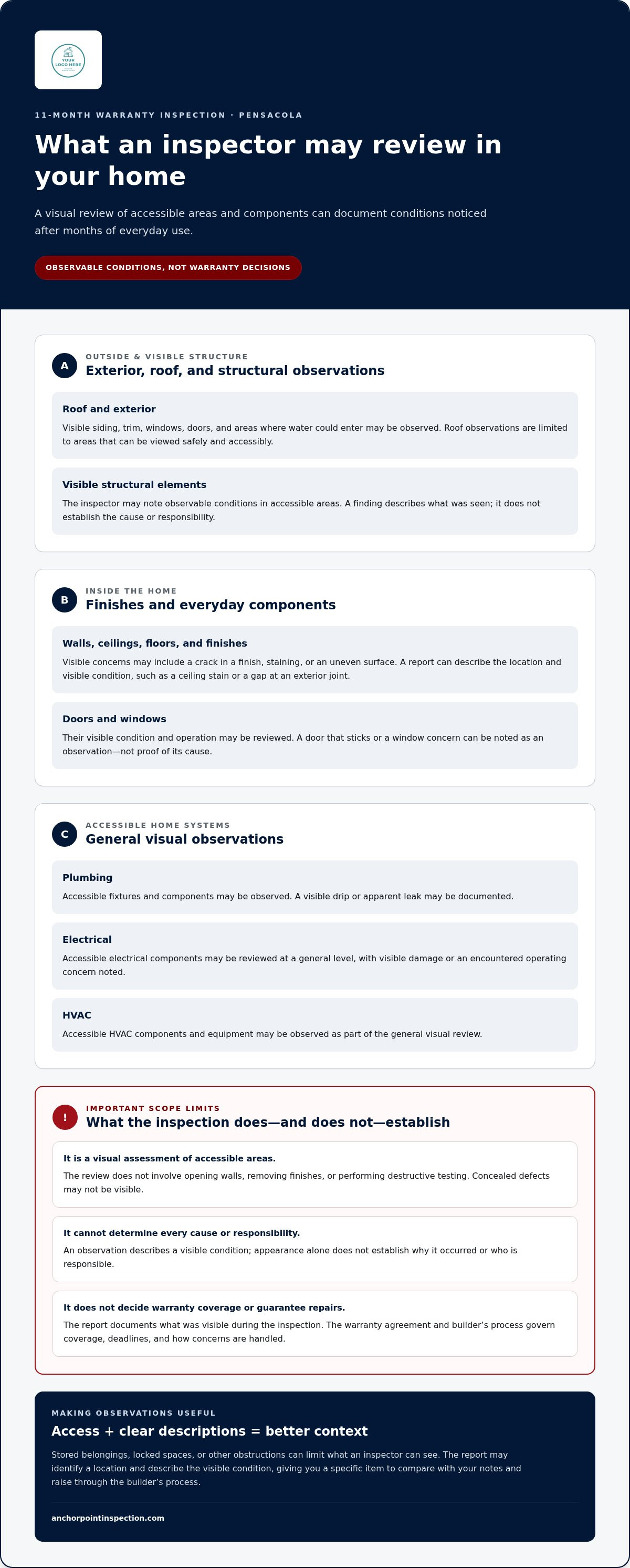
An 11-month warranty inspection in Pensacola is a broad visual review of a home’s accessible components, with attention to conditions that may have appeared during everyday use. The inspector may look at the roof and exterior, visible structural elements, interior finishes, and accessible electrical, plumbing, and HVAC components. The purpose is to document observable conditions, not to open walls or take apart equipment.
A home inspection describes observable conditions; it does not determine warranty eligibility or guarantee a repair. The report explains what was visible during the inspection, while your warranty agreement and the builder’s process govern how a concern is handled. Access matters, too: stored belongings, locked spaces, or other obstructions can limit what an inspector can see.
Visible structure, roof, and exterior conditions
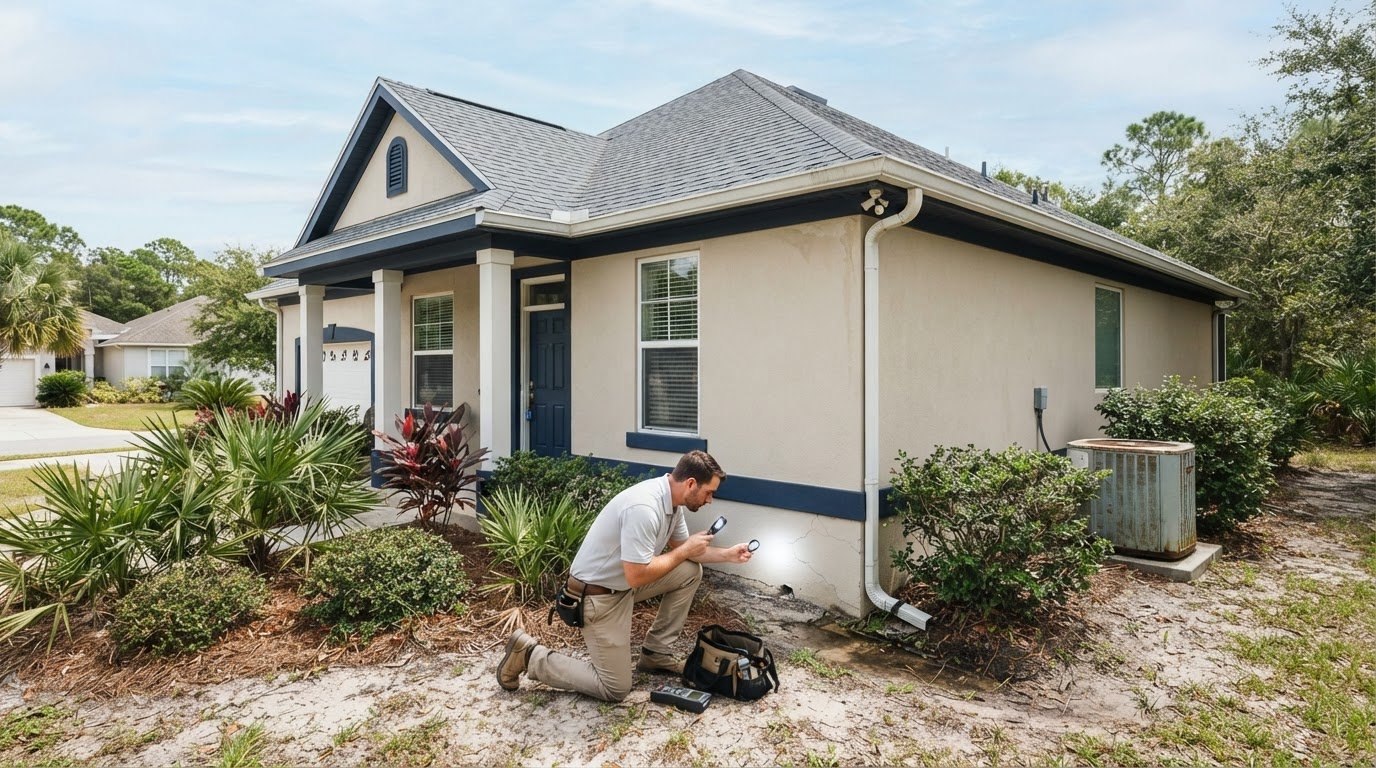
On the exterior, an inspector may observe visible siding, trim, windows, doors, and areas where water could enter. Inside, signs such as a crack in a finish, staining, or an uneven surface can be documented for your review. These observations describe what is present, not necessarily why it occurred. Roof observations are limited to areas that can be viewed safely and accessibly; an inspection shouldn’t imply that every surface or concealed roof component can be examined.
Clear context makes a finding more useful. A report may identify a location and describe the visible condition, such as a ceiling stain or a gap at an exterior joint. That gives you a specific item to compare with your own notes and raise through the builder’s process, without treating appearance alone as proof of cause or responsibility.
Interior systems and everyday components
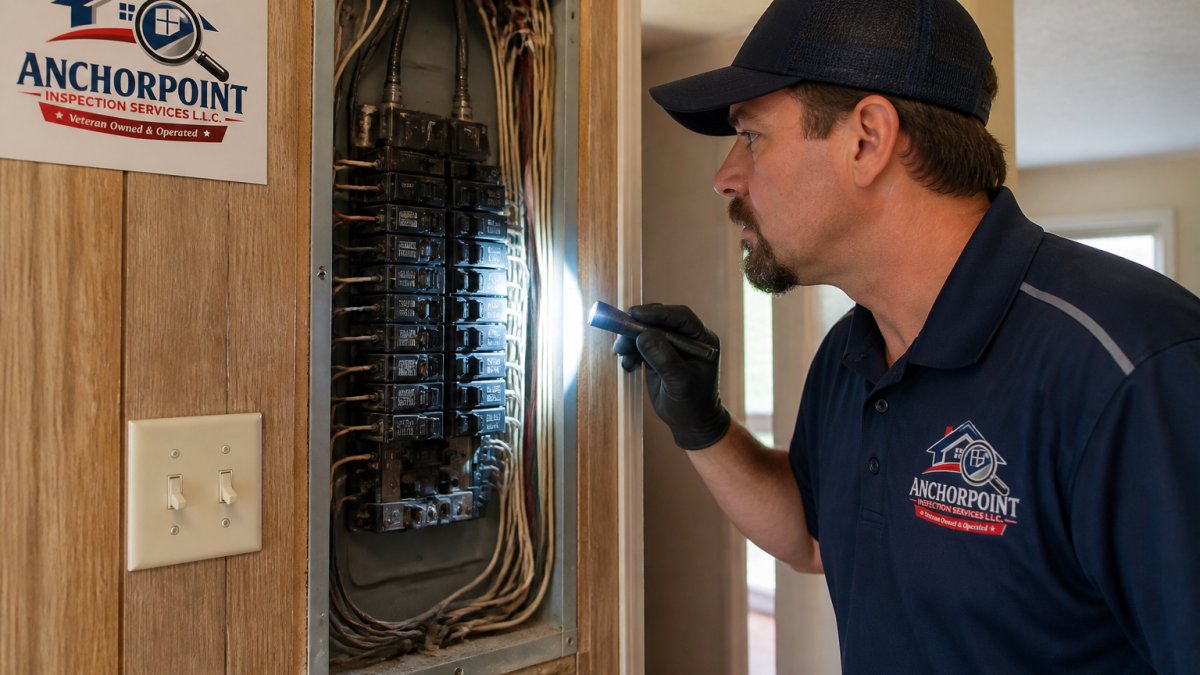
Inside the home, accessible plumbing fixtures, electrical components, and HVAC equipment can be observed at a general level. The inspector may note visible damage, an apparent leak, or an operating concern encountered during the review. This isn’t the same as specialized testing, concealed-system evaluation, or a guarantee that every issue will be detected.
Everyday components matter as well. Doors and windows can be checked for visible condition and operation, while walls, ceilings, floors, and other finishes can be reviewed for observable concerns. You can help make the assessment more useful by ensuring the inspector can reach areas you want reviewed and by pointing out changes you’ve noticed. Furniture, stored items, or personal belongings may obscure surfaces or components.
In Pensacola, visible roof and exterior conditions can be relevant to documenting a home after exposure to local weather. The inspection remains limited to what can be observed safely on the day. Anchorpoint Inspection Services provides 11-month warranty inspections in Pensacola and surrounding communities, including Lynn Haven, Panama City, Panama City Beach, Callaway, Southport, Mexico Beach, Port St. Joe, Santa Rosa, Fort Walton, Niceville, Destin, Gulf Shores, and San Destin. Learn more about an 11-month warranty inspection.
How to Prepare for an 11-Month Warranty Inspection in Pensacola
A little preparation helps make an 11 month warranty inspection Pensacola homeowners schedule more focused. You don’t need to diagnose a problem or decide whether it qualifies for warranty coverage. Your role is to share what you’ve noticed, provide relevant records, and make the areas you want assessed accessible. Use this sequence to get organized without turning the process into a major project.
Review your warranty agreement. Note the stated end date, how concerns must be reported, and any submission steps. Terms and deadlines differ, so use your own agreement rather than assuming a standard timeline.
Gather useful records. Keep builder documents, warranty paperwork, and maintenance records together. If a system or component has been serviced or adjusted, note the date and retain any related paperwork you have.
List concerns by room or area. Describe what you’ve observed, where it occurs, when you first noticed it, and whether it has changed or recurred. Specific notes are more helpful than a general reminder such as “check the windows.”
Arrange access. Make relevant rooms and visible components reachable. Move items that block areas you want reviewed, and consider how pets can be kept safely away from the inspection activity.
Records and observations to gather beforehand
Use a short room-by-room checklist to keep details clear. Include recurring issues as well as recent changes, even if they seem minor. Broader context on inspecting new construction is available in this Florida new construction inspection guide.
Location: Identify the room, wall, fixture, or exterior area.
Timing: Record when you noticed the condition and whether it returns or changes.
Context: Note what you observed, such as a window that sticks or a spot that appears after rain.
Related records: Gather relevant builder communications, warranty documents, and maintenance notes.
Keep the wording factual. “Water mark appeared on the ceiling after a storm” records an observation; it doesn’t claim to know the source. This helps the inspector understand what you’ve experienced without asking you to determine the cause.
Making the home accessible on inspection day
Before the appointment, clear a practical path to rooms and visible components you want assessed. Move personal belongings away from areas of concern, and make sure doors or gates that provide access can be opened. You don’t need to empty the home. Focus on removing obstacles that could hide a surface or prevent access to a component.
Some conditions may remain out of view if they’re concealed behind finishes, blocked by belongings, or otherwise inaccessible. The inspector can document what is observable; preparation helps make that review more useful, but it can’t make concealed areas visible. A written list also helps you remember to point out concerns during the walkthrough.
How to Review Inspection Findings and Follow Up With Your Builder
Once you receive the report, read it as a record of what was observed, not as a verdict on who is responsible. Start with each observation and its location, then review the supporting description and any recommended follow-up. If a term is unfamiliar, use the report’s context or ask the inspector to clarify what the observation means. An 11 month warranty inspection Pensacola homeowners arrange can help organize visible concerns, but your agreement and the builder’s process determine how warranty requests are handled.
An inspection report documents observed conditions; it does not guarantee repairs or decide warranty coverage. A description of a condition is different from a conclusion about its cause, responsibility, or eligibility under a contract. Keeping those distinctions clear helps you share the findings accurately and set realistic expectations.
Prioritize observations without assuming warranty outcomes
Sort the findings into practical groups before following up. Safety-related concerns and conditions that appear active or changing may need prompt attention; other observations may call for monitoring or routine maintenance. This is a way to organize your next steps, not a judgment about what the builder must address. Read the agreement and follow its documented submission process, including any applicable deadlines and instructions.
Safety-related: Review the report’s description and recommended next steps carefully.
Active or changing: Note whether the condition is ongoing, recurring, or worsening.
Maintenance or finish: Keep the observation in context and distinguish upkeep from a possible construction concern.
When you contact the builder, identify the location and quote or summarize the relevant report observation. Ask about the next step in the builder’s process, and keep the exchange factual. A reported condition may not qualify for warranty work, and the inspection itself can’t promise acceptance, repair, or reimbursement.
Use the report as a clear homeowner record
Keep a copy of the report with your home records, along with warranty documents, related photos, maintenance notes, and builder communications. Dated, location-specific details make it easier to track what was observed and what you discussed. For help understanding common report language, see this home inspection report guide.
As you review each item, note whether you’ve seen a change since the inspection and retain any follow-up correspondence. This creates a useful timeline without treating a later change as proof of its cause. If the builder requests information, you can refer to a specific observation rather than relying on memory. The report supports a clearer conversation, while the agreement and builder’s process guide decisions about coverage.
For an independent assessment that gives you clear observations to review before your warranty period ends, schedule an 11-month warranty inspection with Anchorpoint.
Schedule an 11-Month Warranty Inspection in Pensacola With Anchorpoint
If your builder warranty period is approaching its end, arrange an assessment with enough time to review the findings and follow the process in your agreement. Anchorpoint Inspection Services provides 11-month warranty inspections in Pensacola, giving homeowners an independent review of visible home conditions. The inspection can help you understand what was observable during the assessment and provide information to consider as you decide how to follow up.
You don’t need to have every concern diagnosed before scheduling. A note about a recurring issue, a change you’ve noticed, or an area you’d like assessed can help focus attention during the visit. Keep expectations practical: the inspection documents conditions, while the warranty agreement and builder’s process determine how a warranty concern is considered.
What to have ready when scheduling
Before arranging your inspection, check your warranty paperwork for its stated end date and any instructions about submitting concerns. Allow time to arrange the assessment and review the resulting documentation before that date. Warranty terms and deadlines differ, so rely on your own agreement rather than assuming every builder follows the same schedule.
It can also help to have a few details on hand. This makes it easier to explain what you’re looking for and plan access to the home.
Preferred inspection window: Consider dates that work for you while leaving time before your warranty deadline.
Property details: Be ready to identify the home and share relevant details about the areas you want reviewed.
Main concerns: Keep a short list of locations and conditions you’ve noticed, including when they appeared or whether they recur.
Access needs: Think about rooms, visible components, or exterior areas you want the inspector to be able to reach.
You don’t need to resolve every question in advance. The aim is to make your priorities clear and provide enough context for a useful, orderly assessment. Having your notes and warranty deadline nearby can also help keep the scheduling conversation focused.
A practical next step for Pensacola homeowners
A calm, documented assessment can give you a clearer picture of your home’s visible condition as the warranty period nears its end. It won’t determine whether a finding is covered, but it can help you understand what was observed and organize your next steps. That distinction keeps the process grounded in useful information rather than assumptions about what a builder will do.
Anchorpoint’s 11-month warranty inspection helps homeowners document visible conditions and better understand their home. If you’re preparing for an upcoming warranty deadline in Pensacola, schedule an 11-month warranty inspection with Anchorpoint and take the next step with clear information in hand.
Give Your Next Step a Clear Timeline
A warranty deadline can feel like one more item competing for your attention. Make it manageable by setting a reminder to review your agreement, choosing a time to arrange an inspection, and keeping your notes and report with your home records. Taking these steps early gives you space to consider what you’ve learned and follow the process that applies to your home.
For homeowners seeking an 11 month warranty inspection Pensacola, Anchorpoint Inspection Services offers an independent assessment focused on documenting visible conditions. The company serves homeowners in Lynn Haven, Panama City, Panama City Beach, Callaway, Southport, Mexico Beach, Port St. Joe, Santa Rosa, Fort Walton, Niceville, Destin, Pensacola, Gulf Shores, and San Destin. The company is owned and operated by John R. Gramlick III, a Florida-licensed home inspector. The inspection provides information to help you understand your home, while warranty decisions remain subject to your agreement and the builder’s process.
When you’re ready to plan your assessment, schedule an 11-month warranty inspection in Pensacola with Anchorpoint. A considered next step can help you approach the end of your warranty period with greater clarity and confidence.
Frequently Asked Questions
What is an 11-month warranty inspection?
It’s a professional assessment of a newer home near the end of its builder warranty period. The inspector records visible conditions that may deserve your attention, such as a fixture that doesn’t operate as expected. The inspection doesn’t decide whether an item is covered or require the builder to repair it. Check your warranty documents for the applicable process, then use the report to help describe any concerns you choose to raise.
When should I schedule an 11-month warranty inspection in Pensacola?
Arrange it early enough to receive and review the findings before the deadline stated in your builder documents. For an 11 month warranty inspection Pensacola homeowners should use the timing in their own agreement, since warranty terms and procedures can differ. If you can’t find the end date, review the paperwork provided for your home. Allowing time to read the report can make it easier to organize any follow-up.
Can an 11-month inspection guarantee my builder will fix defects?
No. An inspection report records observed conditions, but it can’t compel repairs or establish that an item is covered. For example, a report may describe a window that is difficult to open without determining why it sticks or who is responsible. Review the warranty terms, submit relevant findings through the builder’s process, and keep copies of your messages. Treat an observation as a documented concern, not a confirmed warranty claim.
What does an 11-month warranty inspection look for?
An inspector reviews accessible, visible parts of the home. This may include the roof, exterior surfaces, interior finishes, and accessible electrical, plumbing, and HVAC components. The observations depend on what can be reached and seen during the visit. A visual inspection isn’t a destructive examination, so conditions hidden behind walls or other finishes may not be apparent. The report describes observations rather than deciding whether the warranty covers them.
How long does an 11-month warranty inspection take?
There isn’t one duration that applies to every home. Size, layout, condition, and access can affect the time needed. A home with several levels or areas blocked by stored belongings may take a different amount of time to assess than a more accessible property. When planning, leave room for the inspector to review the home and for you to understand the process. Schedule with enough margin to review the findings before your deadline.
What happens if an inspection finds a concern after my warranty period ends?
The report can document what was visible on the inspection date, but it can’t extend an expired warranty or guarantee a repair. Check your agreement for its deadlines and notification process, and retain dated records of your communications. If a concern poses an immediate safety risk, take reasonable steps to protect people in the home while deciding what action is appropriate. The inspection report may help explain the condition, but it doesn’t determine coverage.
Should I attend my 11-month warranty inspection?
If you’re able to attend, being present can help you point out concerns and understand what the inspector observes. Write down your questions beforehand, such as when a condition began or whether it changes in certain weather. The written report is still important because it organizes the observations for later review. If you can’t be there, your notes about locations and changes can help communicate what you’ve noticed.
Comments