

The 2026 Guide to Roof Certification Inspections in Florida
Imagine opening your mail to find a notice that your homeowner's insurance policy won't be renewed unless you provide a roof certification inspection Florida within thirty days. For many homeowners in 2026, this scenario is a stressful reality as insurers tighten their requirements for aging roofs. It's frustrating to feel like your home's safety is being reduced to a single date on a calendar, especially when you've worked hard to maintain your property.
We understand that the distinction between a 4-point inspection and a roof certification can be confusing, and the anxiety over a mandatory roof replacement is heavy. This guide will clarify exactly why insurers demand these certifications, how our inspectors determine the remaining life of your roof, and what you can do to keep your home protected and insurable. We'll walk through the current Citizens Property Insurance requirements, the critical "five years of useful life" rule, and the practical steps you can take to avoid an unnecessary replacement while securing your policy renewal.
Table of Contents
Why Florida Insurers Require Roof Certification Inspections
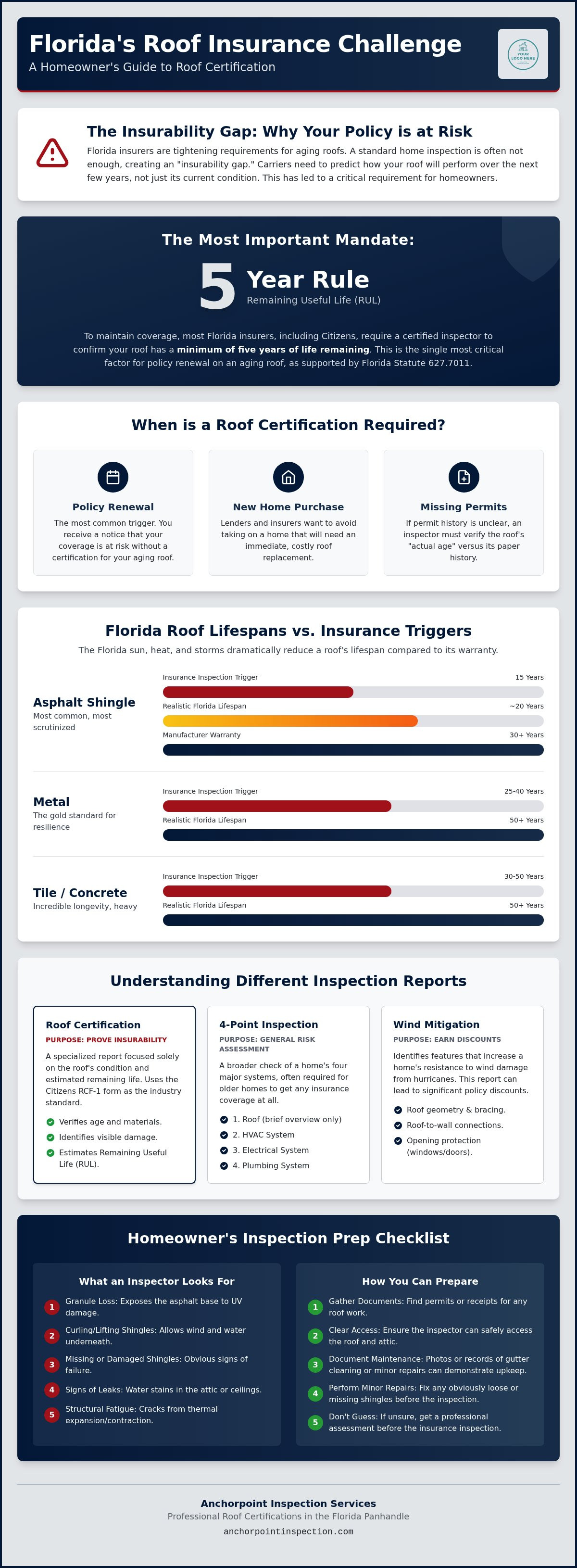
A roof certification is a specialized document that goes beyond a simple visual check. It verifies the installation age, current physical condition, and estimated remaining life of your home's primary defense against the elements. While a general home inspection provides a broad overview of a property's systems, Florida carriers often find that data insufficient for their modern risk assessments. This creates what we call the "insurability gap." Carriers don't just want to know if the roof is holding up today; they need a professional prediction of how it will perform over the next few years.
In the past, shingle roofs were often left alone by insurers until they hit 20 or 25 years. Today, the Florida insurance market is much more cautious. Many private carriers now trigger a mandatory roof certification inspection Florida once an asphalt shingle roof reaches the 15-year mark. For more durable materials like metal, tile, or concrete, the threshold is typically higher, often around 25 to 50 years. However, the high frequency of tropical storms in the Panhandle means even these "lifetime" roofs face increased scrutiny as they age.
The Role of the Citizens RCF-1 Form
Citizens Property Insurance Corporation often sets the pace for the rest of the Florida market. Their RCF-1 form is the industry standard tool for verifying roof integrity. The form requires an inspector to document the exact roofing material, its age, and any visible signs of deterioration like curling shingles or granular loss. The RCF-1 serves as the primary tool for roof insurability verification in the state. If your roof is older than current thresholds, this form is your best chance to prove it still has at least five years of life left.
Regulatory Triggers for an Inspection
Most homeowners encounter this requirement during a policy renewal. You might receive a notice stating your coverage is at risk without a certification. Another common trigger is a new home purchase. Lenders and insurers want to ensure they aren't taking on a liability that requires a massive replacement cost immediately after closing. Finally, if permit documentation is missing or incomplete, an inspector must step in to verify the "actual age" of the materials. This process helps reconcile the paper history with the physical reality of your home's protection, ensuring your policy remains valid and accurate.
Determining Remaining Useful Life: The Inspector’s Criteria
Determining how much time a roof has left isn't about looking at a calendar. It's a physical evaluation of how the materials are handling the intense Florida environment. When performing a roof certification inspection Florida, we focus on factual data to provide a professional estimate of the "Remaining Useful Life" (RUL). Most insurers, including Citizens, now look for a minimum of five years of life to maintain coverage. This standard is supported by Florida Statute 627.7011, which outlines how carriers must handle older roofs if an inspection proves they are still functional. While some smaller carriers might accept a three-year window, the five-year mark is the safest target for long-term insurability.
In the Panhandle, UV exposure and thermal expansion are the primary drivers of aging. The sun's intense heat breaks down the chemical bonds in roofing materials, making them brittle over time. Daily temperature swings cause materials to expand and contract. This constant movement eventually leads to structural fatigue and micro-cracks that aren't always visible from the ground. This detailed assessment is the core of a roof certification inspection Florida, ensuring your carrier has the data they need to assess risk accurately.
Material Breakdown and Expected Lifespans
Asphalt shingles are the most common material we see, but they face the toughest battle. While manufacturers might offer 30-year warranties, the reality in Florida is that architectural shingles often reach their limit around the 20-year mark. Metal roofing remains the gold standard for resilience in Lynn Haven and Panama City, often lasting 50 years with proper maintenance. Concrete and clay tiles offer incredible longevity, but their weight requires the underlying structure to be in perfect condition. If you aren't sure where your home stands, scheduling a professional roof certification can provide the clarity you need.
Visible Damage vs. Natural Aging
We look for specific indicators that a roof is nearing failure. Granule loss on shingles indicates the end of a roof’s protective life because those granules shield the asphalt from UV damage. We also check for curling edges, pitting, or cracked tiles. It's vital to distinguish between cosmetic weathering, like minor color fading, and structural failure. Unrepaired damage, such as active leaks or missing sections, will disqualify a certification regardless of the roof's age. Our role is to help you understand if a simple repair can extend that life or if a full replacement is truly necessary.
Roof Certification vs. 4-Point vs. Wind Mitigation
Deciding which report you actually need can feel like a puzzle, especially when your insurance agent uses these terms interchangeably. A 4-point inspection is a comprehensive health check of your home’s major systems: HVAC, electrical, plumbing, and the roof. It’s designed to tell the insurer if your home is a safe bet for a new policy. In contrast, a wind mitigation inspection focuses entirely on how your home is built to withstand hurricane-force winds. This isn't about the condition of the shingles, but rather the geometry of the roof and the specific hardware used to attach it to the walls.
If your only goal is to verify the remaining life for a renewal, a standalone roof certification inspection Florida is the most direct path. This document is highly focused, providing the specific data points your carrier needs without the broader scope of a 4-point report. For many older homes in Lynn Haven or Panama City, however, you might find that your agent requests all three. This is common when a home is over 20 years old or when you're switching carriers in a tight market. Our process follows the InterNACHI Standards of Practice, ensuring that every observation is grounded in industry-recognized criteria.
Choosing the Right Inspection for Your Goal
Your specific situation determines the report you need. If you're shopping for a new policy, most carriers require both a 4-point and a wind mitigation report to establish a baseline. If you're happy with your current carrier but want to lower your premiums, the wind mitigation report is your primary tool for securing discounts. However, when you receive a letter questioning the age of your roof during a renewal, the roof certification inspection Florida is the specific document requested to bridge the insurability gap. It provides the "useful life" estimate that the other reports might omit.
Cost and Time Efficiency
Bundling these services is a practical way to manage your home maintenance budget. Since an inspector is already on-site and accessing the roof and attic, performing a 4-point, wind mitigation, and roof certification simultaneously saves significant time. A single visit addresses multiple carrier requirements at once, preventing the need for repeated appointments and separate fees. For more details on how these reports work together to protect your investment, see our 2026 Guide to Florida Home Insurance Inspections.
Preparing for Your Inspection: A Homeowner’s Checklist
Walking your property before the inspector arrives can prevent simple oversights from turning into a "fail" on your report. Preparation isn't about hiding flaws; it's about making sure the inspector can see the true condition of your roof without obstructions. A roof certification inspection Florida is a thorough process, and clearing the path for an accurate assessment can save you from unnecessary follow-up visits. When we can see the materials clearly, we can provide a more accurate estimate of the remaining life.
Clear the debris: Thick layers of pine needles or oak leaves trap moisture and can mask underlying damage. If an inspector can't see the material, they can't certify its condition.
Trim overhanging branches: Limbs that scrape against the roof cause mechanical damage, which looks like structural failure on a report. Keeping a three-foot clearance is a good rule of thumb for maintenance.
Gather your paperwork: If you've had minor repairs or a partial replacement, keep the receipts and permits ready. This documentation proves the roof has been maintained and helps verify its age beyond what the public records might show.
Ensure attic access: We must inspect the underside of the roof deck to look for leaks or structural issues. Please clear any storage or furniture blocking the attic hatch before we arrive so we can move through the home efficiently.
The Internal Inspection: Attic and Structure
The view from inside the attic is just as important as the view from the shingles. We look for water staining on the rafters or sheathing, which might indicate an active leak. Even if a stain is old and the leak was fixed, we have to note it unless you have proof of repair. This is also where we verify roof-to-wall attachments, such as clips or wraps, which are vital for your wind mitigation credits. If you haven't looked in your attic recently, doing a quick walkthrough with a flashlight can help you spot issues before the official roof certification inspection Florida begins.
What Happens if the Roof Fails?
Receiving a denial for certification can be stressful, but it doesn't always mean you need a total replacement. Often, minor issues like a few missing shingles or a loose piece of flashing can be repaired to gain a "pass" upon re-inspection. If your carrier denies coverage based on the report, don't panic. Getting a professional second opinion is a wise step before committing to a replacement that could cost $20,000 or more. If you're ready to schedule your assessment, book your roof certification today to ensure your home remains protected and insurable.
Professional Roof Certifications in the Florida Panhandle
Living in the Panhandle means your roof faces unique environmental pressures that differ from other regions. From the salt spray in Mexico Beach to the high-wind zones of Lynn Haven, the materials protecting your home must meet stringent standards to remain effective. When you require a roof certification inspection Florida, you need an inspector who understands these local nuances. At Anchorpoint Inspection Services, we don't just provide raw data; we offer a calm, educational assessment that helps you understand the actual health of your home. Our lead inspector, John R. Gramlick III, is a Florida licensed professional who views every inspection as a partnership in your long-term home maintenance journey.
Our approach is designed to lower the anxiety often associated with insurance renewals. We focus on transparency and accuracy, ensuring that your report reflects the true condition of your property without using alarmist language. We've seen how the insurance market has changed in recent years, and we're committed to helping local homeowners stay ahead of carrier requirements. By providing a clear, professional document, we help you communicate effectively with your insurance agent and avoid the fear of a sudden policy cancellation.
Serving Bay County and Surrounding Areas
Our regional focus extends throughout the entire coastline, covering communities from Destin to Mexico Beach and everywhere in between. We have deep knowledge of the hurricane-rated roofing standards that are specific to the Panhandle, which is critical for accurate reporting. Whether you have a metal roof in Panama City or architectural shingles in Lynn Haven, we understand how these materials age under the intense Florida sun. This local expertise allows us to identify builder defects or structural integrity issues that a less experienced inspector might overlook. We're proud to support our community by providing the reliable data needed to navigate a challenging insurance climate.
Next Steps for Your Roof Certification
If your insurance renewal deadline is approaching, it's best to schedule your assessment as soon as possible. Proactive planning gives you a vital window to address any minor maintenance needs, such as clearing debris or repairing small areas of damage, before the final report is submitted. During the inspection, we'll perform a methodical walkthrough of your roof's exterior and the internal attic structure. This steady pace ensures we capture every detail required by your carrier while allowing time for you to ask questions about your roof's condition.
Once the physical assessment is complete, you'll receive a comprehensive digital report. This document is designed for maximum clarity, linking our professional observations to practical outcomes for your insurability. You can easily forward this file to your insurance provider to satisfy their requirements and secure your policy. We aim to make the process predictable and stress-free, providing you with a stabilizing presence during your renewal period. Schedule your Roof Certification with Anchorpoint today.
Securing Your Property's Insurability
Navigating the evolving Florida insurance market doesn't have to be a source of constant anxiety. By understanding the "five-year rule" and proactively preparing your property for a thorough assessment, you can manage your home’s future with genuine confidence. A professional roof certification inspection Florida provides the precise data your carrier needs to bridge the insurability gap, often helping you avoid the high cost of a premature roof replacement. This document is a vital tool for proving that your home remains a safe, low-risk investment for insurers.
As a Florida Licensed Home Inspector (#HI14567) with extensive expertise in wind mitigation and 4-point reports, I focus on providing supportive clarity rather than just raw technical data. Our educational approach ensures you understand the reasoning behind every recommendation, helping you make informed decisions for your property in Lynn Haven or Panama City. We view our role as a partnership in your home maintenance journey, providing the reliable guidance you need to secure your policy renewal.
Secure Your Home’s Future – Book Your Roof Certification Now
You’ve worked hard to maintain your home; let’s make sure your insurance carrier sees that same value. We're here to help you move forward with a clear path and a well-protected home.
Frequently Asked Questions
How long does a Florida roof certification last?
A roof certification typically remains valid for the duration of your current insurance term, though the document itself estimates the roof's life for several years. Most Florida carriers require a new report annually or every few years as the roof approaches the end of its expected lifespan. This ensures the insurer has current data on the material's integrity in our intense Panhandle climate. Keeping current reports helps you avoid sudden coverage gaps during renewal periods.
Can I perform my own roof certification for insurance?
No, homeowners cannot perform their own roof certification for insurance purposes. Carriers require the report to be completed by a qualified professional, such as a Florida licensed home inspector or a licensed roofing contractor. This ensures the assessment is objective and follows the technical standards required by the state. Using a professional like John R. Gramlick III provides the professional authority and accuracy that insurance companies demand for policy compliance and risk assessment.
What is the "3-year remaining life" rule in Florida?
While some private carriers might still use a three-year threshold, the current standard for many insurers is a minimum of five years of remaining useful life. If a roof certification inspection Florida determines the roof has less than this window of functionality, the carrier may deny coverage or require a replacement. We focus on identifying the physical indicators that prove your roof can still meet these stricter standards, helping you understand your home's true standing with your insurer.
Does a new roof automatically mean I don’t need an inspection?
A brand new roof usually removes the immediate need for a certification, but your insurer will still require proof of the installation through a final permit. Many homeowners in Panama City still choose to get a wind mitigation inspection alongside their new roof. This separate report is what actually triggers the insurance discounts that a standard roof certification or permit alone might not provide. It's a proactive step that maximizes the financial benefits of your new investment.
Will a roof certification lower my insurance premiums?
A roof certification primarily confirms that your home is insurable rather than directly lowering your monthly premiums. Its goal is to prevent policy cancellation by proving the roof is sound. If you're looking for actual premium reductions, a wind mitigation inspection is the correct tool. That report documents specific construction features that help your home withstand storms, which state law requires insurers to reward with discounts. Both reports work together to protect your financial well-being.
What are the most common reasons a roof fails certification in Florida?
Common failure points include excessive granule loss, curling shingles, and active leaks identified during the attic walkthrough. In areas like Lynn Haven, heavy debris buildup from overhanging trees can also lead to a "fail" because it prevents a clear view of the roofing material. Even if the roof is relatively young, unrepaired mechanical damage or poor initial installation can disqualify it from receiving a passing certification. Regular maintenance is the best way to prevent these issues from appearing on a report.
How much does a standalone roof certification cost in Panama City?
The cost of a roof certification in the Panama City area varies depending on whether it is a standalone service or bundled with other reports like a 4-point or wind mitigation. Bundling is often the most efficient choice for homeowners because it addresses multiple insurance requirements in a single visit. We recommend contacting a local licensed inspector to discuss your specific home's needs and receive an accurate quote based on your property's size and material type.


Comments