

Signs of Foundation Problems in Florida Houses to Watch For
A crack in a Florida home doesn’t automatically mean the foundation is failing, and settlement alone doesn’t prove sinkhole activity. Signs of foundation problems in Florida houses can include cracks that grow or form a stair-step pattern, new gaps between walls and ceilings, sticking doors or windows, sloping floors, and excess moisture near the foundation. The pattern matters: several new or worsening signs together deserve closer attention than one unchanged cosmetic flaw.
It’s understandable to wonder whether a change is harmless or points to a larger issue. This guide explains what to look for inside and outside your home, how Florida’s rainfall, drainage, and soil conditions can contribute to movement, and when a professional evaluation may help clarify what’s happening. It also explains why cracks, gaps, doors, floors, and moisture should be considered together rather than judged in isolation.
Table of Contents
1. Does Every Foundation Crack or Settlement Issue Mean a Sinkhole?
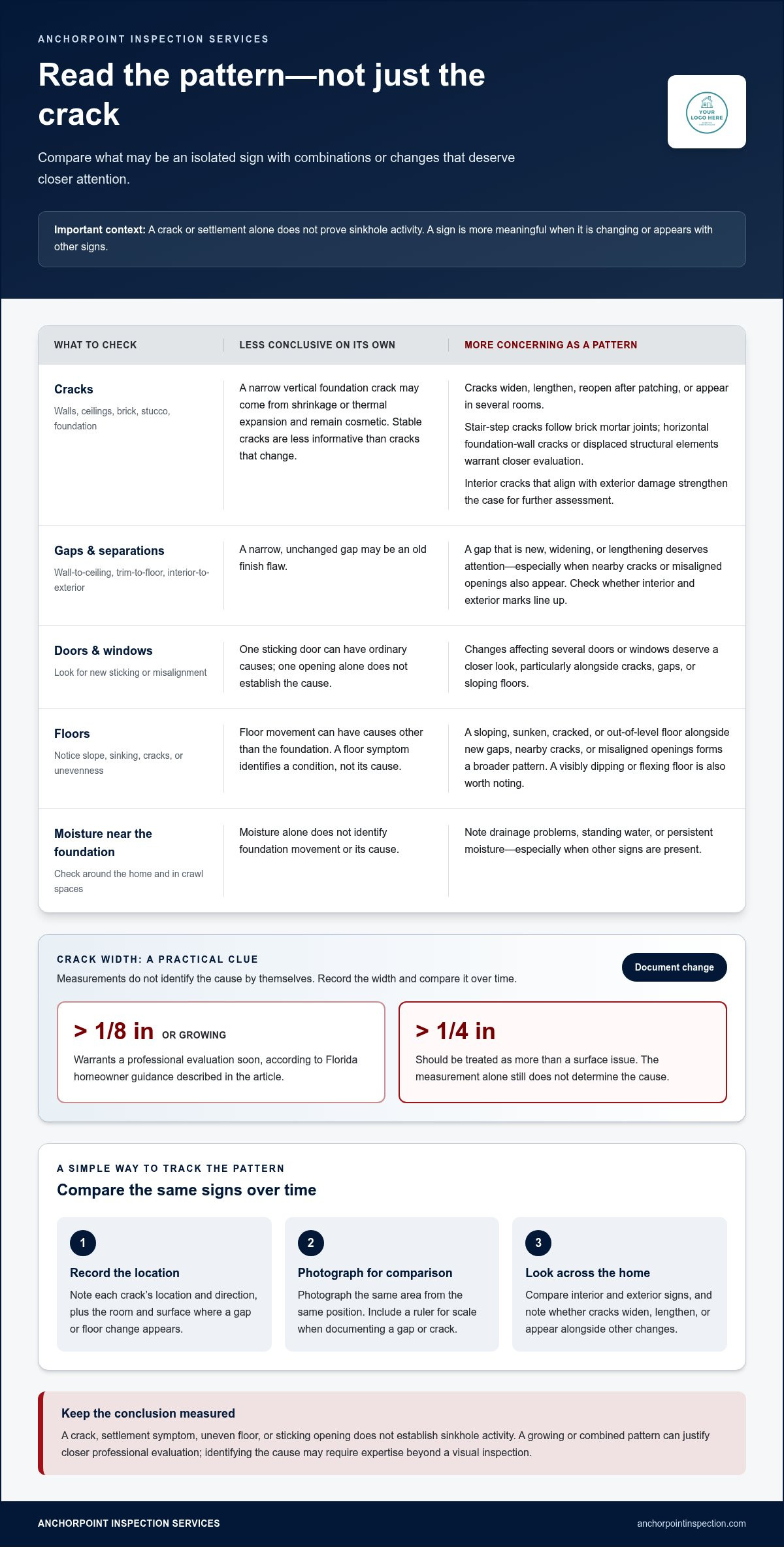
No. A crack can come from concrete shrinkage or temperature changes, while foundation settlement can create a different pattern of movement. Settlement by itself doesn’t prove sinkhole activity; suspected sinkhole activity may require geological or engineering expertise. The useful first step is to record each crack’s location, direction, and changes over time, rather than treating every line in drywall as the same symptom.
Recurring interior wall and ceiling cracks deserve attention when they reopen after patching, lengthen, or appear in several rooms. Diagonal or vertical cracks in drywall or plaster can accompany foundation movement, especially when they occur with gaps between walls and ceilings or misaligned openings. One or two drywall nail pops can be minor. Frequent nail pops, crumbling plaster, or repeated cracks in the same area suggest a broader pattern worth documenting.
Crack shape and change matter more than appearance alone. A narrow vertical foundation crack may result from shrinkage or thermal expansion and remain cosmetic. Stair-step cracks that follow mortar joints can indicate differential settlement, when parts of a house move at different rates. Horizontal cracks in perimeter foundation walls, displaced structural elements, or cracks that continue growing warrant closer professional evaluation. FEMA identifies foundation cracking or movement and displaced structural elements as conditions that can justify involving a qualified professional.
Width offers another practical clue. In Florida homeowner guidance, cracks wider than 1/8 inch or growing over time warrant a professional evaluation soon. A crack wider than 1/4 inch should be treated as more than a surface issue. These measurements don’t identify the cause by themselves, so note the width, photograph the area, and compare it later. A small crack can also become a structural concern if movement continues through a wet season.
Exterior brick, stucco, and foundation walls can show related symptoms. Look for stair-step cracks in brick mortar, horizontal cracks in a foundation wall, or stucco splits that widen near corners and openings. The direction and progression can help distinguish a stable surface flaw from movement. Check whether interior cracks align with exterior damage; matching changes on both sides of a wall strengthen the case for further assessment.
How can you tell foundation settlement from normal cracks in Florida homes? Normal shrinkage cracks tend to remain stable, while settlement becomes more concerning when cracks grow or appear alongside sloping floors, sticking openings, or new gaps. Track changes and consider the pattern across the home rather than judging one crack in isolation.
Does Florida homeowners insurance cover foundation damage, sinkholes, or settlement? A crack or settlement symptom alone doesn’t establish coverage, and sinkhole activity isn’t the same as ordinary settlement. Coverage depends on the policy language and the cause of damage, so review the relevant terms before assuming a particular loss is covered.
2. Gaps between walls, ceilings, floors, and exterior walls
A new separation between building surfaces can indicate that parts of a Florida home are moving differently. Look where walls meet ceilings, where trim meets flooring, and where an interior wall joins an exterior wall. A narrow, unchanged gap may be an old finish flaw. A separation that is becoming wider, longer, or newly visible deserves attention, especially when cracks or misaligned doors appear nearby.
Check the same locations inside and outside. For example, an interior ceiling gap may line up with a crack in exterior stucco or brickwork. That pattern matters more than either mark alone because it can show movement across connected parts of the structure. Photograph each area from the same position, include a ruler for scale, and record whether the gap changes. Dated comparisons help distinguish a stable seam from a developing separation.
Floors provide another useful clue. Foundation settlement can make floors sink, slope, crack, or feel uneven underfoot. Walk across rooms and note whether the slope is limited to one spot or continues toward an exterior wall. A visibly sloping floor can reflect uneven settlement, but floor movement can also have other causes. The observation identifies a symptom, not its cause.
Pay attention to combinations. A sunken floor alongside new gaps between the floor and baseboards, a ceiling separation, or cracks around openings forms a broader pattern than one uneven tile. FEMA’s 2025 National Flood Insurance Program Claims Manual identifies cracked, separated, uneven, or out-of-level floors as conditions that can justify involving a qualified outside professional when foundation movement is in question. This provides a useful reason to document the floor and nearby surfaces together.
A sagging floor may feel different from a sloping one. It can dip visibly near the center of a room or flex as someone walks across it. Spongy floorboards deserve particular attention because severely damaged floor beams, including damage from termites, can make boards feel soft. Moisture-related damage and weak supports can also affect floors, so don’t assume every dip comes from the foundation.
For a simple walkthrough, note the room, the surface, and whether the condition is changing. Check adjacent trim, wall corners, and the corresponding exterior wall. Avoid placing heavy furniture or appliances over visibly sloping floors or areas where support seems weak. A 4-point inspection can document visible property conditions; significant movement or structural concerns call for assessment beyond a visual inspection.
3. Sticking doors and windows
A door that suddenly rubs its frame may reflect a change in the opening, not just a faulty latch. Foundation settlement may shift or twist a frame out of plumb, making the door drag, catch, or refuse to close smoothly. One sticking door alone doesn’t establish foundation movement; humidity, worn hardware, and normal material movement can also affect how it operates.
Look for a pattern across the home. If several doors and windows become difficult to open or close, the house may be shifting out of square. For example, a bedroom door that sticks along its upper edge and a nearby window that no longer latches point to changes around more than one opening. Note which edges rub and whether the problem is worsening.
Check the frames themselves. A settled foundation can cause a door frame to twist or fall out of plumb, leaving uneven spaces between the door and jamb. Compare the gaps along the top and sides, then look for cracks around the trim or separation where the frame meets the wall. Doors or windows pulling away from walls can accompany larger cracks and damage.
Gaps around windows, doors, and cabinets can add useful context. In a kitchen, for example, note whether a cabinet has separated from the wall or a nearby door frame has shifted. A new gap matters more when it appears with sticking openings, wall cracks, or uneven floors than when it remains unchanged. Record the location and photograph the same area again to track changes.
Everyday use can reveal interior shifts, too. A closet door that once cleared the floor may scrape, while a window in the same part of the house may become harder to latch. Check whether changes cluster in one area or occur in separate rooms. The Florida Geological Survey identifies cracking in walls or moldings, uneven floors, and sticking doors and windows as signs that problem soils may contribute to foundation or structural damage.
Compare openings gently rather than forcing them. Test each door and window, note whether it sticks at the top, side, or sill, and check nearby trim for new separation. If several openings change alongside wall or floor symptoms, the combined pattern merits attention. A single door that sticks during humid weather, without other changes, may have a different explanation. Tracking timing and location helps clarify whether the change is isolated or part of broader foundation movement.
4. Weeds and excess moisture near the foundation
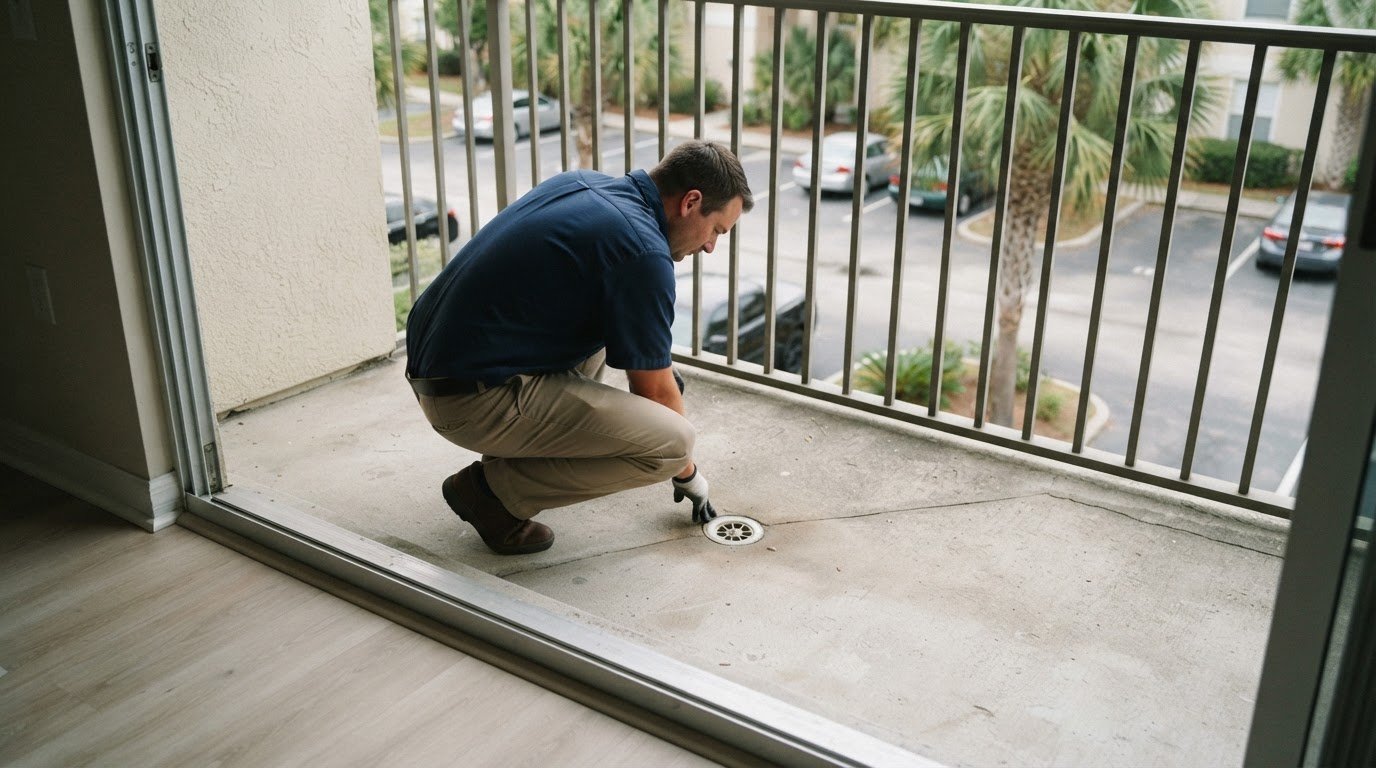
Moisture around a Florida home can affect nearby soil and contribute to movement, depending on soil and site conditions. Check where roof runoff, irrigation, or ground slope sends water after rain. Standing water beside the foundation, soil washed away near a corner, or ground sinking along a drain line can point to drainage trouble. Clusters of weeds close to the wall may indicate excess moisture; weeds growing from a crack can reveal an opening that needs attention.
Florida’s sandy and clay soils respond differently to changing moisture. Some clay-rich soils shrink or swell as conditions change, while some organic soils can lose volume and contribute to subsidence. Frequent rainfall and a high water table can add to moisture challenges. Keep gutters and drainage paths clear, and direct water away from the house. These steps help manage soil moisture, but they don’t establish whether existing foundation damage is active.
In a crawl space, look for standing water, damp surfaces, or excessive condensation on walls. Moisture can soften wooden supports, contribute to rot, and reduce their ability to support floors. A musty odor or visible mold also calls for attention to the moisture source and ventilation. For example, a damp crawl space beneath a sagging floor section links moisture conditions with a possible support problem, but visible signs alone don’t identify the cause.
Check basements and crawl spaces carefully after heavy rain. Note water marks, wet soil, condensation, and any musty smell, then see whether the area dries or remains damp. Water entering through a foundation crack can cause further damage, including mold growth. Sealing a minor crack may limit water entry, but it won’t stop movement if the foundation continues to shift.
What foundation repair methods are commonly used for Florida homes, and how do they compare? Helical piers and push piers can bypass unstable topsoil to help stabilize a home; the appropriate method depends on soil, foundation type, and site conditions. A structural assessment guides that choice, not moisture symptoms alone.
What Florida building codes or permits apply to foundation repairs? Requirements depend on the repair scope and local jurisdiction, so address structural plans and permit requirements with the relevant local building department before work begins. Don’t treat a drainage adjustment as equivalent to structural foundation work.
How do you find a licensed foundation repair contractor in Florida? Look for a Florida-licensed contractor whose license covers the proposed work, and compare the written scope with the recommended repair method. For foundation issues involving active movement, request an assessment that explains the evidence, proposed approach, and any required permits. An inspection can document visible moisture and structural symptoms, helping clarify what needs further evaluation.
5. Common signs of foundation problems
Common signs of foundation problems in Florida houses include uneven or bouncy floors, growing cracks, bowing foundation walls, and a chimney pulling away from the home. One sign alone doesn’t identify the cause, but several changes appearing together form a pattern worth documenting and evaluating.
Start with the structure beneath your feet. A floor that dips, slopes, or feels springy can reflect settlement, weak supports, moisture damage, or termites. Cracked tiles without an obvious impact may also warrant attention. Note where the floor changes, then compare nearby doorways and walls. A localized dip beside a damp crawl space, for example, suggests different possible causes than movement across several rooms.
Look at the foundation wall and other masonry. Bowing or buckling inward can signal pressure or movement, while a leaning retaining wall may indicate a separate structural concern. Outside, warped siding or gaps between siding planks can accompany moisture or structural changes. These observations don’t prove foundation failure, but their location and progression help guide an evaluation.
A chimney that tilts or pulls away from the house deserves prompt professional attention because it can present a collapse risk. Also listen for unusual sounds from walls and watch for new or growing cracks. Repeated popping sounds near a changing crack add context, especially if nearby flooring or masonry also shifts.
Follow the same inspection route inside and outside the Florida home. Note the room or exterior location, the type of change, and whether it appears new or has grown. Photograph cracks, wall angles, and gaps from the same position over time. This record helps show whether symptoms are isolated or developing across connected parts of the structure.
Uneven floors can result from foundation settlement, but moisture damage, poor wood quality, and termites can also contribute. Soft or bouncy areas call for attention to floor supports, particularly where crawl-space moisture is present. A visual inspection can document accessible conditions, but it doesn’t expose concealed structural components or provide engineering analysis. Significant movement or displacement needs a structural evaluation to distinguish active movement from older damage.
If several signs are developing, a comprehensive home inspection can document visible conditions and help clarify the next step. Use the findings to decide whether the concern calls for further structural assessment.
Anchorpoint Inspection Services: Comprehensive Home Inspection
Anchorpoint Inspection Services offers a Comprehensive Home Inspection to document visible conditions throughout a home. If you’ve noticed several changes, such as growing cracks alongside uneven floors or sticking openings, an inspection can help clarify what is visible and identify areas that need further evaluation.
A home inspection is visual and non-invasive. It doesn’t expose concealed structural components or provide engineering analysis, so significant movement or displacement may require a structural engineer’s assessment. An inspection can still provide a clearer record of visible symptoms to support your next decisions.
For a home approaching the end of its builder warranty, Anchorpoint also offers an 11 Month Warranty inspection to identify builder defects. Contact Anchorpoint Inspection Services to discuss a home inspection and the visible concerns you’ve observed.
Take a Clear Next Step for Your Home
Noticing signs of foundation problems in Florida houses can leave you unsure what deserves attention first. Turn your observations into a practical record: note when a change appeared, where it is, and whether it has progressed. This gives you a clearer starting point for discussing the property and deciding what further evaluation may help.
Anchorpoint Inspection Services offers a Comprehensive Home Inspection to document visible conditions. Its 4-Point and Wind Mitigation Inspections address separate property and insurance inspection needs. A home inspection is visual and non-invasive, so significant structural movement may call for additional engineering assessment.
You don’t need to solve every question before taking the next step. Share the changes you’ve observed and get a clearer picture of the home’s visible condition. Contact Anchorpoint Inspection Services today to discuss an inspection. A careful, informed next step can help you move forward with greater confidence.
Frequently Asked Questions
What Signs of Foundation Damage in Florida Homes Should You Watch For?
Watch for changes that appear together or continue over time, rather than judging one mark alone. For example, document a growing crack paired with a newly uneven floor. Note the room, date, and nearby changes, then take photos from the same position for comparison. This record gives a qualified professional useful context about when symptoms appeared and how they may have developed.
Can I sell a Florida home with foundation problems?
Yes, a Florida home can be sold with foundation problems, though the condition may affect buyer decisions, negotiations, and the sale timeline. Keep inspection reports, repair records, and evaluations together so prospective buyers can review the documented history. Describe known conditions accurately during the transaction, and seek legal guidance about disclosure obligations that apply to your sale.
Can drainage problems contribute to foundation movement?
Yes. Drainage changes soil moisture around a home, and the effects depend on soil and site conditions. Poorly directed roof runoff or persistent pooling can contribute to erosion, soil expansion, or other ground movement. After rain, observe where water collects and whether it flows toward the house. Keeping drainage paths clear and directing runoff away can help manage moisture near the foundation.
Does Every Foundation Crack or Settlement Issue Mean a Sinkhole?
No. Foundation settlement describes structural movement; it doesn’t by itself establish sinkhole activity. Changes in soil, water conditions, or drainage can also contribute to settlement. If the ground sinks or structural movement appears alongside other concerning changes, record the location and timing. Suspected sinkhole activity involves geological questions that a routine visual home inspection cannot resolve on its own.
Is it normal for a Florida house to have some foundation cracks?
Small, stable cracks can occur as concrete shrinks or expands with temperature changes, so their presence alone doesn’t prove structural damage. Photograph a crack periodically and record any new separation or water entry. A crack that widens, returns after patching, or appears alongside other changes deserves closer attention than an unchanged surface line.
What Is a Sinking Foundation?
A sinking foundation has moved downward as the soil or support beneath it shifts, compresses, erodes, or loses capacity. Movement may affect one part of a home more than another, changing how floors or openings align. Visible symptoms alone can’t establish whether movement is active or historic. A structural assessment can examine the pattern and determine what further evaluation is appropriate.
What is a common cause of foundation failure in Florida homes?
There isn’t one cause that applies to every Florida home. Heavy rain can erode soil beneath a concrete slab and increase pressure against foundation walls, while drainage, soil type, and site conditions also influence movement. A useful first step is to note where water travels and whether ground or structural changes occur nearby. Those observations help focus an evaluation on relevant conditions.
What causes foundation problems in Florida, including sandy soil, sinkholes, and flooding?
Foundation problems can involve variable sandy or clay soils, high water tables, frequent rainfall, poor drainage, or water infiltration. Water may erode supporting soil, while changing moisture can affect some soils. Sinkhole activity is a distinct geological process, not another name for ordinary settlement. Flooding can add moisture and pressure, so understanding the cause requires considering the home’s location and the pattern of movement.


Comments