

Pre-Purchase Home Inspection in Fort Walton Beach
A pre-purchase home inspection in Fort Walton Beach is a non-invasive evaluation of a home’s accessible structures, systems, and components. It may cover the roof, structure, electrical and plumbing systems, HVAC, insulation, and interior and exterior areas. The roof is walked only when it is safe to do so. The inspection helps buyers understand observable conditions before making decisions about the property.
It’s natural to want more than a list of technical terms when you’re weighing a major purchase. A digital report with photos and descriptions can help connect an observation to its location and explain why it may need attention, making findings easier to review and discuss. This guide outlines what an inspection covers, how to use the report, and how inspections can also support homeowners and sellers. It also explains the differences between a full home inspection and focused services such as wind mitigation, 4-point, pool, roof, and new-construction inspections, so you can understand which type fits your situation.
Table of Contents
Digital inspection reports with photos and descriptions
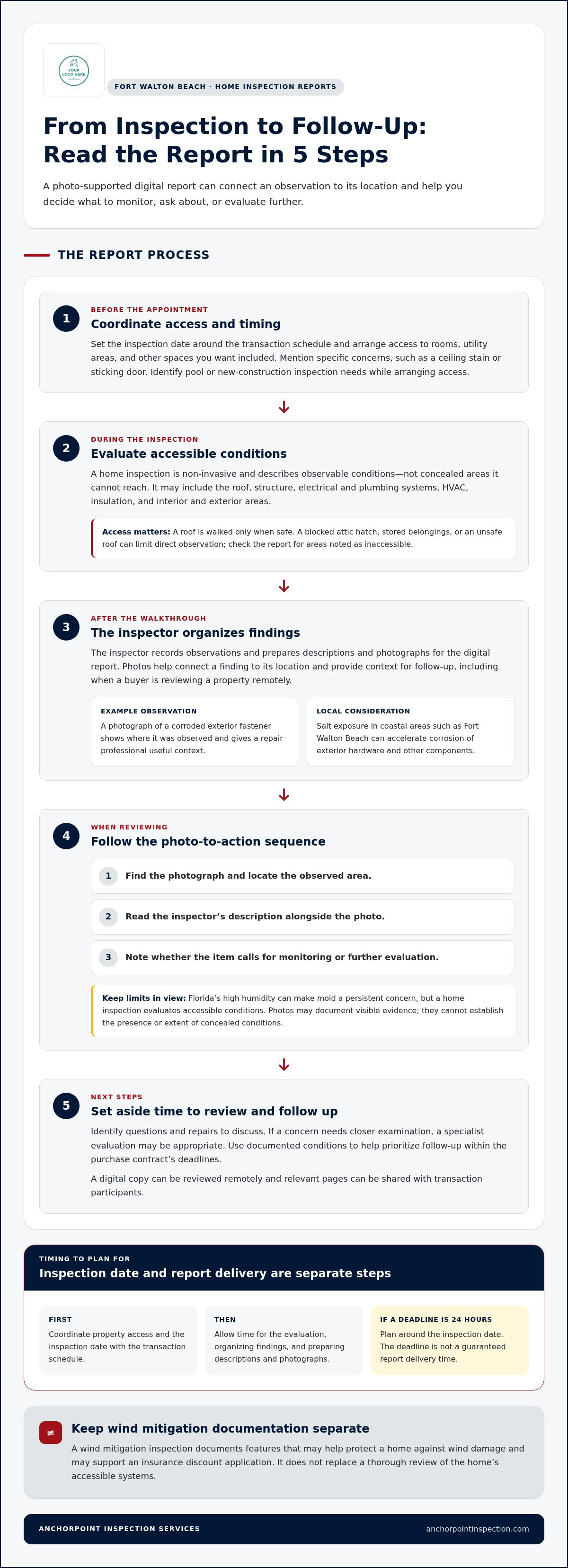
A digital report records the inspector’s observations for buyers to review alongside their transaction documents. Clear descriptions and photographs help connect each finding to its location and a practical next step, including for buyers reviewing a Fort Walton Beach property remotely.
Photo-Supported Report Descriptions
Read each caption alongside its photograph rather than treating the report as a stand-alone repair list. For example, a photo of a corroded exterior fastener shows where the issue was observed and gives a repair professional useful context for follow-up. Salt exposure in coastal areas such as Fort Walton Beach can accelerate corrosion of exterior hardware and other components.
Use the report in sequence: find the photograph, read the inspector’s description, then note whether the item calls for monitoring or further evaluation. Florida’s high humidity can make mold a persistent concern, but a home inspection evaluates accessible conditions, not hidden areas. Photos may document visible evidence, but they cannot establish the presence or extent of concealed conditions.
Keep wind mitigation documentation separate from the full inspection findings. A wind mitigation inspection documents features that may help protect a home against wind damage and may support an insurance discount application. It does not replace a thorough review of the home’s accessible systems.
Report Delivery Timing
Inspection scheduling and report delivery are separate steps. First, coordinate property access and the inspection date with the transaction schedule. Then allow time for the inspector to conduct the evaluation, organize findings, and prepare descriptions and photographs. A 24-hour deadline in a purchase timeline should be planned around the inspection date, not treated as a guaranteed delivery time.
This distinction can matter during a military relocation, when a buyer may be coordinating from another state or working around travel and closing dates. Set aside time to review the report, then identify questions and repairs to discuss. A digital copy makes it easier to review findings remotely and share relevant pages with transaction participants.
Before scheduling, coordinate the inspection date with contract milestones and property access. If the home has a pool or is new construction, identify those inspection needs while arranging access. Planning ahead leaves time to review the report and consider its findings before making the next purchase decision.
Accessible systems and components covered in a home inspection
A home inspection is a non-invasive evaluation of accessible structures, systems, and components. For a Fort Walton Beach home, the review may include the roof, structure, electrical and plumbing systems, HVAC, insulation, and interior and exterior areas. Findings describe observable conditions, not concealed areas that cannot be reached.
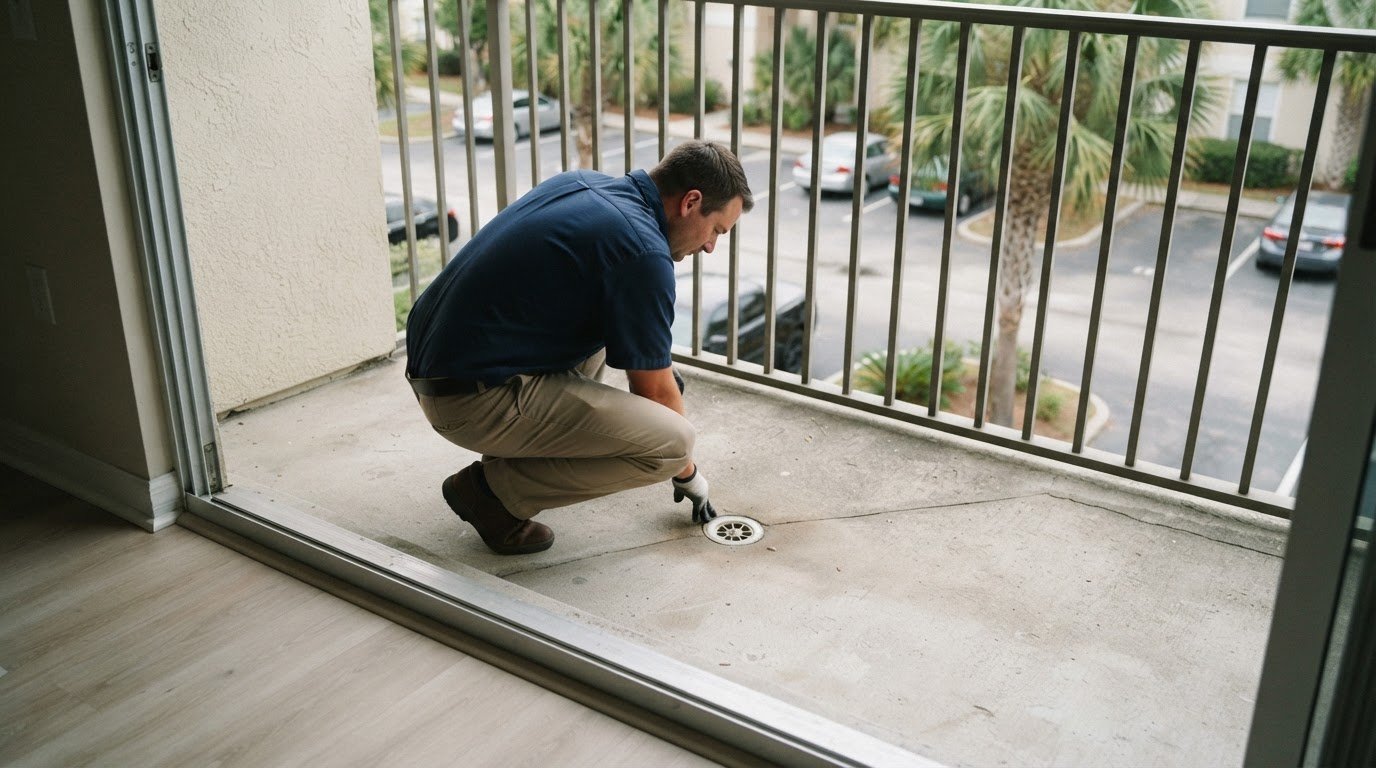
The roof is walked only when it is safe to do so. Inspectors also assess accessible exterior and interior components, including visible finishes, doors, and windows. Before the appointment, arrange access to rooms, utility areas, and other spaces you want included. Mention specific concerns, such as a ceiling stain or sticking door, so the inspector can consider them during the walkthrough.
Tools may help an inspector observe some hard-to-access areas, but they do not change the non-invasive scope. A blocked attic hatch, stored belongings, or an unsafe roof can limit direct observation. Review the report for areas identified as inaccessible, and note how those limitations affect the findings.
In Florida, home inspectors may be subject to regional licensing requirements separate from certification. InterNACHI Certified Professional Inspectors must complete pre-certification training, pass the InterNACHI Online Inspector Exam, follow its standards of practice, and complete 24 hours each year of continuing education.
Buyers are encouraged to attend the inspection to see locations firsthand and ask what an observation means, whether further evaluation is needed, and what maintenance may help. Keep questions specific to components, such as the electrical panel or roofing material.
In a Florida home purchase, the signed contract sets the inspection contingency deadlines and options. Use the report to identify repair priorities, then discuss any requests through the transaction process before the applicable deadline. Focus on documented conditions and clarify which concerns matter most to your decision.
Inspection services for buyers, homeowners, and sellers
A pre-purchase home inspection in Fort Walton Beach evaluates accessible structures and systems, including the roof, electrical and plumbing systems, HVAC, insulation, and interior and exterior components. It is non-invasive, so it describes visible conditions rather than opening walls or diagnosing concealed damage. Buyers searching “pre-purchase home inspection Fort Walton Beach” can use this scope as a starting point when comparing inspection options.
Some concerns may call for a focused evaluation beyond a general home inspection. Termite activity, roof condition, HVAC performance, or suspected mold may require a more specific assessment. A full inspection can document visible observations, while specialized testing or evaluation addresses a narrower question. The appropriate next step depends on the initial findings and what needs closer examination.
If an inspection identifies a major defect, start by reviewing its location and description in the report. Arrange any needed specialist evaluation, consider the finding’s effect on safety or function, and discuss options within the purchase contract’s deadlines. This helps distinguish a documented concern from a question that needs further assessment.
For buyers, the report helps distinguish repair priorities from routine maintenance. A damaged roof covering, for example, raises a different concern from an aging fixture. Ask what the inspector observed, which accessible components were affected, and whether further evaluation could clarify the issue. When searching “pre-purchase home inspection Fort Walton Beach,” consider the inspection scope you need, not just the service label.
Homeowners can use an inspection to understand current conditions and plan maintenance before a small issue spreads. Sellers may arrange an inspection before listing, review the documented items, and decide what to address or disclose through the sale process. In either case, the report organizes observations; it does not guarantee future performance.
Focused insurance inspections answer narrower questions. Florida 4-point and wind mitigation inspections don’t replace a full residential home inspection. Buyers should match the inspection scope to their decision, property features, and concerns; a pool, for example, may need its own inspection. For a newly built home, inspections during construction phases can help identify incomplete work before closing.
Fort Walton Beach home inspector listings
For a Fort Walton Beach property, review mapped flood-zone information separately, then look for visible hurricane damage and drainage concerns. Examples include patched roofing, water staining, or water collecting beside the foundation. An inspection can document observable conditions, but it does not determine a property’s flood-zone designation.
Online home inspector listings can look similar, so compare the stated evaluation scope. Check whether it includes accessible structural components, roofing, electrical systems, plumbing, and HVAC. A listing focused on wind mitigation describes a narrower purpose: documenting features that may help protect against wind damage and may support an insurance discount application.
Use a consistent checklist as you review listings:
Scope: Does the description explain which home systems the inspector evaluates?
Reporting: Does it describe how findings, photos, and access limitations appear in the report?
Credentials: Does it identify relevant qualifications and explain applicable inspection standards?
Local conditions: Does it address coastal corrosion, drainage observations, or visible storm-related damage?
Then compare the inspection purpose with your decision. A general home inspection helps buyers understand accessible conditions across the property. A 4-point inspection focuses on four major systems for insurance purposes, while wind mitigation documents wind-resistant features. Neither focused inspection replaces a full residential home inspection.
Coastal exposure can accelerate corrosion on HVAC equipment, fasteners, railings, electrical components, and exterior hardware. Look for a clear explanation of how visible corrosion is documented and where plumbing or exterior observations appear. A useful report connects each finding to a location and describes the observed condition, helping you distinguish routine maintenance from a concern that needs further evaluation.
For a property-specific review of wind-resistant features, request a wind mitigation inspection. Match the inspection scope to the decision you need to make, then use the report to guide follow-up on documented concerns.
Anchorpoint Inspection Services: Comprehensive Home Inspection
Anchorpoint Inspection Services helps buyers understand a property’s condition with a Full Home Inspection. Choose this evaluation before purchase when you want findings across accessible home components, rather than an inspection focused only on insurance features.
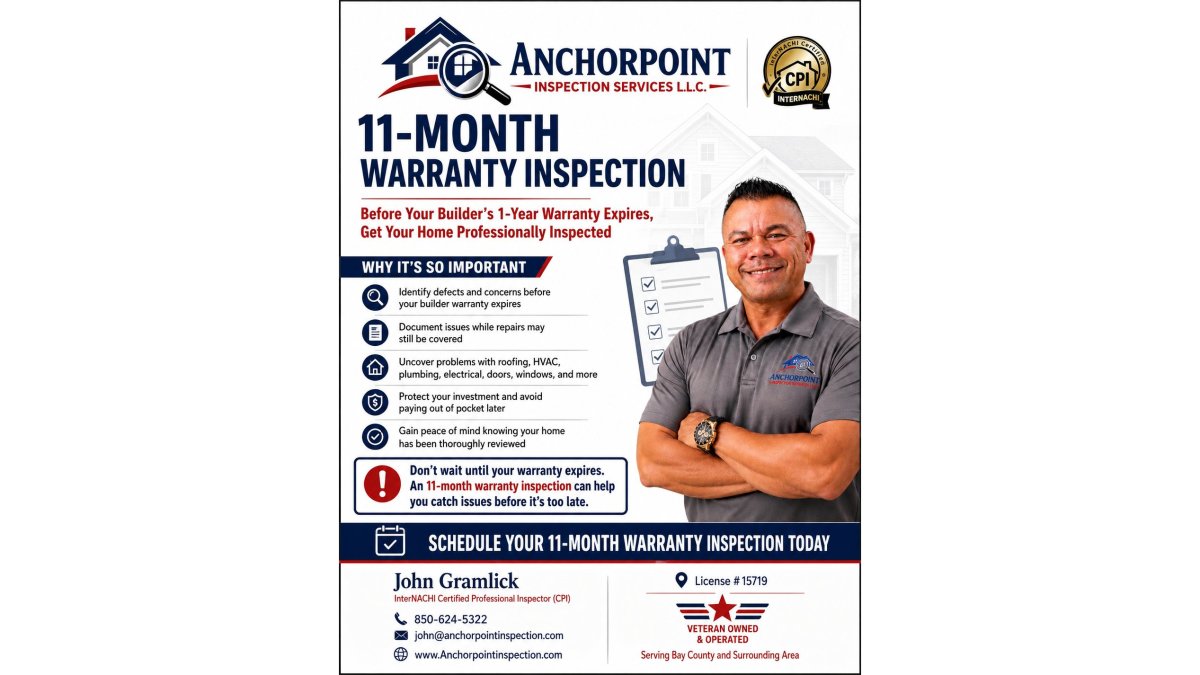
For narrower needs, a Wind Mitigation Inspection documents features that may help protect a home against wind damage, while a 4-Point Inspection focuses on key systems for insurance purposes. Neither replaces a full residential inspection. Homeowners with a newly built property can use an 11 Month Warranty inspection to identify potential builder defects before the warranty period ends.
Choosing the right service starts with your decision: assess the home before buying, document wind-resistant features, address insurance inspection needs, or review a new home before warranty expiration. Contact Anchorpoint Inspection Services to discuss the appropriate inspection, or visit anchorpointinspection.com.
Move Forward With a Clear Plan
A pre-purchase home inspection in Fort Walton Beach can support a more deliberate decision, but the report is only one part of the process. Consider how documented conditions fit your priorities, budget planning, and purchase timeline. Separate immediate questions from items you can monitor, and align your next steps with the terms of your agreement.
Anchorpoint Inspection Services offers a Comprehensive Home Inspection for buyers seeking a broad evaluation. A Wind Mitigation Inspection or 4-Point Inspection may fit a more focused purpose, but neither replaces a full residential inspection. Choosing the right scope starts with the decision you need to make about the property.
Take time to identify your main concerns and the inspection type that addresses them. For a next step, contact Anchorpoint Inspection Services to discuss your inspection needs. A thoughtful review can help you proceed with greater clarity and confidence.
Frequently Asked Questions
How do I find a licensed home inspector in Fort Walton Beach?
Compare inspector listings by Florida license status, inspection scope, and reporting approach. State licensing and professional association certification are separate credentials. Anchorpoint Inspection Services’ lead inspector, John Gramlick III, is a licensed Florida home inspector and InterNACHI® Certified Professional Inspector®. Ask whether the inspection follows applicable standards and how the report will document accessible areas or inspection limitations.
How long does a home inspection take, and when is the report delivered?
Most home inspections take 2-4 hours, with larger homes or added features such as pools and detached structures extending the walkthrough. The digital report follows the inspection and documentation process. When scheduling, ask how report delivery fits your transaction timeline, then leave time to review findings before any purchase deadlines. This separates time at the property from time needed to prepare the report.
Comments