

Florida New Construction Inspection Guide (2026)
If the county building inspector already signed off on your home, why would you need to hire someone else to look at it? It's a common question for anyone considering a new construction inspection Florida project, and it's natural to feel pressure from your builder to move straight to closing. You've likely spent months watching your vision come to life, and you want to trust that every nail and structural tie is exactly where it belongs. However, a municipal inspector’s brief visit is often limited to basic code minimums, which might not catch the subtle structural defects that lead to long-term headaches.
This guide will help you understand how an independent inspector acts as your personal advocate during the building process. We'll walk you through the essential phases of a build, explaining how to validate that your home meets the rigorous 2026 Florida Building Code standards for wind loads and roof-to-wall connections. By the end of this article, you'll know how to manage the transition from a construction site to a safe, defect-free home with a professional punch-list in hand. We're here to provide the clarity you need to protect your investment and your family's future.
Table of Contents
Why Independent New Construction Inspections Are Vital in Florida
Building a home in the Florida Panhandle is a significant investment in your future comfort and security. To protect that investment, a phase inspection is a series of checks performed at critical construction milestones to ensure quality before it's hidden by the next stage of work. While your builder works hard to meet deadlines, a professional new construction inspection Florida service ensures that speed doesn't compromise the structural integrity or long-term health of your home. This process provides a clear, documented record of what lies beneath your paint and flooring.
The Reality of Municipal vs. Private Inspections
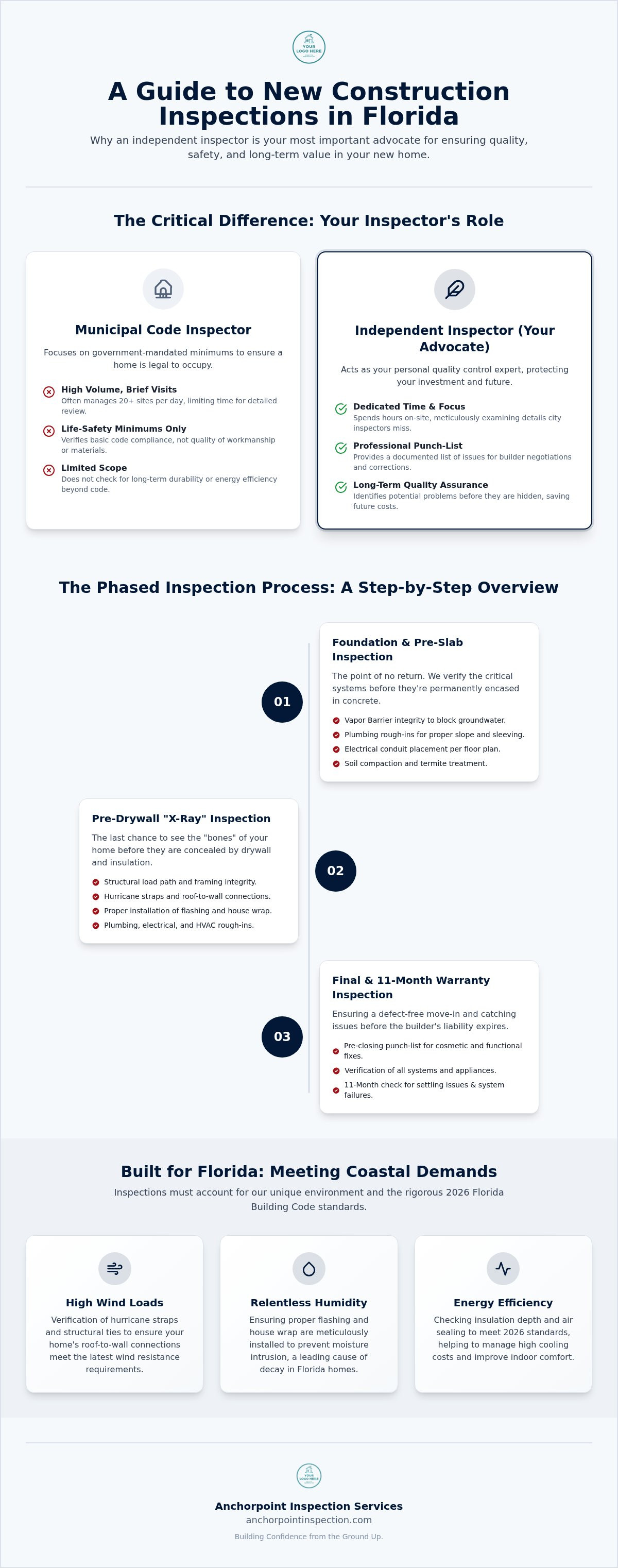
City and county inspectors are often dedicated professionals, but they are frequently tasked with managing 20 or more sites in a single day. This high volume forces them to focus almost exclusively on life-safety code minimums. They check if the house is legal to occupy, not necessarily if it's built for long-term durability or peak efficiency. Their role is to satisfy the government's requirements, while our role is to satisfy yours.
In contrast, an independent inspector serves as your personal advocate. We spend the time needed to look at the fine details that city officials might miss during a brief walkthrough. Our goal isn't just to check a box for the county; it's to provide you with a professional punch-list. This document gives you the leverage needed for builder negotiations, ensuring that corrections are made while the trades are still on-site and the walls are still open.
Florida-Specific Construction Risks
Our local environment in Panama City and Lynn Haven presents unique challenges that builders in other regions don't always face. Sandy soil requires specific foundation preparation to prevent uneven settling, while our relentless humidity demands perfect moisture barriers. If these "hidden systems" aren't verified during the build, you might not realize there's a problem until years later when repairs become incredibly expensive.
With the 2026 updates to the Florida Building Code, there's an even greater emphasis on resilience. We verify the following critical components during a new construction inspection Florida project:
Hurricane Straps: Verifying that roof-to-wall connectors and structural ties are installed according to the latest wind load requirements.
Moisture Barriers: Ensuring proper flashing and house wrap to prevent the moisture intrusion that leads to typical Florida decay.
Insulation Standards: Checking for proper insulation depth and air sealing to meet 2026 energy efficiency standards, which helps manage your cooling costs.
By catching errors in these areas early, you ensure your home is truly prepared for the coastal weather we expect in Bay County. We act as a diligent mentor throughout this process, helping you understand the reasoning behind every recommendation so you can move into your new home with total confidence.
Phase 1: Foundation and Pre-Slab Inspection Essentials
The foundation is the point of no return for your building project. Once the concrete trucks arrive, any mistakes in the plumbing layout or structural reinforcement are locked in place. During a new construction inspection Florida residents often realize that this phase is their best opportunity to prevent future slab-on-grade issues like major foundation cracks. We pay close attention to the vapor barrier. This heavy-duty shielding prevents groundwater from wicking into your home, which is essential in Lynn Haven and Panama City where the water table is naturally high and soil moisture is a constant factor.
The Plumbing and Electrical Rough-in
Before the pour, all plumbing and electrical lines must be secured and verified. We check that every pipe is properly sleeved. This protective layer ensures the concrete doesn't rub against the pipes as it cures or as the house settles over time, which prevents leaks in the future. We also verify the slope of the drain lines to ensure gravity does its job effectively. If a drain line is too flat, you'll face recurring clogs for years. We also confirm that electrical conduits are positioned according to your specific floor plan, preventing the need for costly jackhammering later to move a kitchen island lead or floor outlet.
Foundation Reinforcement and Soil Compaction
Florida's sandy soil requires careful preparation to support the weight of a modern home. We verify that the soil has been treated for termites, a critical first step in our climate. We also look for the consistent use of rebar chairs. These supports keep the steel reinforcement centered within the slab. If rebar sits on the dirt or is too high, the concrete loses the tension strength it needs to resist cracking. We also inspect the formwork for stability. A blowout during the pour can lead to an uneven slab that creates problems for your framing and flooring installers later.
Managing these early details ensures your home has the structural integrity to last for decades. If you're currently in the planning stages, our new construction phase inspections can help you verify that your builder is following these best practices from day one. Taking this step now provides a transparent record of the quality beneath your feet, allowing you to focus on the more exciting parts of the build.
Phase 2: The Critical Pre-Drywall Inspection
The pre-drywall phase is arguably the most pivotal moment in your home's construction. It's the final opportunity to view the structural skeleton and mechanical guts of the building before they're sealed away for decades. Once the drywall is hung, these components become invisible, making it nearly impossible to diagnose structural issues without destructive testing. By inspecting now, we ensure that the bones of your home are healthy and ready for the finishing touches.
During a new construction inspection Florida professionals look for the "load path." This is the continuous connection that transfers weight and wind pressure from the roof down to the foundation. If this path is interrupted by a missing bolt, a missing strap, or a poorly placed stud, the entire structure's resilience is compromised. We also examine the framing for any excessive notches or holes. While plumbers and electricians need to run their lines, over-drilling or cutting into the center of a joist can weaken load-bearing studs significantly. We also verify that fire-blocking is installed correctly at every floor and ceiling penetration. These small blocks of wood or fire-rated foam are designed to slow the spread of flames within wall cavities, which is a vital safety requirement under the current Florida Building Code.
Wind Mitigation and Hurricane Hardware
Living in the Florida Panhandle means preparing for high-wind events. We verify that every hurricane clip and strap is properly nailed and positioned. Missing a single nail can significantly reduce its effectiveness. These checks are also essential for your future Florida wind mitigation reports. Documenting these connections now helps you secure insurance discounts later. We also inspect window flashing to prevent coastal rain from driving into your wall cavities.
Mechanical, Electrical, and Plumbing (MEP) Systems
Once the framing is complete, the utility rough-in begins. We check for pinched wires that might have been crimped during installation. These faults are much easier to fix now than after the power is turned on. We also examine the ductwork. Properly sealed ducts are key to HVAC efficiency in our humid climate, preventing cool air from leaking into the attic. Finally, we verify that plumbing vents are correctly routed through the roof to prevent sewer gases from entering your living space. Performing this level of detail during a new construction inspection Florida ensures your home's internal systems are as robust as its exterior.
The excitement of seeing your finished home can lead to an oversight of the technical details. We don't let that happen. While the rough-in phases focused on the bones, this final stage ensures every finished system works exactly as intended before you sign the closing papers. A new construction inspection Florida at this point is your final opportunity to identify defects that the builder is still legally obligated to fix on their dime.
We perform a systematic walkthrough that tests every outlet, faucet, and appliance in the home. We also climb into the attic to verify that the insulation coverage is uniform and that the ventilation isn't blocked by overspray or debris. This is vital for your home's longevity; a poorly ventilated attic in Panama City can lead to premature roof failure and sky-high cooling bills. Outside, we verify the exterior grading. We ensure the soil slopes away from the foundation so that heavy Florida downpours don't pool against your slab.
The Pre-Closing Inspection Checklist
Our checklist goes beyond just checking if the lights turn on. We test the HVAC system under a full load to ensure it can handle the intense Florida humidity and heat. We also help you document cosmetic defects, from paint runs to poorly fitted trim, creating a professional punch-list for the builder. This is also the time to ensure your roof certification inspections are complete. Having this documentation ready ensures your insurance carrier has the proof they need to provide coverage from day one.
Maximizing Your 11-Month Warranty
The first year is when a new home truly settles. During these months, the wood dries out and the foundation finds its permanent seat in the sandy soil. This often results in settlement cracks, nail pops in the drywall, or doors that suddenly stick. Your 11-month warranty inspection is a specialty service designed to catch these issues before the builder’s one-year liability period expires. It's your "last chance" safety net to have the builder pay for repairs that would otherwise become your financial responsibility.
Don't wait until the warranty expires to find out your home has settling issues. Contact us today to schedule your 11-month warranty inspection and protect your investment for the long term.
How to Choose a New Construction Inspector in the Florida Panhandle
Selecting the right professional for your new construction inspection Florida project is about more than just finding a name in a directory. It's about partnering with a mentor who understands the specific environmental demands of the Panhandle. You want an inspector who doesn't just provide raw data, but offers clear, actionable guidance that helps you manage your relationship with the builder. We recommend verifying that any inspector you consider is fully licensed by the Florida Department of Business and Professional Regulation (DBPR) and carries the appropriate commercial general liability insurance.
Always ask for a sample report before you hire. A high-quality report should be transparent and easy to read, featuring clear photo documentation of every observation. If a report is filled with generic filler text, it won't provide the leverage you need during builder negotiations. Additionally, look for a professional who offers multi-phase packages. Having the same expert walk the site from the foundation to the final walkthrough ensures a consistent record of quality and prevents critical details from falling through the cracks between phases.
Why Local Knowledge Matters in Bay County
Building in Panama City and Lynn Haven requires a deep understanding of local flood zones and wind-borne debris requirements. These regulations are more than just red tape; they're essential for the long-term safety of your family. A local expert is familiar with the specific soil conditions of Bay County and knows which shortcuts regional builders might attempt when they're under pressure to close quickly. At Anchorpoint, our commitment is to provide a protective, mentor-led service that treats your new home with the same care we would give our own.
Scheduling Your Anchorpoint Inspection
Coordination is key to a successful phase inspection. We work directly with you to align our visits with your builder's timeline, ensuring we arrive at the exact moment when systems are visible but before they're covered up. If your new build includes a backyard oasis, we also recommend a comprehensive pool inspection to verify the safety and efficiency of your new equipment and shell. Our goal is to provide a steady, methodical rhythm to the inspection process that lowers your anxiety and provides a clear path forward. To begin securing your new home's future, contact Anchorpoint today to discuss your build schedule and phase options.
Building Your Future on a Solid Foundation
Your new home is more than just a structure; it's the backdrop for your family's future. By prioritizing a new construction inspection Florida process, you ensure that every critical phase, from the first concrete pour to the final 11-month warranty check, meets the highest standards of resilience. You've learned how independent oversight catches the structural and mechanical details that municipal checks might overlook, giving you the leverage needed to hold builders accountable. This proactive approach turns a complex building process into a manageable, transparent experience.
As a Florida Licensed Inspector serving Panama City, Lynn Haven, and Destin, Anchorpoint Inspection Services provides the expert advocacy you need. We deliver detailed digital reports with photos that offer a clear view of your home's health. Secure Your Investment with Anchorpoint's New Construction Phase Inspections and move forward with the confidence that your home is built to last. We're here to be your diligent mentor throughout this journey, ensuring your transition into your new home is as smooth as possible. You've worked hard for this milestone, and we're ready to help you protect it.
Frequently Asked Questions
Is a new construction inspection required by law in Florida?
No, an independent inspection is not legally required, but municipal code inspections are mandatory for every build. City inspectors focus on minimum safety standards to ensure the home is legal for occupancy. Hiring a professional for a new construction inspection Florida project goes beyond these basics. We look for long-term durability and quality of workmanship that city officials don't have the time to evaluate during their brief visits.
When should I schedule my pre-drywall inspection?
You should schedule your pre-drywall inspection as soon as the framing, electrical, and plumbing rough-ins are finished but before the walls are closed. This window is often quite narrow, usually lasting only two or three days. It's the only time we can verify the load path and hurricane straps are correct. We recommend staying in close contact with your builder's superintendent to catch this critical milestone.
Will my builder let me bring in an outside inspector?
Yes, most builders in Lynn Haven and Panama City allow outside inspectors if they are licensed and carry proper insurance. Your construction contract typically includes a clause about third-party inspections. It's helpful to inform your builder about your plans early in the process. This helps establish a collaborative atmosphere where everyone is focused on the common goal of delivering a high-quality, safe home for your family.
How much does a new construction phase inspection cost in Florida?
The cost of a new construction inspection Florida service depends on several factors, including the home’s square footage and the number of phases you choose. A full three-phase package typically involves multiple site visits, which reflects in the total fee compared to a single walkthrough. While we don't quote specific prices here, many homeowners find that the investment is a small fraction of the potential repair bills for hidden defects.
What happens if the inspector finds a major defect during the build?
If our inspector finds a major defect, we provide a detailed digital report that you can immediately share with your builder. Reputable builders usually want to fix these issues before the next phase of construction begins. The report acts as a professional punch-list, documenting exactly what is wrong and why it needs correction. This gives you clear, technical evidence to use during your negotiations with the construction team.
Does a new home need a wind mitigation inspection?
Absolutely, a wind mitigation inspection is vital for new Florida homes to secure the best possible insurance rates. Even though your home is built to the latest codes, insurance carriers won't apply discounts without a certified report. This inspection verifies your roof-to-wall connections and impact-resistant openings. It's a simple step that often pays for itself through lower annual premiums in our coastal hurricane zones.
What is the difference between a walkthrough and a professional inspection?
A builder walkthrough is primarily a tour of your home’s features, whereas a professional inspection is a technical audit of its systems. During a walkthrough, the builder shows you how to operate appliances and checks for paint touch-ups. A professional inspector uses technical expertise to evaluate the attic insulation, structural ties, and drainage. We focus on the things you can't see, ensuring the home functions as intended.
Can I do the 11-month warranty inspection myself?
You can certainly look for cosmetic issues yourself, but a professional 11-month warranty inspection catches technical failures that are often invisible to the untrained eye. We check for signs of foundation settling, slow leaks, and mechanical issues that develop during the first year of occupancy. Our report provides the professional documentation you need to demand repairs from the builder before your one-year warranty period officially expires.


Comments